2,99 €
2,99 €
inkl. MwSt.
Sofort per Download lieferbar

0 °P sammeln
2,99 €
Als Download kaufen
2,99 €
inkl. MwSt.
Sofort per Download lieferbar
0 °P sammeln
Jetzt verschenken
Alle Infos zum eBook verschenken
2,99 €
inkl. MwSt.
Sofort per Download lieferbar
Alle Infos zum eBook verschenken
0 °P sammeln

Andere Kunden interessierten sich auch für
") The Making of the Modern State: Political and Social Transformations in Early Modern Europe (eBook, ePUB)2,99 €
The Making of the Modern State: Political and Social Transformations in Early Modern Europe (eBook, ePUB)2,99 €") Language Dynamics in the Early Modern Period (eBook, ePUB)39,95 €
Language Dynamics in the Early Modern Period (eBook, ePUB)39,95 €") Translation and Transposition in the Early Modern Period (eBook, ePUB)42,95 €
Translation and Transposition in the Early Modern Period (eBook, ePUB)42,95 € (eBook, ePUB)") Dutch Armies of the 80 Years' War 1568-1648 (1) (eBook, ePUB)9,95 €
Dutch Armies of the 80 Years' War 1568-1648 (1) (eBook, ePUB)9,95 € (eBook, ePUB)") Dutch Armies of the 80 Years' War 1568-1648 (2) (eBook, ePUB)9,95 €
Dutch Armies of the 80 Years' War 1568-1648 (2) (eBook, ePUB)9,95 €") The Medieval and Early Modern Garden in Britain (eBook, ePUB)44,95 €
The Medieval and Early Modern Garden in Britain (eBook, ePUB)44,95 €") The European Crisis of the 1590s (eBook, ePUB)52,95 €
The European Crisis of the 1590s (eBook, ePUB)52,95 €







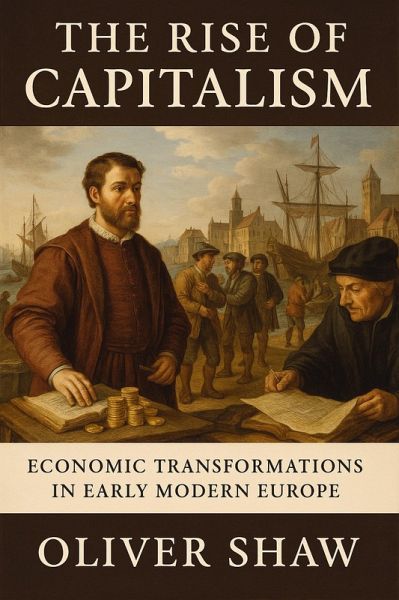
The Rise of Capitalism: Economic Transformations in Early Modern Europe by Oliver Shaw explores the profound economic shifts that took place in Europe from the late Middle Ages to the dawn of the Industrial Revolution. The book delves into the factors that fueled the rise of capitalism, examining the transformations in trade, agriculture, finance, and manufacturing that reshaped European societies.
Through a detailed analysis of key economic ideas, such as mercantilism and early capitalist thought, the book traces the role of institutions like the banking system, joint-stock companies, and colonial enterprises in laying the groundwork for modern capitalism. The development of global trade networks, the rise of the bourgeoisie, and the establishment of factory systems are explored alongside the social consequences of these changes, particularly the emergence of the working class and the exploitation of colonial labor.
Shaw also provides a critical examination of the economic theories and practices that underpinned this transformation, including the contributions of thinkers such as Adam Smith and Karl Marx, as well as the political and social upheavals that came with the rise of capitalist economies. The book offers a comprehensive narrative of how early modern Europe transitioned from feudal economies to capitalist systems, setting the stage for the global economic order that emerged in the 19th and 20th centuries.
Through a detailed analysis of key economic ideas, such as mercantilism and early capitalist thought, the book traces the role of institutions like the banking system, joint-stock companies, and colonial enterprises in laying the groundwork for modern capitalism. The development of global trade networks, the rise of the bourgeoisie, and the establishment of factory systems are explored alongside the social consequences of these changes, particularly the emergence of the working class and the exploitation of colonial labor.
Shaw also provides a critical examination of the economic theories and practices that underpinned this transformation, including the contributions of thinkers such as Adam Smith and Karl Marx, as well as the political and social upheavals that came with the rise of capitalist economies. The book offers a comprehensive narrative of how early modern Europe transitioned from feudal economies to capitalist systems, setting the stage for the global economic order that emerged in the 19th and 20th centuries.
Dieser Download kann aus rechtlichen Gründen nur mit Rechnungsadresse in A, B, CY, CZ, D, DK, EW, E, FIN, F, GR, H, IRL, I, LT, L, LR, M, NL, PL, P, R, S, SLO, SK ausgeliefert werden.