4,49 €
inkl. MwSt.
Sofort per Download lieferbar
0 °P sammeln

Andere Kunden interessierten sich auch für
") The Architect of Inheritance: Thomas Hunt Morgan (eBook, ePUB)4,49 €
The Architect of Inheritance: Thomas Hunt Morgan (eBook, ePUB)4,49 €") My Remarkable Journey (eBook, ePUB)23,53 €
My Remarkable Journey (eBook, ePUB)23,53 €") India's Forgotten Rocket Pioneer (eBook, ePUB)4,99 €
India's Forgotten Rocket Pioneer (eBook, ePUB)4,99 € (eBook, ePUB)") Cielo de octubre (Rocket Boys) (eBook, ePUB)8,99 €
Cielo de octubre (Rocket Boys) (eBook, ePUB)8,99 €") Bothwell, Or, The Days of Mary Queen of Scots, Volume 1, 2, 3 (eBook, ePUB)1,99 €
Bothwell, Or, The Days of Mary Queen of Scots, Volume 1, 2, 3 (eBook, ePUB)1,99 €") The Leaders of the Confederacy (eBook, ePUB)4,99 €
The Leaders of the Confederacy (eBook, ePUB)4,99 €") Moiety of a Gingerbread Man: A Rocket Scientist's Memoir (eBook, ePUB)2,99 €
Moiety of a Gingerbread Man: A Rocket Scientist's Memoir (eBook, ePUB)2,99 €






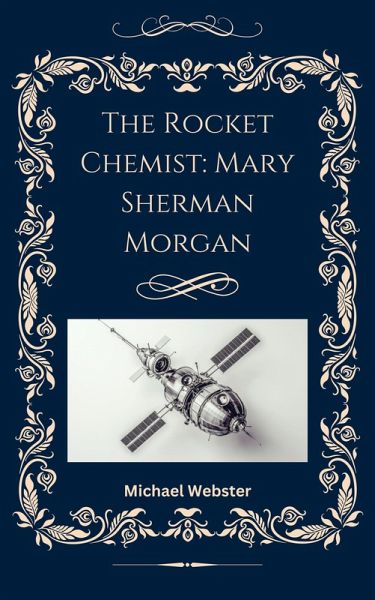
The Rocket Chemist: The Woman Who Fueled America's First Satellite
October 1957: The Soviet Union launches Sputnik, plunging America into crisis. The nation's pride, and its place in the world, depended on one mission: launching a satellite before the year ended. The problem? The rocket needed more power than its existing fuel could provide.
The task of finding the chemical solutionone that required a leap in rocket science but fit within existing engine hardwarefell to a single individual working in a high-security lab: Mary Sherman Morgan.
Born in rural North Dakota, Morgan was the only woman chemist at North American Aviation's Rocketdyne division. Working under unimaginable pressure, she swiftly formulated Hydyne (H-5), a potent, high-energy fuel mixture. It was the crucial, necessary edge. On January 31, 1958, the Jupiter-C rocketfueled by Morgan's inventionlaunched Explorer 1, placing the first American satellite in orbit and successfully thrusting the United States back into the space race. Approx.160 pages, 34100 word count
October 1957: The Soviet Union launches Sputnik, plunging America into crisis. The nation's pride, and its place in the world, depended on one mission: launching a satellite before the year ended. The problem? The rocket needed more power than its existing fuel could provide.
The task of finding the chemical solutionone that required a leap in rocket science but fit within existing engine hardwarefell to a single individual working in a high-security lab: Mary Sherman Morgan.
Born in rural North Dakota, Morgan was the only woman chemist at North American Aviation's Rocketdyne division. Working under unimaginable pressure, she swiftly formulated Hydyne (H-5), a potent, high-energy fuel mixture. It was the crucial, necessary edge. On January 31, 1958, the Jupiter-C rocketfueled by Morgan's inventionlaunched Explorer 1, placing the first American satellite in orbit and successfully thrusting the United States back into the space race. Approx.160 pages, 34100 word count
Dieser Download kann aus rechtlichen Gründen nur mit Rechnungsadresse in A, B, CY, CZ, D, DK, EW, E, FIN, F, GR, H, IRL, I, LT, L, LR, M, NL, PL, P, R, S, SLO, SK ausgeliefert werden.