42,95 €
42,95 €
inkl. MwSt.
Erscheint vor. 31.12.25

21 °P sammeln
42,95 €
Als Download kaufen
42,95 €
inkl. MwSt.
Erscheint vor. 31.12.25
21 °P sammeln
Jetzt verschenken
Alle Infos zum eBook verschenken
42,95 €
inkl. MwSt.
Erscheint vor. 31.12.25
Alle Infos zum eBook verschenken
21 °P sammeln

Andere Kunden interessierten sich auch für
") The Role of Enemies in Military Shooter Video Games (eBook, PDF)42,95 €
The Role of Enemies in Military Shooter Video Games (eBook, PDF)42,95 €") Understanding Video Games (eBook, ePUB)48,95 €
Understanding Video Games (eBook, ePUB)48,95 €") Introduction to Game Analysis (eBook, ePUB)38,95 €
Introduction to Game Analysis (eBook, ePUB)38,95 €") Videogames and the Gothic (eBook, ePUB)39,95 €
Videogames and the Gothic (eBook, ePUB)39,95 €") Interactive Storytelling (eBook, ePUB)33,95 €
Interactive Storytelling (eBook, ePUB)33,95 €") Women Comedians in the Digital Age (eBook, ePUB)36,95 €
Women Comedians in the Digital Age (eBook, ePUB)36,95 €") Fifty Key Video Games (eBook, ePUB)25,95 €
Fifty Key Video Games (eBook, ePUB)25,95 €




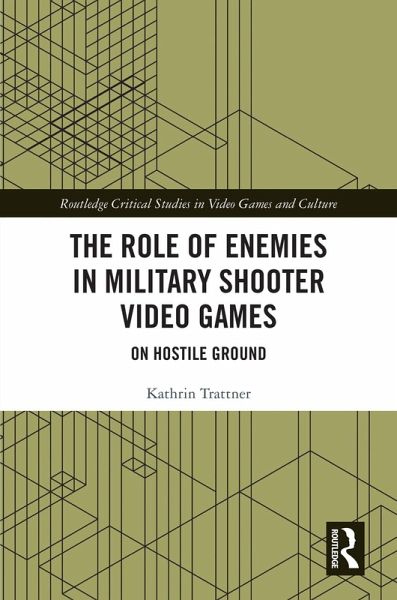
This book delivers a unique way of understanding the heart of every first-person military shooter game - its enemies - from within the genre itself to present a nuanced view of opponents in war games.
The analysis provides a systematic framework for a comparative and intersectional analysis that pays attention to multiple layers of video games, such as narrative, audiovisuality, gameplay, and the construction of ludic space, considering genre-specific conventions and mechanics. Integrating theories and methods from game studies, cultural studies, and religious studies, this book introduces the concept of "ludic othering." By applying this concept to a variety of military shooters produced during the heyday of the War on Terror, this book illustrates "ludic othering's" analytical potential in answering a central question: What social and cultural ascriptions are at play in the representation of enemies?
This volume will interest students and scholars of video game studies, religious and cultural studies, digital media, genre, history, postcolonial studies, and communication studies.
The analysis provides a systematic framework for a comparative and intersectional analysis that pays attention to multiple layers of video games, such as narrative, audiovisuality, gameplay, and the construction of ludic space, considering genre-specific conventions and mechanics. Integrating theories and methods from game studies, cultural studies, and religious studies, this book introduces the concept of "ludic othering." By applying this concept to a variety of military shooters produced during the heyday of the War on Terror, this book illustrates "ludic othering's" analytical potential in answering a central question: What social and cultural ascriptions are at play in the representation of enemies?
This volume will interest students and scholars of video game studies, religious and cultural studies, digital media, genre, history, postcolonial studies, and communication studies.
Dieser Download kann aus rechtlichen Gründen nur mit Rechnungsadresse in A, B, BG, CY, CZ, D, DK, EW, E, FIN, F, GR, HR, H, IRL, I, LT, L, LR, M, NL, PL, P, R, S, SLO, SK ausgeliefert werden.