18,95 €
18,95 €
inkl. MwSt.
Sofort per Download lieferbar

9 °P sammeln
18,95 €
Als Download kaufen
18,95 €
inkl. MwSt.
Sofort per Download lieferbar
9 °P sammeln
Jetzt verschenken
Alle Infos zum eBook verschenken
18,95 €
inkl. MwSt.
Sofort per Download lieferbar
Alle Infos zum eBook verschenken
9 °P sammeln

Andere Kunden interessierten sich auch für
") China's Search for Democracy: The Students and Mass Movement of 1989 (eBook, ePUB)55,95 €
China's Search for Democracy: The Students and Mass Movement of 1989 (eBook, ePUB)55,95 €") Cosmopolitanism, Identity and Authenticity in the Middle East (eBook, ePUB)47,95 €
Cosmopolitanism, Identity and Authenticity in the Middle East (eBook, ePUB)47,95 €") The Tunisian Women's Rights Movement (eBook, ePUB)43,95 €
The Tunisian Women's Rights Movement (eBook, ePUB)43,95 €") Being British Muslims (eBook, ePUB)2,99 €
Being British Muslims (eBook, ePUB)2,99 €") The Black Arts Movement (eBook, ePUB)22,95 €
The Black Arts Movement (eBook, ePUB)22,95 €") Black Movement (eBook, ePUB)17,95 €
Black Movement (eBook, ePUB)17,95 €") The Colored Conventions Movement (eBook, ePUB)18,95 €
The Colored Conventions Movement (eBook, ePUB)18,95 €







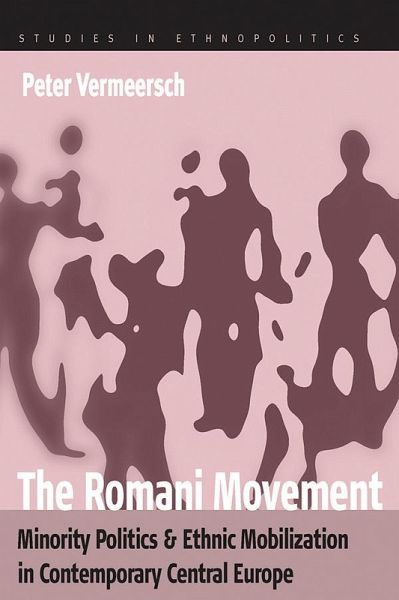
The collapse of communism and the process of state building that ensued in the 1990s have highlighted the existence of significant minorities in many European states, particularly in Central Europe. In this context, the growing plight of Europe's biggest minority, the Roma (Gypsies), has been particularly salient. Traditionally dispersed, possessing few resources and devoid of a common "kin state" to protect their interests, the Roma have often suffered from widespread exclusion and institutionalized discrimination. Politically underrepresented and lacking popular support amongst the wider populations of their host countries, the Roma have consequently become one of Europe's greatest "losers" in the transition towards democracy.
Against this background, the author examines the recent attempts of the Roma in Central Europe and their supporters to form a political movement and to influence domestic and international politics. On the basis of first-hand observation and interviews with activists and politicians in the Czech Republic, Hungary and Slovakia, he analyzes connections between the evolving state policies towards the Roma and the recent history of Romani mobilization. In order to reach a better understanding of the movement's dynamics at work, the author explores a number of theories commonly applied to the study of social movements and collective action.
Against this background, the author examines the recent attempts of the Roma in Central Europe and their supporters to form a political movement and to influence domestic and international politics. On the basis of first-hand observation and interviews with activists and politicians in the Czech Republic, Hungary and Slovakia, he analyzes connections between the evolving state policies towards the Roma and the recent history of Romani mobilization. In order to reach a better understanding of the movement's dynamics at work, the author explores a number of theories commonly applied to the study of social movements and collective action.
Dieser Download kann aus rechtlichen Gründen nur mit Rechnungsadresse in A, D ausgeliefert werden.