
44,95 €
44,95 €
inkl. MwSt.
Sofort per Download lieferbar

22 °P sammeln
44,95 €
Als Download kaufen
44,95 €
inkl. MwSt.
Sofort per Download lieferbar
22 °P sammeln
Jetzt verschenken
Alle Infos zum eBook verschenken
44,95 €
inkl. MwSt.
Sofort per Download lieferbar
Alle Infos zum eBook verschenken
22 °P sammeln

Andere Kunden interessierten sich auch für
") The Routledge Handbook of Disability in Southern Africa (eBook, ePUB)43,95 €
The Routledge Handbook of Disability in Southern Africa (eBook, ePUB)43,95 €") The Routledge International Handbook of Disability and Global Health (eBook, PDF)47,95 €
The Routledge International Handbook of Disability and Global Health (eBook, PDF)47,95 €") Health and Care in Old Age in Africa (eBook, PDF)41,95 €
Health and Care in Old Age in Africa (eBook, PDF)41,95 €") Ubuntu Philosophy and Disabilities in Sub-Saharan Africa (eBook, PDF)38,95 €
Ubuntu Philosophy and Disabilities in Sub-Saharan Africa (eBook, PDF)38,95 €") Rethinking Sexual and Reproductive Health and Rights for Young Women in Southern Africa (eBook, PDF)36,95 €
Rethinking Sexual and Reproductive Health and Rights for Young Women in Southern Africa (eBook, PDF)36,95 €") Development and Women's Reproductive Health in Ghana, 1920-1982 (eBook, PDF)39,95 €
Development and Women's Reproductive Health in Ghana, 1920-1982 (eBook, PDF)39,95 €") The Routledge Handbook of Postcolonial Disability Studies (eBook, PDF)47,95 €
The Routledge Handbook of Postcolonial Disability Studies (eBook, PDF)47,95 €
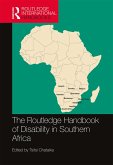

This comprehensive ground-breaking southern African-centred collection spans the breadth of disability research and practice. Reputable and emerging scholars, together with disability advocates adopt a critical and interdisciplinary stance to prove, challenge and shift commonly held social understanding of disability in traditional discourses, frontiers and practices in prominent areas such as inter/national development, disability studies, education, culture, health, religion, gender, sports, tourism, ICT, theatre, media , housing and legislation.
This handbook provides a body of interdisciplinary analyses suitable for the development of disability studies in southern Africa. Through drawing upon and introducing resources from several disciplines, theoretical perspectives and personal narratives from disability activists, it reflects on disability and sustainable development in southern Africa. It also addresses a clear need to bring together interdisciplinary perspectives and narratives on disability and sustainable development in ways that do not undermine disability politics advanced by disabled people across the world. The handbook further acknowledges and builds upon the huge body of literature that understands the social, cultural, educational, psychological, economic, historical and political facets of the exclusion of disabled people.
The handbook covers the following broad themes:
. Disability inclusion, ICT and sustainable development
. Access to education, from early childhood development up to higher education
. Disability, employment, entrepreneurship and community-based rehabilitation
. Religion, gender and parenthood
. Tourism, sports and accessibility
. Compelling narratives from disability activists on societal attitudes toward disability, media advocacy, accessible housing and social exclusion.
Thus, this much-awaited handbook provides students, academics, practitioners, development partners, policy makers and activists with an authoritative framework for critical thinking and debates that inform policy and practice in incomparable ways, with the view to promoting inclusive and sustainable development.
This handbook provides a body of interdisciplinary analyses suitable for the development of disability studies in southern Africa. Through drawing upon and introducing resources from several disciplines, theoretical perspectives and personal narratives from disability activists, it reflects on disability and sustainable development in southern Africa. It also addresses a clear need to bring together interdisciplinary perspectives and narratives on disability and sustainable development in ways that do not undermine disability politics advanced by disabled people across the world. The handbook further acknowledges and builds upon the huge body of literature that understands the social, cultural, educational, psychological, economic, historical and political facets of the exclusion of disabled people.
The handbook covers the following broad themes:
. Disability inclusion, ICT and sustainable development
. Access to education, from early childhood development up to higher education
. Disability, employment, entrepreneurship and community-based rehabilitation
. Religion, gender and parenthood
. Tourism, sports and accessibility
. Compelling narratives from disability activists on societal attitudes toward disability, media advocacy, accessible housing and social exclusion.
Thus, this much-awaited handbook provides students, academics, practitioners, development partners, policy makers and activists with an authoritative framework for critical thinking and debates that inform policy and practice in incomparable ways, with the view to promoting inclusive and sustainable development.
Dieser Download kann aus rechtlichen Gründen nur mit Rechnungsadresse in A, B, BG, CY, CZ, D, DK, EW, E, FIN, F, GR, HR, H, IRL, I, LT, L, LR, M, NL, PL, P, R, S, SLO, SK ausgeliefert werden.