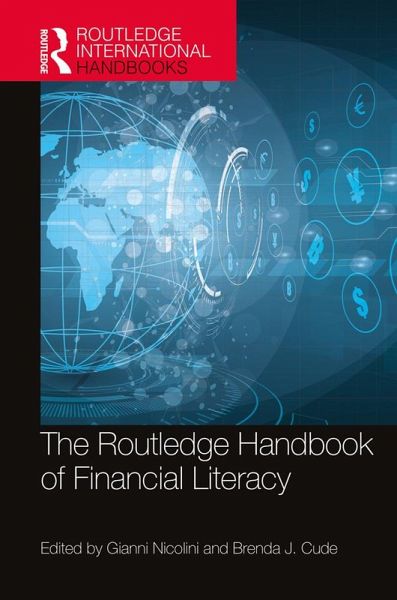
43,95 €
43,95 €
inkl. MwSt.
Sofort per Download lieferbar

22 °P sammeln
43,95 €
Als Download kaufen
43,95 €
inkl. MwSt.
Sofort per Download lieferbar
22 °P sammeln
Jetzt verschenken
Alle Infos zum eBook verschenken
43,95 €
inkl. MwSt.
Sofort per Download lieferbar
Alle Infos zum eBook verschenken
22 °P sammeln

Andere Kunden interessierten sich auch für
") The Routledge Handbook of Financial Literacy (eBook, PDF)43,95 €
The Routledge Handbook of Financial Literacy (eBook, PDF)43,95 €") Financial Literacy in Europe (eBook, ePUB)43,95 €
Financial Literacy in Europe (eBook, ePUB)43,95 €") Financial Literacy Education (eBook, ePUB)67,95 €
Financial Literacy Education (eBook, ePUB)67,95 €") Investment Analysis (eBook, ePUB)56,95 €
Investment Analysis (eBook, ePUB)56,95 € (eBook, ePUB)") Capital Inflation and the Multinationals (Routledge Revivals) (eBook, ePUB)39,95 €
Capital Inflation and the Multinationals (Routledge Revivals) (eBook, ePUB)39,95 €") The Routledge Handbook of State-Owned Enterprises (eBook, ePUB)45,95 €
The Routledge Handbook of State-Owned Enterprises (eBook, ePUB)45,95 € (eBook, ePUB)") The Structure and Reform of Direct Taxation (Routledge Revivals) (eBook, ePUB)51,95 €
The Structure and Reform of Direct Taxation (Routledge Revivals) (eBook, ePUB)51,95 €






Financial literacy and financial education are not new topics, even though interest in these topics among policymakers, financial authorities, and academics continues to grow. The Routledge Handbook of Financial Literacy provides a comprehensive reference work that addresses both research perspectives and practical applications to financial education. This is the first volume to summarize the milestones of research in financial literacy from multiple perspectives to offer an overview.
The book is organized into six parts. The first three parts provide a conceptual framework, which discusses what financial literacy is, how it should be measured, and explains why it represents a relevant topic and effective tool in enhancing decision-making among consumers as well as consumer protection strategies. Part IV addresses the connection between financial education and financial literacy, with chapters about financial education in school settings as well as for adults. This part includes an analysis of the role of Fintech and the use of gamification in financial education. Part V is a collection of contributions that analyze financial literacy and financial education around the world, with a focus on geographical areas including the U.S., South America, Western Europe, Eastern Europe, Asia, and Africa. This part also considers how financial literacy should be addressed in the case of Islamic finance. The concluding part of the book examines how financial literacy is related to other possible approaches to consumer finance and consumer protection, addressing the relationships between financial literacy and behavioral economics, financial well-being, and financial inclusion.
This volume is an indispensable reference for scholars who are new to the topic, including undergraduate and graduate students, and for experienced researchers who wish to enrich their knowledge, policymakers seeking a broader understanding and an international perspective, and practitioners who seek knowledge of best practices as well as innovative approaches.
The book is organized into six parts. The first three parts provide a conceptual framework, which discusses what financial literacy is, how it should be measured, and explains why it represents a relevant topic and effective tool in enhancing decision-making among consumers as well as consumer protection strategies. Part IV addresses the connection between financial education and financial literacy, with chapters about financial education in school settings as well as for adults. This part includes an analysis of the role of Fintech and the use of gamification in financial education. Part V is a collection of contributions that analyze financial literacy and financial education around the world, with a focus on geographical areas including the U.S., South America, Western Europe, Eastern Europe, Asia, and Africa. This part also considers how financial literacy should be addressed in the case of Islamic finance. The concluding part of the book examines how financial literacy is related to other possible approaches to consumer finance and consumer protection, addressing the relationships between financial literacy and behavioral economics, financial well-being, and financial inclusion.
This volume is an indispensable reference for scholars who are new to the topic, including undergraduate and graduate students, and for experienced researchers who wish to enrich their knowledge, policymakers seeking a broader understanding and an international perspective, and practitioners who seek knowledge of best practices as well as innovative approaches.
Dieser Download kann aus rechtlichen Gründen nur mit Rechnungsadresse in A, B, BG, CY, CZ, D, DK, EW, E, FIN, F, GR, HR, H, IRL, I, LT, L, LR, M, NL, PL, P, R, S, SLO, SK ausgeliefert werden.