48,95 €
48,95 €
inkl. MwSt.
Sofort per Download lieferbar

24 °P sammeln
48,95 €
Als Download kaufen
48,95 €
inkl. MwSt.
Sofort per Download lieferbar
24 °P sammeln
Jetzt verschenken
Alle Infos zum eBook verschenken
48,95 €
inkl. MwSt.
Sofort per Download lieferbar
Alle Infos zum eBook verschenken
24 °P sammeln

Andere Kunden interessierten sich auch für
") The Routledge Handbook of Food Ethics (eBook, PDF)48,95 €
The Routledge Handbook of Food Ethics (eBook, PDF)48,95 €") Food Ethics: The Basics (eBook, ePUB)19,95 €
Food Ethics: The Basics (eBook, ePUB)19,95 €") Food Ethics: The Basics (eBook, PDF)19,95 €
Food Ethics: The Basics (eBook, PDF)19,95 €") The Animal Ethics Reader (eBook, ePUB)56,95 €
The Animal Ethics Reader (eBook, ePUB)56,95 €") Routledge Handbook of Animal Welfare (eBook, ePUB)0,00 €
Routledge Handbook of Animal Welfare (eBook, ePUB)0,00 €") Unsettling Food Politics (eBook, ePUB)30,95 €
Unsettling Food Politics (eBook, ePUB)30,95 €") The Routledge Handbook of Applied Climate Change Ethics (eBook, ePUB)42,95 €
The Routledge Handbook of Applied Climate Change Ethics (eBook, ePUB)42,95 €

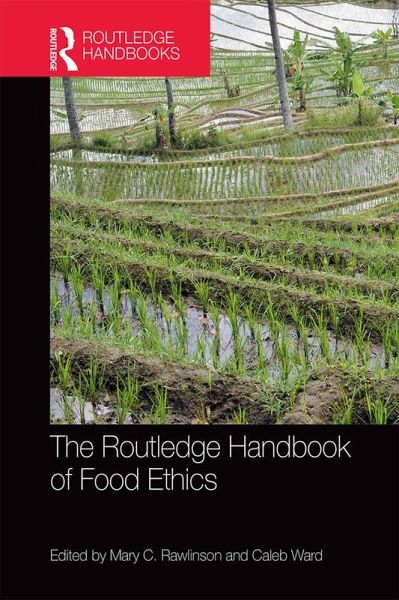
While the history of philosophy has traditionally given scant attention to food and the ethics of eating, in the last few decades the subject of food ethics has emerged as a major topic, encompassing a wide array of issues, including labor justice, public health, social inequity, animal rights and environmental ethics. This handbook provides a much needed philosophical analysis of the ethical implications of the need to eat and the role that food plays in social, cultural and political life. Unlike other books on the topic, this text integrates traditional approaches to the subject with cutting edge research in order to set a new agenda for philosophical discussions of food ethics.
The Routledge Handbook of Food Ethics is an outstanding reference source to the key topics, problems and debates in this exciting subject and is the first collection of its kind. Comprising over 35 chapters by a team of international contributors, the Handbook is divided into 7 parts:
Essential reading for students and researchers in food ethics, it is also an invaluable resource for those in related disciplines such as environmental ethics and bioethics.
The Routledge Handbook of Food Ethics is an outstanding reference source to the key topics, problems and debates in this exciting subject and is the first collection of its kind. Comprising over 35 chapters by a team of international contributors, the Handbook is divided into 7 parts:
- the phenomenology of food
- gender and food
- food and cultural diversity
- liberty, choice and food policy
- food and the environment
- farming and eating other animals
- food justice
Essential reading for students and researchers in food ethics, it is also an invaluable resource for those in related disciplines such as environmental ethics and bioethics.
Dieser Download kann aus rechtlichen Gründen nur mit Rechnungsadresse in A, B, BG, CY, CZ, D, DK, EW, E, FIN, F, GR, HR, H, IRL, I, LT, L, LR, M, NL, PL, P, R, S, SLO, SK ausgeliefert werden.
"The title "handbook" does not do justice to the fact that this collection of essays deepens current conversations on food ethics, surveying the literature as well as developing original arguments. Chapters not only effectively place popular food writing in conversation with contemporary food studies scholarship, but also draw explicit connections to historical philosophical work. It is an extremely useful resource for the classroom and an instructive guide to all those interested in the topic." Lisa Heldke, Gustavus Adolpho Collage, USA
"This Handbook is an exciting and important intervention to raise concern about the global ethics of food. For the first time, a wide range of perspectives are brought together to establish the importance of situating food in the context of ethics and justice. This is real-world philosophy at its finest" Sridhar Venkatapuram, King's College London, UK
"The ethics of food comprises a variety of issues including health, inequity, animalrights, justice issues, and environmental ethics, presented in this handbook. Combining traditional research with innovative perspectives, the reader sets a new agenda of discussions around the ethics of food. The comprehensive handbook is structured in seven sections comprising 35 chapters. The sections focus on the phenomenology of food; gender and food; food and cultural diversity; liberty, choice, and food policy; food and the environment; farming and the consumption of animals, as well as food justice. Several chapters investigate labelling, ethical consumerism, and policymaking."Journal of Consumer Policy, 02/2020
"This Handbook is an exciting and important intervention to raise concern about the global ethics of food. For the first time, a wide range of perspectives are brought together to establish the importance of situating food in the context of ethics and justice. This is real-world philosophy at its finest" Sridhar Venkatapuram, King's College London, UK
"The ethics of food comprises a variety of issues including health, inequity, animalrights, justice issues, and environmental ethics, presented in this handbook. Combining traditional research with innovative perspectives, the reader sets a new agenda of discussions around the ethics of food. The comprehensive handbook is structured in seven sections comprising 35 chapters. The sections focus on the phenomenology of food; gender and food; food and cultural diversity; liberty, choice, and food policy; food and the environment; farming and the consumption of animals, as well as food justice. Several chapters investigate labelling, ethical consumerism, and policymaking."Journal of Consumer Policy, 02/2020
"The Routledge Handbook of Food Ethics is an important contribution to food ethics and philosophy. The extensive collection of scholarly work provides readers with an extensive introduction to the field and insight into how food impacts the social, technological, and political sphere. I was impressed with how the collection includes a diverse array of voices, hones in on topics of particular importance to the public, and situates these discussions in the larger theoretical literature and public food movements. It is essential reading for researchers in food ethics and is also an invaluable resource for those in related disciplines such as environmental ethics and bioethics. It is also an invaluable resource for educators teaching classes on the subject." - Samantha Noll, Humana.Mente
"The title 'handbook' does not do justice to the fact that this collection of essays deepens current conversations on food ethics, surveying the literature as well as developing original arguments. Chapters not only effectively place popular food writing in conversation with contemporary food studies scholarship, but also draw explicit connections to historical philosophical work. It is an extremely useful resource for the classroom and an instructive guide to all those interested in the topic." Lisa Heldke, Gustavus Adolpho Collage, USA
"This Handbook is an exciting and important intervention to raise concern about the global ethics of food. For the first time, a wide range of perspectives are brought together to establish the importance of situating food in the context of ethics and justice. This is real-world philosophy at its finest." - Sridhar Venkatapuram, King's College London, UK
"The title 'handbook' does not do justice to the fact that this collection of essays deepens current conversations on food ethics, surveying the literature as well as developing original arguments. Chapters not only effectively place popular food writing in conversation with contemporary food studies scholarship, but also draw explicit connections to historical philosophical work. It is an extremely useful resource for the classroom and an instructive guide to all those interested in the topic." Lisa Heldke, Gustavus Adolpho Collage, USA
"This Handbook is an exciting and important intervention to raise concern about the global ethics of food. For the first time, a wide range of perspectives are brought together to establish the importance of situating food in the context of ethics and justice. This is real-world philosophy at its finest." - Sridhar Venkatapuram, King's College London, UK