47,95 €
47,95 €
inkl. MwSt.
Sofort per Download lieferbar

24 °P sammeln
47,95 €
Als Download kaufen
47,95 €
inkl. MwSt.
Sofort per Download lieferbar
24 °P sammeln
Jetzt verschenken
Alle Infos zum eBook verschenken
47,95 €
inkl. MwSt.
Sofort per Download lieferbar
Alle Infos zum eBook verschenken
24 °P sammeln

Andere Kunden interessierten sich auch für
") The Islamic Finance Industry (eBook, ePUB)39,95 €
The Islamic Finance Industry (eBook, ePUB)39,95 €") Islamic Economics, Growth and Development (eBook, ePUB)42,95 €
Islamic Economics, Growth and Development (eBook, ePUB)42,95 €") The Future of Islamic Banking and Finance in Indonesia (eBook, ePUB)39,95 €
The Future of Islamic Banking and Finance in Indonesia (eBook, ePUB)39,95 €") Higher Education Finance and Islamic Endowments (eBook, ePUB)42,95 €
Higher Education Finance and Islamic Endowments (eBook, ePUB)42,95 €") Islamic Management Practices in Financial Institutions (eBook, ePUB)41,95 €
Islamic Management Practices in Financial Institutions (eBook, ePUB)41,95 €") Shariah Governance in Islamic Banking Institutions (eBook, ePUB)39,95 €
Shariah Governance in Islamic Banking Institutions (eBook, ePUB)39,95 €") Islamic Sustainable Finance (eBook, ePUB)42,95 €
Islamic Sustainable Finance (eBook, ePUB)42,95 €

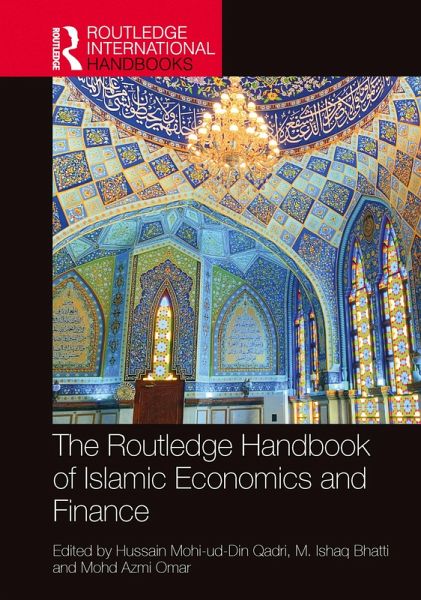
Islamic finance is one of the fastest-growing sectors of the finance industry due to a number of factors, including the technology boom, fintech, blockchain, and higher oil and commodity prices, but also, in particular, its demand by 1.5 billion Muslims around the globe. It enjoys sustainably higher positive returns compared to its conventional finance counterparts, specifically during financial crises. Moreover, it plays a major role in implementing the UN's Sustainable Development Goals due to its non-traditional source of long-term fund-financing that advances social, environmental, and economic goals. The Routledge Handbook of Islamic Economics and Finance offers a detailed introduction to the current scholarship in this ever-expanding and emerging field.
The book is divided into three parts, covering Islamic business, Islamic economics, and Islamic finance, respectively. Each chapter provides a balanced overview of current knowledge, identifying issues and discussing the relevant debates. The book seeks to explore the current developments and trends in Islamic economics, Islamic banking, and Islamic capital markets. It also covers the areas of Islamic social finance, impact investment and Islamic microfinance, SMEs, poverty alleviation, and financial inclusion. Additionally, it launches the debate on the emergence, progress, challenges, and future potential of Islamic fintech and the Islamic digital economy. Furthermore, it sheds light on subjects such as the marketing of Islamic financial services and products, the circular economy, and the blue economy from an Islamic financial perspective.
As well as surveying the current state of the art, the authors also reflect on where the research agenda is likely to advance in the future, making this the definitive resource for scholars and researchers in this area.
The book is divided into three parts, covering Islamic business, Islamic economics, and Islamic finance, respectively. Each chapter provides a balanced overview of current knowledge, identifying issues and discussing the relevant debates. The book seeks to explore the current developments and trends in Islamic economics, Islamic banking, and Islamic capital markets. It also covers the areas of Islamic social finance, impact investment and Islamic microfinance, SMEs, poverty alleviation, and financial inclusion. Additionally, it launches the debate on the emergence, progress, challenges, and future potential of Islamic fintech and the Islamic digital economy. Furthermore, it sheds light on subjects such as the marketing of Islamic financial services and products, the circular economy, and the blue economy from an Islamic financial perspective.
As well as surveying the current state of the art, the authors also reflect on where the research agenda is likely to advance in the future, making this the definitive resource for scholars and researchers in this area.
Dieser Download kann aus rechtlichen Gründen nur mit Rechnungsadresse in A, B, BG, CY, CZ, D, DK, EW, E, FIN, F, GR, HR, H, IRL, I, LT, L, LR, M, NL, PL, P, R, S, SLO, SK ausgeliefert werden.