43,95 €
inkl. MwSt.
Sofort per Download lieferbar
22 °P sammeln

Andere Kunden interessierten sich auch für
") The Routledge Handbook of Philosophy of Games (eBook, ePUB)43,95 €
The Routledge Handbook of Philosophy of Games (eBook, ePUB)43,95 €") The Virtue of Playfulness (eBook, PDF)21,95 €
The Virtue of Playfulness (eBook, PDF)21,95 €") Philosophy, Sport and the Pandemic (eBook, PDF)41,95 €
Philosophy, Sport and the Pandemic (eBook, PDF)41,95 €") Sport and Species (eBook, PDF)52,95 €
Sport and Species (eBook, PDF)52,95 €") The Ethics of Sports Fandom (eBook, PDF)38,95 €
The Ethics of Sports Fandom (eBook, PDF)38,95 €") The Ethics of Sports Technologies and Human Enhancement (eBook, PDF)276,95 €
The Ethics of Sports Technologies and Human Enhancement (eBook, PDF)276,95 €") Sports, Virtues and Vices (eBook, PDF)61,95 €
Sports, Virtues and Vices (eBook, PDF)61,95 €





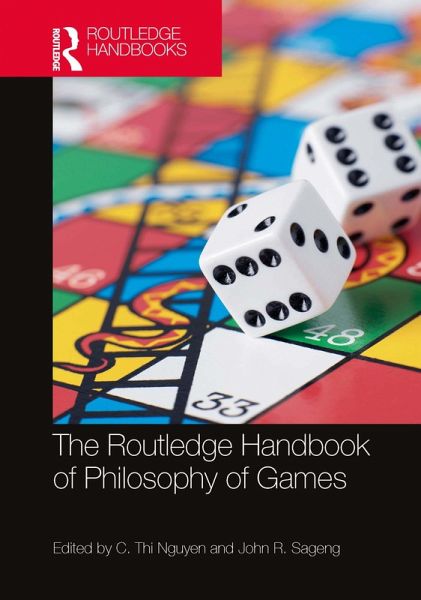
Playing games is a basic human activity, and games raise a great number of fascinating philosophical questions. What, exactly, are we doing when we play a game? What is the value of games for human life? What is the ontology of a game? And could games be, or someday become, a form of art?
Comprising twenty-seven chapters by an international team of contributors, The Routledge Handbook of Philosophy of Games is an outstanding reference source to the core concepts, problems and debates in this exciting subject, and is the first collection of its kind. Beginning with an Introduction by the editors, the Handbook is divided into five clear parts:
Within these sections key topics are examined, including sport and games; rules in games; cheating in games; simulation; narrative in games; space in videogames; the nature of play; the body and play; avatars; the aesthetics of gameplay; violence; immersion; representation in games; race and gender in games; and many more.
The Routledge Handbook of Philosophy of Games is essential reading for students and researchers working in philosophy of games, philosophy of sport, digital aesthetics and game studies.
Comprising twenty-seven chapters by an international team of contributors, The Routledge Handbook of Philosophy of Games is an outstanding reference source to the core concepts, problems and debates in this exciting subject, and is the first collection of its kind. Beginning with an Introduction by the editors, the Handbook is divided into five clear parts:
- Introduction and historical foundations
- Game ontology
- Play and players
- Aesthetics of games
- Ethics and values of games
Within these sections key topics are examined, including sport and games; rules in games; cheating in games; simulation; narrative in games; space in videogames; the nature of play; the body and play; avatars; the aesthetics of gameplay; violence; immersion; representation in games; race and gender in games; and many more.
The Routledge Handbook of Philosophy of Games is essential reading for students and researchers working in philosophy of games, philosophy of sport, digital aesthetics and game studies.
Dieser Download kann aus rechtlichen Gründen nur mit Rechnungsadresse in A, B, BG, CY, CZ, D, DK, EW, E, FIN, F, GR, HR, H, IRL, I, LT, L, LR, M, NL, PL, P, R, S, SLO, SK ausgeliefert werden.