52,95 €
52,95 €
inkl. MwSt.
Sofort per Download lieferbar

26 °P sammeln
52,95 €
Als Download kaufen
52,95 €
inkl. MwSt.
Sofort per Download lieferbar
26 °P sammeln
Jetzt verschenken
Alle Infos zum eBook verschenken
52,95 €
inkl. MwSt.
Sofort per Download lieferbar
Alle Infos zum eBook verschenken
26 °P sammeln

Andere Kunden interessierten sich auch für
") The Philosophy of Well-Being (eBook, ePUB)38,95 €
The Philosophy of Well-Being (eBook, ePUB)38,95 €") The Philosophy of Well-Being (eBook, PDF)38,95 €
The Philosophy of Well-Being (eBook, PDF)38,95 €") The Philosophy of Pleasure (eBook, ePUB)35,95 €
The Philosophy of Pleasure (eBook, ePUB)35,95 €") Welfare, Meaning, and Worth (eBook, ePUB)42,95 €
Welfare, Meaning, and Worth (eBook, ePUB)42,95 €") Virtue Ethics for the Real World (eBook, ePUB)39,95 €
Virtue Ethics for the Real World (eBook, ePUB)39,95 €") The Routledge Handbook of Philosophy of Friendship (eBook, ePUB)43,95 €
The Routledge Handbook of Philosophy of Friendship (eBook, ePUB)43,95 €") The Routledge Handbook of Epistemic Injustice (eBook, ePUB)48,95 €
The Routledge Handbook of Epistemic Injustice (eBook, ePUB)48,95 €


The concept of well-being is one of the oldest and most important topics in philosophy and ethics, going back to ancient Greek philosophy. Following the boom in happiness studies in the last few years it has moved to centre stage, grabbing media headlines and the attention of scientists, psychologists and economists. Yet little is actually known about well-being and it is an idea that is often poorly articulated.
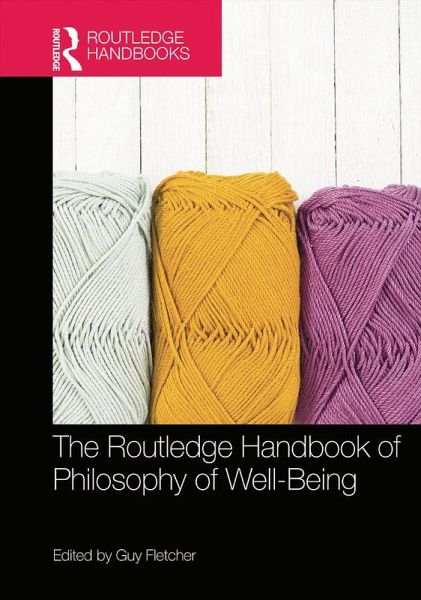
The Routledge Handbook of Philosophy of Well-Being provides a comprehensive, outstanding guide and reference source to the key topics and debates in this exciting subject.
Comprising over 40 chapters by a team of international contributors, the Handbook is divided into six parts:
Essential reading for students and researchers in ethics and political philosophy, it is also an invaluable resource for those in related disciplines such as psychology, politics and sociology.
The Routledge Handbook of Philosophy of Well-Being provides a comprehensive, outstanding guide and reference source to the key topics and debates in this exciting subject.
Comprising over 40 chapters by a team of international contributors, the Handbook is divided into six parts:
- well-being in the history of philosophy
- current theories of well-being, including hedonism and perfectionism
- examples of well-being and its opposites, including friendship and virtue and pain and death
- theoretical issues, such as well-being and value, harm, identity and well-being and children
- well-being in moral and political philosophy
- well-being and related subjects, including law, economics and medicine.
Essential reading for students and researchers in ethics and political philosophy, it is also an invaluable resource for those in related disciplines such as psychology, politics and sociology.
Dieser Download kann aus rechtlichen Gründen nur mit Rechnungsadresse in A, B, BG, CY, CZ, D, DK, EW, E, FIN, F, GR, HR, H, IRL, I, LT, L, LR, M, NL, PL, P, R, S, SLO, SK ausgeliefert werden.
"Without rival or even comparison in the literature, this is the definitive collection of contemporary philosophical perspectives on well-being. It is of use to students and scholars not merely of value theory, but also psychology, economics, politics, and medicine. These and still more fields have been made better off by the expert contributions to this Handbook." - Thaddeus Metz, University of Johannesburg, South Africa
"The question of what makes our lives good or bad for us is obviously of huge importance. Philosophers have much to contribute to answering that question, as this volume shows. The authors are excellent philosophers, and many have made significant contributions to the literature on well-being. This book will become the starting-point for future philosophical research on well-being." - Roger Crisp, University of Oxford, UK
"The question of what makes our lives good or bad for us is obviously of huge importance. Philosophers have much to contribute to answering that question, as this volume shows. The authors are excellent philosophers, and many have made significant contributions to the literature on well-being. This book will become the starting-point for future philosophical research on well-being." - Roger Crisp, University of Oxford, UK