47,95 €
47,95 €
inkl. MwSt.
Sofort per Download lieferbar

24 °P sammeln
47,95 €
Als Download kaufen
47,95 €
inkl. MwSt.
Sofort per Download lieferbar
24 °P sammeln
Jetzt verschenken
Alle Infos zum eBook verschenken
47,95 €
inkl. MwSt.
Sofort per Download lieferbar
Alle Infos zum eBook verschenken
24 °P sammeln

Andere Kunden interessierten sich auch für
") The Routledge Handbook of Religion, Politics and Ideology (eBook, ePUB)43,95 €
The Routledge Handbook of Religion, Politics and Ideology (eBook, ePUB)43,95 €") Routledge Handbook of Religion and Politics (eBook, ePUB)44,95 €
Routledge Handbook of Religion and Politics (eBook, ePUB)44,95 €") The Routledge Handbook of Religious Literacy, Pluralism, and Global Engagement (eBook, ePUB)0,00 €
The Routledge Handbook of Religious Literacy, Pluralism, and Global Engagement (eBook, ePUB)0,00 €") The Routledge Handbook of Contemporary Readings on Tribe and Religions in India (eBook, ePUB)47,95 €
The Routledge Handbook of Contemporary Readings on Tribe and Religions in India (eBook, ePUB)47,95 €") The Routledge Handbook of Religion and Nationalism (eBook, ePUB)47,95 €
The Routledge Handbook of Religion and Nationalism (eBook, ePUB)47,95 €") Religion and Politics in America (eBook, ePUB)39,95 €
Religion and Politics in America (eBook, ePUB)39,95 €") The Routledge Handbook of Religion and Secrecy (eBook, ePUB)43,95 €
The Routledge Handbook of Religion and Secrecy (eBook, ePUB)43,95 €


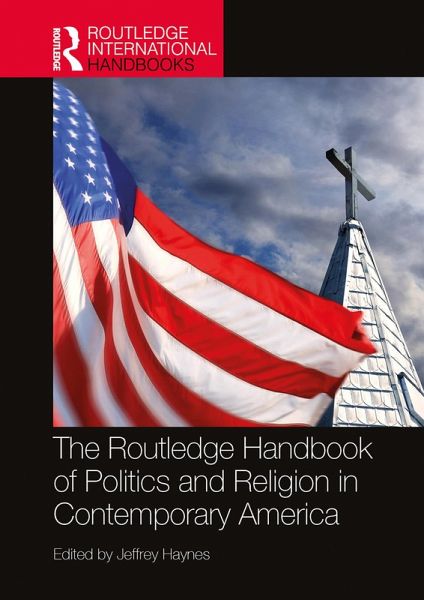
The Routledge Handbook of Politics and Religion in Contemporary America is a comprehensive reference source to this significant, controversial and consistent topic in America's politics. It examines the copious research conducted to date, evaluates what we know, identifies what is less clear because of differing research findings and pursues important but under-researched questions.
Comprising 34 chapters by a team of international contributors, the Handbook is divided into four parts: History and context; Theoretical debates and methodological perspectives; Actors, policies and institutions; and Contemporary debates and controversies. The Handbook addresses three key questions: (1) How is religion politically important in the USA? (2) Why does religion retain political and social prominence in the USA? and (3) Is the USA secularising? If so, what does it mean for the relationship between religion and politics? Chapters explore central issues, debates and problems within politics and religion in the USA, including citizenship, secularism, the law, religious diversity, atheism, political economy, religious minorities, discrimination, the US presidency, nationalism, public opinion, gender and sexuality, foreign policy, Congress, religious freedom, party politics, human rights, public institutions, civil society, populism, feminism, LGBTQ+ rights, political violence, hate speech, inequality and immigration.
This Handbook will be essential reading for students and researchers of politics and religious studies. Professionals (policy-oriented, government, corporations) will also find the Handbook useful, especially for research purposes.
Comprising 34 chapters by a team of international contributors, the Handbook is divided into four parts: History and context; Theoretical debates and methodological perspectives; Actors, policies and institutions; and Contemporary debates and controversies. The Handbook addresses three key questions: (1) How is religion politically important in the USA? (2) Why does religion retain political and social prominence in the USA? and (3) Is the USA secularising? If so, what does it mean for the relationship between religion and politics? Chapters explore central issues, debates and problems within politics and religion in the USA, including citizenship, secularism, the law, religious diversity, atheism, political economy, religious minorities, discrimination, the US presidency, nationalism, public opinion, gender and sexuality, foreign policy, Congress, religious freedom, party politics, human rights, public institutions, civil society, populism, feminism, LGBTQ+ rights, political violence, hate speech, inequality and immigration.
This Handbook will be essential reading for students and researchers of politics and religious studies. Professionals (policy-oriented, government, corporations) will also find the Handbook useful, especially for research purposes.
Dieser Download kann aus rechtlichen Gründen nur mit Rechnungsadresse in A, B, BG, CY, CZ, D, DK, EW, E, FIN, F, GR, HR, H, IRL, I, LT, L, LR, M, NL, PL, P, R, S, SLO, SK ausgeliefert werden.