2,13 €
2,13 €
inkl. MwSt.
Sofort per Download lieferbar

0 °P sammeln
2,13 €
Als Download kaufen
2,13 €
inkl. MwSt.
Sofort per Download lieferbar
0 °P sammeln
Jetzt verschenken
Alle Infos zum eBook verschenken
2,13 €
inkl. MwSt.
Sofort per Download lieferbar
Alle Infos zum eBook verschenken
0 °P sammeln

Andere Kunden interessierten sich auch für
") The Essential Writings of Jean-Jacques Rousseau (eBook, ePUB)10,99 €
The Essential Writings of Jean-Jacques Rousseau (eBook, ePUB)10,99 €") A Slow Death or, The Silence of the Old World (eBook, ePUB)7,99 €
A Slow Death or, The Silence of the Old World (eBook, ePUB)7,99 €") The Expanding Blaze (eBook, ePUB)17,95 €
The Expanding Blaze (eBook, ePUB)17,95 €") Reflections on the Revolution in France (eBook, ePUB)1,97 €
Reflections on the Revolution in France (eBook, ePUB)1,97 €") The Freedom to Be Free (eBook, ePUB)5,49 €
The Freedom to Be Free (eBook, ePUB)5,49 €") Du contrat social ou Principes du droit politique (eBook, ePUB)3,99 €
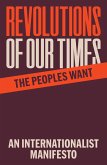
Du contrat social ou Principes du droit politique (eBook, ePUB)3,99 €") Revolutions of Our Times (eBook, ePUB)5,99 €
Revolutions of Our Times (eBook, ePUB)5,99 €



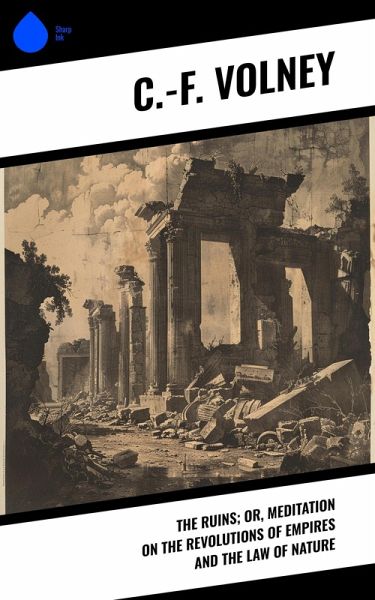
C.-F. Volney's "The Ruins; Or, Meditation on the Revolutions of Empires and the Law of Nature" is a profound philosophical treatise that marries historical reflection with meditative inquiry. Written in the aftermath of the French Revolution, this work explores the cyclical nature of civilizations, arguing that empires rise and fall in accordance with universal natural laws. The literary style is imbued with a poetic yet incisive tone, drawing on a wealth of historical examples to illustrate the transience of human achievements. Volney's rich use of imagery and philosophical discourse invites readers to reflect on mortality and the impermanence of societal constructs, making it a significant piece within Enlightenment literature. Volney, a leading figure of the Enlightenment, was deeply influenced by the revolutionary fervor of his time and his extensive travels throughout the Ottoman Empire, where he observed the consequences of political instability. His background as a historian and a politician shaped his perspective on human nature and governance, enabling him to contemplate the broader implications of societal collapse. This blend of personal and societal reflection is woven throughout "The Ruins," lending it both intellectual depth and urgent relevance. Highly recommended for historians, philosophers, and anyone intrigued by the interplay of civilization and nature, Volney's text remains an essential read for understanding the dynamics of empires and the philosophical inquiries they provoke. This work serves not only as a historical account but also as a timeless reminder of the fragility of human endeavors.
Dieser Download kann aus rechtlichen Gründen nur mit Rechnungsadresse in A, B, BG, CY, CZ, D, DK, EW, E, FIN, F, GR, HR, H, IRL, I, LT, L, LR, M, NL, PL, P, R, S, SLO, SK ausgeliefert werden.