4,49 €
4,49 €
inkl. MwSt.
Erscheint vor. 12.01.26

0 °P sammeln
4,49 €
Als Download kaufen
4,49 €
inkl. MwSt.
Erscheint vor. 12.01.26
0 °P sammeln
Jetzt verschenken
Alle Infos zum eBook verschenken
4,49 €
inkl. MwSt.
Erscheint vor. 12.01.26
Alle Infos zum eBook verschenken
0 °P sammeln

Andere Kunden interessierten sich auch für
 (eBook, ePUB)") Salt Wraith of Cullercoats (The Blackthorn Chapbooks, #1) (eBook, ePUB)2,99 €
Salt Wraith of Cullercoats (The Blackthorn Chapbooks, #1) (eBook, ePUB)2,99 €") Elizabeth & The Salt of Earth (eBook, ePUB)10,49 €
Elizabeth & The Salt of Earth (eBook, ePUB)10,49 €") The Salt Line (eBook, ePUB)5,99 €
The Salt Line (eBook, ePUB)5,99 €") A Symphony of Salt and Smoke (eBook, ePUB)9,68 €
A Symphony of Salt and Smoke (eBook, ePUB)9,68 €") The Salt Oath (eBook, ePUB)5,49 €
The Salt Oath (eBook, ePUB)5,49 €") The Salt Roads of Tamara (eBook, ePUB)4,75 €
The Salt Roads of Tamara (eBook, ePUB)4,75 €") The Salt God's Daughter (eBook, ePUB)8,95 €
The Salt God's Daughter (eBook, ePUB)8,95 €






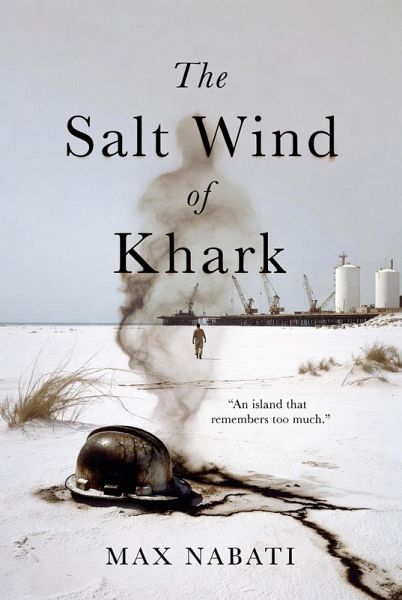
In the sun-scorched expanse of the Persian Gulf lies Khark Island, a remote outpost of limestone and salt flats where the relentless hum of oil pumps echoes like a heartbeat that refuses to fade. Max Nabati's "The Salt Wind of Khark" weaves a haunting narrative inspired by the island's history as Iran's vital crude oil terminal, blending the stark realities of industrial isolation with whispers of the ethereal. At its core is Reza, a young man drawn from the arid inland dunes to this windswept rock on a deeply personal quest prompted by his mother's final words. What begins as a search for lost family connections unfolds against a backdrop of towering storage tanks, rusting pipelines, and the ceaseless wind carrying scents of diesel, tar, and an ancient sweetness buried in the earth.
Nabati, drawing from his own visits to the island, paints a vivid portrait of a place where the boundaries between the living and the remembered blur. The village clings to the shore like an afterthought, its coral-stone houses and silent inhabitants guarding stories etched into the very ground. Cranes loom over jetties awaiting supertankers, while the air thickens with the residue of labor-men who toiled in the heat, their voices lingering in cracked walls and abandoned helmets. The novel explores themes of memory, inheritance, and the inexorable pull of place, questioning how landscapes shaped by human ambition can, in turn, reshape those who tread upon them. Khark is no mere setting; it's a character alive with the pulse of forgotten lives, where fresh water hides in saline rock and echoes of the past seep through like underground rivers.
Through lyrical prose that evokes the island's sensory assault-the blinding white flats, the low thunder of machinery, the salt-dusted faces of its people-Nabati invites readers into a world where history and myth intertwine. The narrative draws on the island's geological secrets, as explained by locals and experts, to mirror the hidden layers of human experience. It's a tale of arrival and unrest, where newcomers test the ground beneath their feet, only to find it testing them in return. The author's acknowledgments pay tribute to the real voices that informed the fiction: fishermen sharing silences, shift supervisors offering cryptic advice, and geologists revealing how memory mirrors the strata of stone.
This is not a straightforward ghost story, nor a dry historical account, but a meditation on what endures when progress carves into the earth. Nabati's firsthand encounters-the feel of ruins under his palms, the second voice behind sentences tasting of salt and diesel-infuse the book with authenticity. Readers will feel the weight of the heat, the isolation of the sea horizon, and the subtle unease of a land that remembers too much. Perfect for fans of atmospheric fiction like that of Jeff VanderMeer or Colson Whitehead, "The Salt Wind of Khark" captures the eerie beauty of a forgotten corner of the world, reminding us that some places hold onto their inhabitants long after they've gone. As the wind carries fragments of old instructions and unfinished conversations, the island beckons, promising answers that shift like tides.
Nabati, drawing from his own visits to the island, paints a vivid portrait of a place where the boundaries between the living and the remembered blur. The village clings to the shore like an afterthought, its coral-stone houses and silent inhabitants guarding stories etched into the very ground. Cranes loom over jetties awaiting supertankers, while the air thickens with the residue of labor-men who toiled in the heat, their voices lingering in cracked walls and abandoned helmets. The novel explores themes of memory, inheritance, and the inexorable pull of place, questioning how landscapes shaped by human ambition can, in turn, reshape those who tread upon them. Khark is no mere setting; it's a character alive with the pulse of forgotten lives, where fresh water hides in saline rock and echoes of the past seep through like underground rivers.
Through lyrical prose that evokes the island's sensory assault-the blinding white flats, the low thunder of machinery, the salt-dusted faces of its people-Nabati invites readers into a world where history and myth intertwine. The narrative draws on the island's geological secrets, as explained by locals and experts, to mirror the hidden layers of human experience. It's a tale of arrival and unrest, where newcomers test the ground beneath their feet, only to find it testing them in return. The author's acknowledgments pay tribute to the real voices that informed the fiction: fishermen sharing silences, shift supervisors offering cryptic advice, and geologists revealing how memory mirrors the strata of stone.
This is not a straightforward ghost story, nor a dry historical account, but a meditation on what endures when progress carves into the earth. Nabati's firsthand encounters-the feel of ruins under his palms, the second voice behind sentences tasting of salt and diesel-infuse the book with authenticity. Readers will feel the weight of the heat, the isolation of the sea horizon, and the subtle unease of a land that remembers too much. Perfect for fans of atmospheric fiction like that of Jeff VanderMeer or Colson Whitehead, "The Salt Wind of Khark" captures the eerie beauty of a forgotten corner of the world, reminding us that some places hold onto their inhabitants long after they've gone. As the wind carries fragments of old instructions and unfinished conversations, the island beckons, promising answers that shift like tides.
Dieser Download kann aus rechtlichen Gründen nur mit Rechnungsadresse in A, B, CY, CZ, D, DK, EW, E, FIN, F, GR, H, IRL, I, LT, L, LR, M, NL, PL, P, R, S, SLO, SK ausgeliefert werden.