41,95 €
inkl. MwSt.
Sofort per Download lieferbar
21 °P sammeln

Andere Kunden interessierten sich auch für
") The Sarvodaya Movement (eBook, ePUB)41,95 €
The Sarvodaya Movement (eBook, ePUB)41,95 €") Tamil Nationalism in Sri Lanka (eBook, PDF)39,95 €
Tamil Nationalism in Sri Lanka (eBook, PDF)39,95 €") India's Sri Lanka Policy (eBook, PDF)39,95 €
India's Sri Lanka Policy (eBook, PDF)39,95 €") International Society and the De Facto State (eBook, PDF)34,95 €
International Society and the De Facto State (eBook, PDF)34,95 €") Civil Society Organizations Against Terrorism (eBook, PDF)41,95 €
Civil Society Organizations Against Terrorism (eBook, PDF)41,95 €") International Legitimacy and the Domestic Use of Force (eBook, PDF)41,95 €
International Legitimacy and the Domestic Use of Force (eBook, PDF)41,95 €") Foreign Aid and Development in South Korea and Africa (eBook, PDF)41,95 €
Foreign Aid and Development in South Korea and Africa (eBook, PDF)41,95 €


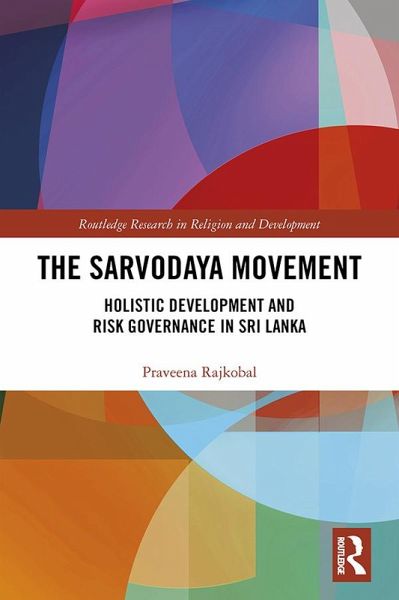
This book provides an important case study of how local cultures, religions and spiritualities can enhance development activities, and provide helpful frameworks for contemporary societies facing the pressures of neo-liberalism. It specifically traces how the influential Sri Lankan Sarvodaya Movement has deployed concepts of spirituality-based holistic development to help local communities with post-tsunami reconstruction and redevelopment.
Throughout, the author provides a Three-Sphere conceptualisation of holistic sustainable development, focused on Culture, Economics and Power, slightly revising Sarvodaya's Three-Sphere model comprising Spirituality, Economics and Power. The author contends that the success of holistic development, including risk governance, is largely contingent on an awareness of the interdependency of these three spheres, and establishing equitable partnerships between communities, NGOs, INGOs, States and the private sector. Overall, this book argues that religion, spirituality and non-religious worldviews play an important role among other resources concerned with how to survive the pressures of neo-liberalism and environmental risks and crises.
The Sarvodaya Movement, which draws on Buddhist concepts of spirituality, is widely acknowledged as an important example of spirituality and community-driven development, and as such, this book will be of interest to scholars of Development and Humanitarian Studies, Religious Studies and South Asian Studies.
Throughout, the author provides a Three-Sphere conceptualisation of holistic sustainable development, focused on Culture, Economics and Power, slightly revising Sarvodaya's Three-Sphere model comprising Spirituality, Economics and Power. The author contends that the success of holistic development, including risk governance, is largely contingent on an awareness of the interdependency of these three spheres, and establishing equitable partnerships between communities, NGOs, INGOs, States and the private sector. Overall, this book argues that religion, spirituality and non-religious worldviews play an important role among other resources concerned with how to survive the pressures of neo-liberalism and environmental risks and crises.
The Sarvodaya Movement, which draws on Buddhist concepts of spirituality, is widely acknowledged as an important example of spirituality and community-driven development, and as such, this book will be of interest to scholars of Development and Humanitarian Studies, Religious Studies and South Asian Studies.
Dieser Download kann aus rechtlichen Gründen nur mit Rechnungsadresse in A, B, BG, CY, CZ, D, DK, EW, E, FIN, F, GR, HR, H, IRL, I, LT, L, LR, M, NL, PL, P, R, S, SLO, SK ausgeliefert werden.
"Rajkobal's The Sarvodaya Movement, well grounded in fieldwork conducted in three Tsunami villages, surpasses previous scholarship. Its holistic interpretation of the most prominent Buddhist NGO in Sri Lanka is very convincing. The sound interpretation produced in Rajkobal's work underlines philosophy that sustains its sustainable thinking. A useful work for everyone in development studies." -- Mahinda Deegalle, Professor in Study of Religions, Philosophies and Ethics, Bath Spa University, UK
"Rajkobal's The Sarvodaya Movement, well grounded in fieldwork conducted in three Tsunami villages, surpasses previous scholarship. Its holistic interpretation of the most prominent Buddhist NGO in Sri Lanka is very convincing. The sound interpretation produced in Rajkobal's work underlines philosophy that sustains its sustainable thinking. A useful work for everyone in development studies." -- Mahinda Deegalle, Professor in Study of Religions, Philosophies and Ethics, Bath Spa University, UK