13,95 €
13,95 €
inkl. MwSt.
Sofort per Download lieferbar

7 °P sammeln
13,95 €
Als Download kaufen
13,95 €
inkl. MwSt.
Sofort per Download lieferbar
7 °P sammeln
Jetzt verschenken
Alle Infos zum eBook verschenken
13,95 €
inkl. MwSt.
Sofort per Download lieferbar
Alle Infos zum eBook verschenken
7 °P sammeln

Andere Kunden interessierten sich auch für
") Shakespeare and his critic Brandes (eBook, ePUB)0,99 €
Shakespeare and his critic Brandes (eBook, ePUB)0,99 €") Spectacular Science, Technology and Superstition in the Age of Shakespeare (eBook, ePUB)22,95 €
Spectacular Science, Technology and Superstition in the Age of Shakespeare (eBook, ePUB)22,95 €") Magnificent Rebels (eBook, ePUB)4,49 €
Magnificent Rebels (eBook, ePUB)4,49 €") Definition of Shakespeare (eBook, ePUB)2,99 €
Definition of Shakespeare (eBook, ePUB)2,99 €") The Hot Hand (eBook, ePUB)10,59 €
The Hot Hand (eBook, ePUB)10,59 €") Shakespeare - Racine - and Ibsenin their final stages (eBook, ePUB)6,99 €
Shakespeare - Racine - and Ibsenin their final stages (eBook, ePUB)6,99 €") Parisian Shakespeare Library (eBook, ePUB)12,99 €
Parisian Shakespeare Library (eBook, ePUB)12,99 €


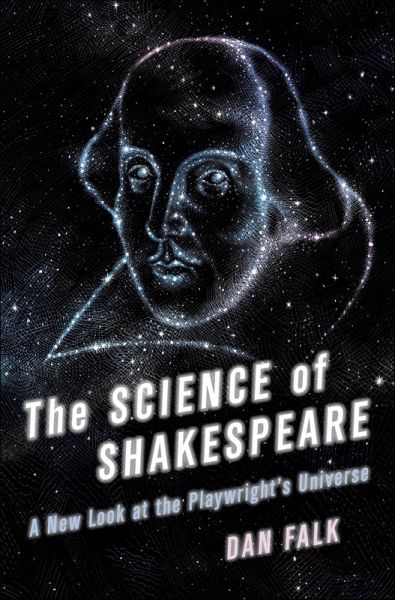
William Shakespeare lived at a remarkable time-a period we now recognize as the first phase of the Scientific Revolution. New ideas were transforming Western thought, the medieval was giving way to the modern, and the work of a few key figures hinted at the brave new world to come: the methodical and rational Galileo, the skeptical Montaigne, and-as Falk convincingly argues-Shakespeare, who observed human nature just as intently as the astronomers who studied the night sky. In The Science of Shakespeare, we meet a colorful cast of Renaissance thinkers, including Thomas Digges, who published the first English account of the "new astronomy" and lived in the same neighborhood as Shakespeare; Thomas Harriot-"England's Galileo"-who aimed a telescope at the night sky months ahead of his Italian counterpart; and Danish astronomer Tycho Brahe, whose observatory-castle stood within sight of Elsinore, chosen by Shakespeare as the setting for Hamlet-and whose family crest happened to include the names "Rosencrans" and "Guildensteren." And then there's Galileo himself: As Falk shows, his telescopic observations may have influenced one of Shakespeare's final works. Dan Falk's The Science of Shakespeare explores the connections between the famous playwright and the beginnings of the Scientific Revolution-and how, together, they changed the world forever.
Dieser Download kann aus rechtlichen Gründen nur mit Rechnungsadresse in A, B, BG, CZ, D, DK, EW, E, FIN, F, GR, HR, H, I, LT, L, LR, NL, PL, P, R, S, SLO, SK ausgeliefert werden.