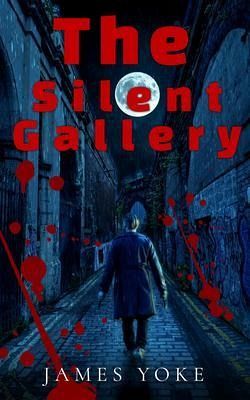
3,99 €
inkl. MwSt.
Sofort per Download lieferbar
2 °P sammeln

Andere Kunden interessierten sich auch für
") The Four Just Men (eBook, ePUB)6,99 €
The Four Just Men (eBook, ePUB)6,99 €") The Island (eBook, ePUB)8,99 €
The Island (eBook, ePUB)8,99 €") The Gallery At Bristol Pines (eBook, ePUB)1,99 €
The Gallery At Bristol Pines (eBook, ePUB)1,99 €") The Blackheart Pact (eBook, ePUB)3,49 €
The Blackheart Pact (eBook, ePUB)3,49 € (eBook, ePUB)") The Gallery (A Contemporary Reverse Harem Romance) (eBook, ePUB)4,49 €
The Gallery (A Contemporary Reverse Harem Romance) (eBook, ePUB)4,49 €") The Whispering Gallery (eBook, ePUB)5,49 €
The Whispering Gallery (eBook, ePUB)5,49 €") How Fear Departed the Long Gallery (eBook, ePUB)0,99 €
How Fear Departed the Long Gallery (eBook, ePUB)0,99 €




Victor Ashford, the most powerful-and most feared-figure in contemporary art, lies dead on the marble floor of his own gallery, murdered on the eve of his final, career-defining exhibition. Detective Sarah Chen arrives at the Ashford Gallery to find not just a crime scene, but a puzzle box: a brutally orchestrated murder surrounded by meticulously curated artwork, by careful arrangement and deliberate symbolism. The crime is as refined as it is violent, as controlled as it is personal.
For four decades, Victor Ashford wielded absolute authority over the art world. His approval launched artists to international prominence; his dismissal consigned promising careers to obscurity. He was a gatekeeper, a tastemaker, a man who understood that in the realm of high art, perception was reality-and his perception was law. But this immense power came at a cost measured in human suffering: destroyed careers, broken dreams, artists whose potential was never realized because Victor Ashford decided their work was insufficient.
Now, someone has decided that Victor Ashford himself is insufficient. And they have staged his death like a final curatorial statement.
With forensic art historian Dr. Eleanor Hartwell, Detective Chen begins to decode the exhibition itself-"Revelations: The Hidden Language of Art." She discovers that the paintings and sculptures are not randomly arranged but deliberately positioned, creating a visual narrative that traces a journey from aspiration through betrayal to ultimate reckoning. Ashford's own curatorial notes form a secondary story, words that seem innocuous until read in sequence, revealing patterns that suggest confession, accusation, and hidden meaning.
The investigation uncovers a landscape of resentment. Thomas Brennan, an artist whose career Ashford destroyed with a single scathing critique, emerges as a central figure-a man who has spent years in artistic exile, his promise unfulfilled, his potential unrealized. Elena Rossini, a young artist whom Ashford was in the process of controlling and exploiting, created the exhibition's centerpiece: "The Architect's Shadow," a monumental painting containing hidden layers of meaning visible only under certain wavelengths of light. This painting is not simply displayed above where Ashford's body was found; it is evidence, testimony, confession embedded in the official narrative of the show.
As Chen and Eleanor piece together the evidence, they discover that Ashford's death was not a crime of sudden passion but a carefully orchestrated plan involving multiple individuals, each motivated by years of accumulated trauma and resentment. Thomas Brennan, driven by decades of rage, orchestrated the conspiracy. Elena Rossini positioned herself as both participant and artistic witness. And Monica Brennan, Thomas's sister and a gallery employee who had witnessed countless instances of Ashford's casual cruelty, delivered the fatal blow-a swift, decisive strike that was both murder and execution.
But identifying the killer does not solve the moral complexity of the crime. Victor Ashford was undeniably a man who abused his power, who exploited others, who destroyed lives through the careless exercise of his authority. His death, viewed through one lens, is justice-a reckoning with someone who operated largely without consequences. Yet through another lens, it is premeditated murder, carried out by individuals who decided they had the right and authority to judge and execute that judgment.
For four decades, Victor Ashford wielded absolute authority over the art world. His approval launched artists to international prominence; his dismissal consigned promising careers to obscurity. He was a gatekeeper, a tastemaker, a man who understood that in the realm of high art, perception was reality-and his perception was law. But this immense power came at a cost measured in human suffering: destroyed careers, broken dreams, artists whose potential was never realized because Victor Ashford decided their work was insufficient.
Now, someone has decided that Victor Ashford himself is insufficient. And they have staged his death like a final curatorial statement.
With forensic art historian Dr. Eleanor Hartwell, Detective Chen begins to decode the exhibition itself-"Revelations: The Hidden Language of Art." She discovers that the paintings and sculptures are not randomly arranged but deliberately positioned, creating a visual narrative that traces a journey from aspiration through betrayal to ultimate reckoning. Ashford's own curatorial notes form a secondary story, words that seem innocuous until read in sequence, revealing patterns that suggest confession, accusation, and hidden meaning.
The investigation uncovers a landscape of resentment. Thomas Brennan, an artist whose career Ashford destroyed with a single scathing critique, emerges as a central figure-a man who has spent years in artistic exile, his promise unfulfilled, his potential unrealized. Elena Rossini, a young artist whom Ashford was in the process of controlling and exploiting, created the exhibition's centerpiece: "The Architect's Shadow," a monumental painting containing hidden layers of meaning visible only under certain wavelengths of light. This painting is not simply displayed above where Ashford's body was found; it is evidence, testimony, confession embedded in the official narrative of the show.
As Chen and Eleanor piece together the evidence, they discover that Ashford's death was not a crime of sudden passion but a carefully orchestrated plan involving multiple individuals, each motivated by years of accumulated trauma and resentment. Thomas Brennan, driven by decades of rage, orchestrated the conspiracy. Elena Rossini positioned herself as both participant and artistic witness. And Monica Brennan, Thomas's sister and a gallery employee who had witnessed countless instances of Ashford's casual cruelty, delivered the fatal blow-a swift, decisive strike that was both murder and execution.
But identifying the killer does not solve the moral complexity of the crime. Victor Ashford was undeniably a man who abused his power, who exploited others, who destroyed lives through the careless exercise of his authority. His death, viewed through one lens, is justice-a reckoning with someone who operated largely without consequences. Yet through another lens, it is premeditated murder, carried out by individuals who decided they had the right and authority to judge and execute that judgment.
Dieser Download kann aus rechtlichen Gründen nur mit Rechnungsadresse in A, D ausgeliefert werden.