22,95 €
22,95 €
inkl. MwSt.
Sofort per Download lieferbar

11 °P sammeln
22,95 €
Als Download kaufen
22,95 €
inkl. MwSt.
Sofort per Download lieferbar
11 °P sammeln
Jetzt verschenken
Alle Infos zum eBook verschenken
22,95 €
inkl. MwSt.
Sofort per Download lieferbar
Alle Infos zum eBook verschenken
11 °P sammeln

Andere Kunden interessierten sich auch für
") The South for New Southerners (eBook, ePUB)15,95 €
The South for New Southerners (eBook, ePUB)15,95 €") From Vice to Nice (eBook, ePUB)18,95 €
From Vice to Nice (eBook, ePUB)18,95 €") The Pig and the Skyscraper (eBook, ePUB)19,95 €
The Pig and the Skyscraper (eBook, ePUB)19,95 €") Prison Capital (eBook, ePUB)17,95 €
Prison Capital (eBook, ePUB)17,95 €") Murder at the Sleepy Lagoon (eBook, ePUB)15,95 €
Murder at the Sleepy Lagoon (eBook, ePUB)15,95 €") Otto Wood, the Bandit (eBook, ePUB)10,95 €
Otto Wood, the Bandit (eBook, ePUB)10,95 €") Crossing Broadway (eBook, ePUB)6,99 €
Crossing Broadway (eBook, ePUB)6,99 €






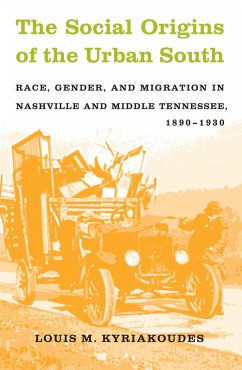
In the late nineteenth and early twentieth centuries, millions of black and white southerners left farms and rural towns to try their fate in the region’s cities. This transition brought about significant economic, social, and cultural changes in both urban centers and the countryside. Focusing on Nashville and its Middle Tennessee hinterland, Louis Kyriakoudes explores the impetus for this migration and illuminates its effects on regional development. Kyriakoudes argues that increased rural-to-urban migration in the late nineteenth century grew out of older seasonal and circular migration patterns long employed by southern farm families. These mobility patterns grew more urban-oriented and more permanent as rural blacks and whites turned increasingly to urban migration in order to cope with rapid economic and social change. The urban economy was particularly welcoming to women, offering freedom from the male authority that dominated rural life. African Americans did not find the same freedoms, however, as whites found ways to harness the forces of modernization to deny them access to economic and social opportunity. By linking urbanization, economic and social change, and popular cultural institutions, Kyriakoudes lends insight into the development of an urban, white, working-class identity that reinforced racial divisions and laid the demographic and social foundations for today’s modern, urban South.
Dieser Download kann aus rechtlichen Gründen nur mit Rechnungsadresse in A, D ausgeliefert werden.