1,99 €
1,99 €
inkl. MwSt.
Sofort per Download lieferbar

0 °P sammeln
1,99 €
Als Download kaufen
1,99 €
inkl. MwSt.
Sofort per Download lieferbar
0 °P sammeln
Jetzt verschenken
Alle Infos zum eBook verschenken
1,99 €
inkl. MwSt.
Sofort per Download lieferbar
Alle Infos zum eBook verschenken
0 °P sammeln

Andere Kunden interessierten sich auch für
") The Storm (eBook, ePUB)2,13 €
The Storm (eBook, ePUB)2,13 €") The Blackmore Country (eBook, ePUB)0,49 €
The Blackmore Country (eBook, ePUB)0,49 €") A Cotswold Village; Or, Country Life and Pursuits in Gloucestershire (eBook, ePUB)1,99 €
A Cotswold Village; Or, Country Life and Pursuits in Gloucestershire (eBook, ePUB)1,99 €") A Month in Yorkshire (eBook, ePUB)1,99 €
A Month in Yorkshire (eBook, ePUB)1,99 €") The Voyage of the Beagle (eBook, ePUB)1,82 €
The Voyage of the Beagle (eBook, ePUB)1,82 €") On the Origin of Species (eBook, ePUB)3,99 €
On the Origin of Species (eBook, ePUB)3,99 €") Storm Surge (eBook, ePUB)18,18 €
Storm Surge (eBook, ePUB)18,18 €


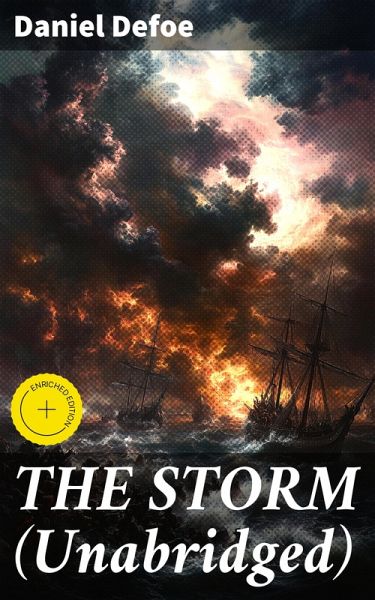
In "The Storm," Daniel Defoe employs his renowned narrative technique to vividly recount the harrowing experiences of a tempest that struck the British Isles in 1703. This unabridged work masterfully blends factual accounts with imaginative storytelling, capturing the chaos and destruction of one of history's most violent storms. Defoe's prose is characterized by its meticulous detail and psychological insight, showcasing the human response to nature's unpredictability. Set against the backdrop of emerging Enlightenment thought, the text not only illustrates the physical wildness of nature but also reflects the burgeoning interest in empiricism and rationality within early 18th-century literature. Daniel Defoe, best known for his groundbreaking novel "Robinson Crusoe," was a keen observer of social and environmental phenomena. His life as a writer, journalist, and merchant gave him a unique perspective on the interconnectedness of humanity and nature. Drawing upon his own experiences with trade and shipwrecks, Defoe infuses "The Storm" with a sense of urgency and realism, allowing readers to grapple with the sublime forces that shape human existence. This compelling narrative is recommended for anyone interested in the intersection of literature, history, and natural disasters. Defoe's rich descriptive style and thoughtful commentary offer not just an account of a tempest but also a reflection on human endurance, making it a vital read for scholars and casual readers alike. In this enriched edition, we have carefully created added value for your reading experience: - A succinct Introduction situates the work's timeless appeal and themes. - The Synopsis outlines the central plot, highlighting key developments without spoiling critical twists. - A detailed Historical Context immerses you in the era's events and influences that shaped the writing. - An Author Biography reveals milestones in the author's life, illuminating the personal insights behind the text. - A thorough Analysis dissects symbols, motifs, and character arcs to unearth underlying meanings. - Reflection questions prompt you to engage personally with the work's messages, connecting them to modern life. - Hand-picked Memorable Quotes shine a spotlight on moments of literary brilliance. - Interactive footnotes clarify unusual references, historical allusions, and archaic phrases for an effortless, more informed read.
Dieser Download kann aus rechtlichen Gründen nur mit Rechnungsadresse in A, B, BG, CY, CZ, D, DK, EW, E, FIN, F, GR, H, IRL, I, LT, L, LR, M, NL, PL, P, R, S, SLO, SK ausgeliefert werden.