37,95 €
37,95 €
inkl. MwSt.
Sofort per Download lieferbar

19 °P sammeln
37,95 €
Als Download kaufen
37,95 €
inkl. MwSt.
Sofort per Download lieferbar
19 °P sammeln
Jetzt verschenken
Alle Infos zum eBook verschenken
37,95 €
inkl. MwSt.
Sofort per Download lieferbar
Alle Infos zum eBook verschenken
19 °P sammeln

Andere Kunden interessierten sich auch für
") Nietzsche's Naturalist Deconstruction of Truth (eBook, PDF)26,95 €
Nietzsche's Naturalist Deconstruction of Truth (eBook, PDF)26,95 €") The Philosophy of Mannerism (eBook, PDF)24,95 €
The Philosophy of Mannerism (eBook, PDF)24,95 €") Mind, Matter and the Implicate Order (eBook, PDF)72,95 €
Mind, Matter and the Implicate Order (eBook, PDF)72,95 €") Unsettling Food Politics (eBook, PDF)30,95 €
Unsettling Food Politics (eBook, PDF)30,95 €") The Invention of the Visible (eBook, PDF)31,95 €
The Invention of the Visible (eBook, PDF)31,95 €") Experience and Infinite Task (eBook, PDF)31,95 €
Experience and Infinite Task (eBook, PDF)31,95 €") The Aesthetic Ground of Critical Theory (eBook, PDF)37,95 €
The Aesthetic Ground of Critical Theory (eBook, PDF)37,95 €




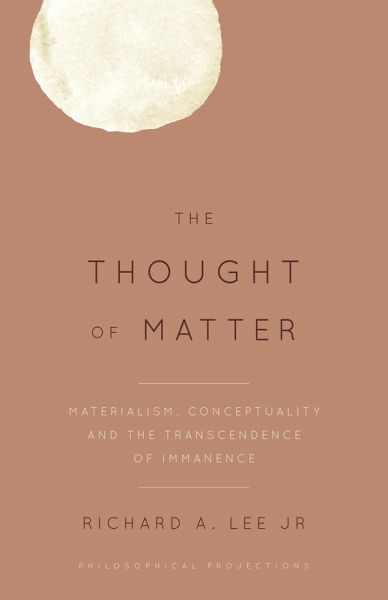
Discussions of materialism have exploded in recent years. From the speculative realism/materialism of Quentin Meillassoux to the New Materialism of many modern Marxisms, the interest in a return to or rehabilitation of materialism is on the rise. What is not analyzed in many of these discussions, however, is a trenchant methodological and metaphysical problem lying at the basis of any philosophical materialism: if matter is simply that which is other than thought, then how can it be thought without drawing it away from its materiality? On the other hand, if one assumes a direct access to matter, to this other, what are the conditions of that access? Are they material conditions or cognitive (thought) conditions? Does what would present itself immediately present, at the same time, the conditions that allow it to be presented? If not, then we are closer to a theology of matter and further from a philosophical materialism. The Thought of Matter investigates this metaphysical and methodological problem through Aristotle, Marx, Adorno, Althusser, Duns Scotus, Hobbes, and Benjamin in order to show that a philosophical materialism necessarily requires the concepts and tools of thought in order to allow the otherness of matter to emerge in its own materiality.