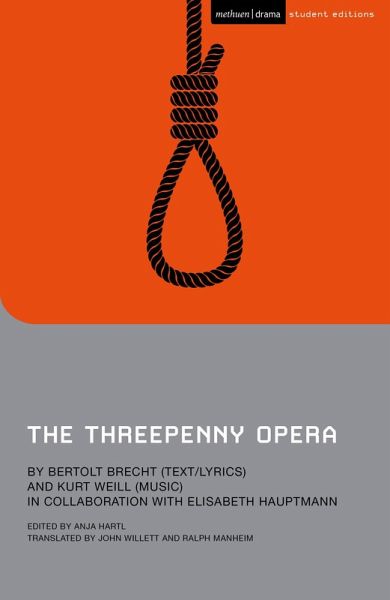
Bertolt Brecht, Kurt Weill
The Threepenny Opera (eBook, ePUB)
Redaktion: Hartl, Anja / Übersetzer: Willett, John; Manheim, Ralph
11,95 €
11,95 €
inkl. MwSt.
Sofort per Download lieferbar

6 °P sammeln

11,95 €
Als Download kaufen
11,95 €
inkl. MwSt.
Sofort per Download lieferbar
6 °P sammeln
Jetzt verschenken
Alle Infos zum eBook verschenken
11,95 €
inkl. MwSt.
Sofort per Download lieferbar
Alle Infos zum eBook verschenken
6 °P sammeln
Bertolt Brecht, Kurt Weill
The Threepenny Opera (eBook, ePUB)
Redaktion: Hartl, Anja / Übersetzer: Willett, John; Manheim, Ralph
- Format: ePub
- Merkliste
- Auf die Merkliste
- Bewerten Bewerten
- Teilen
- Produkt teilen
- Produkterinnerung
- Produkterinnerung
- Weitere 7 Ausgaben:
- Broschiertes Buch
- Broschiertes Buch
- eBook, ePUB
- eBook, ePUB
- eBook, PDF
- eBook, PDF
- eBook, PDF

Bitte loggen Sie sich zunächst in Ihr Kundenkonto ein oder registrieren Sie sich bei
bücher.de, um das eBook-Abo tolino select nutzen zu können.
Hier können Sie sich einloggen
Sie sind bereits eingeloggt. Klicken Sie auf 2. tolino select Abo, um fortzufahren.

Bitte loggen Sie sich zunächst in Ihr Kundenkonto ein oder registrieren Sie sich bei bücher.de, um das eBook-Abo tolino select nutzen zu können.
One of Bertolt Brecht's best-loved and most performed plays, The Threepenny Opera was first staged in 1928 at the Theater am Schiffbauerdamm, Berlin (now the home of the Berliner Ensemble).
Based on the eighteenth-century The Beggar's Opera by John Gay, the play is a satire on the bourgeois society of the Weimar Republic, but set in a mock-Victorian Soho.
With Kurt Weill's music, which was one of the earliest and most successful attempts to introduce the jazz idiom into the theatre, it became a popular hit throughout the western world.
This new edition is published here in John…mehr
- Geräte: eReader
- ohne Kopierschutz
- eBook Hilfe
Andere Kunden interessierten sich auch für
Bertolt BrechtThe Threepenny Opera (eBook, PDF)11,95 €
Samuel BeckettWaiting for Godot (eBook, ePUB)13,99 €
Arthur MillerA View from the Bridge (eBook, ePUB)7,99 €
Arthur MillerDeath of a Salesman (eBook, ePUB)7,99 €
Bertolt BrechtThe Caucasian Chalk Circle (eBook, ePUB)9,95 €
Benjamin ZephaniahRefugee Boy (eBook, ePUB)10,95 €
Bertolt BrechtA Life of Galileo (eBook, ePUB)10,95 €-
-
-
One of Bertolt Brecht's best-loved and most performed plays, The Threepenny Opera was first staged in 1928 at the Theater am Schiffbauerdamm, Berlin (now the home of the Berliner Ensemble).
Based on the eighteenth-century The Beggar's Opera by John Gay, the play is a satire on the bourgeois society of the Weimar Republic, but set in a mock-Victorian Soho.
With Kurt Weill's music, which was one of the earliest and most successful attempts to introduce the jazz idiom into the theatre, it became a popular hit throughout the western world.
This new edition is published here in John Willett and Ralph Manhein's classic translation with commentary and notes by Anja Hartl.
Based on the eighteenth-century The Beggar's Opera by John Gay, the play is a satire on the bourgeois society of the Weimar Republic, but set in a mock-Victorian Soho.
With Kurt Weill's music, which was one of the earliest and most successful attempts to introduce the jazz idiom into the theatre, it became a popular hit throughout the western world.
This new edition is published here in John Willett and Ralph Manhein's classic translation with commentary and notes by Anja Hartl.
Produktdetails
- Produktdetails
- Verlag: Bloomsbury eBooks UK
- Seitenzahl: 152
- Erscheinungstermin: 10. Februar 2022
- Englisch
- ISBN-13: 9781350205291
- Artikelnr.: 63070228
- Verlag: Bloomsbury eBooks UK
- Seitenzahl: 152
- Erscheinungstermin: 10. Februar 2022
- Englisch
- ISBN-13: 9781350205291
- Artikelnr.: 63070228
- Herstellerkennzeichnung Die Herstellerinformationen sind derzeit nicht verfügbar.
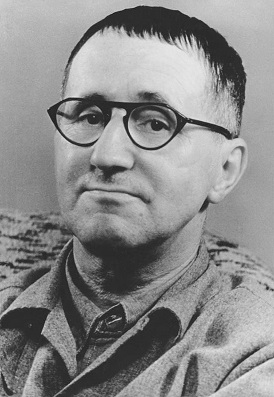
Bertolt Brecht (1898-1956) is acknowledged as one of the great dramatists whose plays, work with the Berliner Ensemble and writing have had a considerable influence on the theatre.
John Willett (1917-2002) was the greatest English-language authority on Brecht. The foremost translator and editor of Brecht's drama, poetry, letters, diaries, theatrical essays and fiction, Willett produced a dozen volumes for Methuen Drama on the greatest modern German writer.
Ralph Manheim (1907-1992) was an American translator of German and French literature. In collaboration with John Willett, Manheim translated the works of Bertolt Brecht. The Pen/Ralph Manheim Medal for Translation, inaugurated in his name, is a major lifetime achievement award in the field of translation. He himself won its predecessor, the PEN translation prize, in 1964.
Anja Hartl is Assistant Professor at the Department of Literature, Art and Media Studies at the University of Konstanz, Germany. She has published essays on contemporary British theatre, Brecht and Shakespearean adaptation. Her research focuses on political theatre, adaptation studies, Shakespeare and Victorian fiction. She is the author of Brecht and Post-1990s British Drama in the Methuen Drama Engage series.
John Willett (1917-2002) was the greatest English-language authority on Brecht. The foremost translator and editor of Brecht's drama, poetry, letters, diaries, theatrical essays and fiction, Willett produced a dozen volumes for Methuen Drama on the greatest modern German writer.
Ralph Manheim (1907-1992) was an American translator of German and French literature. In collaboration with John Willett, Manheim translated the works of Bertolt Brecht. The Pen/Ralph Manheim Medal for Translation, inaugurated in his name, is a major lifetime achievement award in the field of translation. He himself won its predecessor, the PEN translation prize, in 1964.
Anja Hartl is Assistant Professor at the Department of Literature, Art and Media Studies at the University of Konstanz, Germany. She has published essays on contemporary British theatre, Brecht and Shakespearean adaptation. Her research focuses on political theatre, adaptation studies, Shakespeare and Victorian fiction. She is the author of Brecht and Post-1990s British Drama in the Methuen Drama Engage series.

Bundesarchiv, Bild 183-W0409-300 / Kolbe, Jörg / CC-BY-SA
Chronology
Contexts
- Historical, social and cultural
- Political and social climate of the 1920s
- Cultural context: the Roaring '20s
- Significance of the play for Brecht and for political theatre
- 18th century context
- 20th century context
- Britain vs. Germany; London/East London
Genres
- Opera/music/theatre - a new theatrical genre
- Adaptation - John Gay, The Beggar's Opera
- Hybridity: low- and highbrow, emphasis on fun, entertainment in Brechtian
theatre
- Satire
Themes
- Who is who? Bourgeois and/or beggar?
- Role of the institutions (police, royal family, state)
- Corruption, money
- Exploitation, human trade, poverty
- Morality, asocial vs. social
- Love and sexuality, prostitution
- Resistance and change
- Which opportunities for change are envisioned by the play?
Characters
Male characters
- Peachum empire
- Macheath
- Tigerbrown
Female characters and sexual politics of the play
- Mrs Peachum
- Polly
- Jenny
Play as performance
- Brechtian principles of theatre-making
> emphasis on dialectical theatre
> theatricality
> actor-audience relationship
> deus-ex-machina ending
- Music
> Kurt Weill's composition
> Brechtian opera
> The significance of the songs
Academic debate
- Central strands in scholarship (comparative readings, focus on music and
operatic genre)
Production history
- German productions (Berliner Ensemble; new production announced for
January 2021)
- English productions
- International success (and problems which ensued: misinterpretation,
commercialisation, etc.)
- Der Dreigroschenprozess (The Threepenny Trial by Bertolt Brecht)
- Simon Stephens's recent new version at the National Theatre, UK
- Joachim Lang's film Mackie Messer - Brechts Dreigroschenfilm
Behind the scenes
Interview with playwright Simon Stephens
Further reading and viewing
THE THREEPENNY OPERA
Additional texts
Notes
Contexts
- Historical, social and cultural
- Political and social climate of the 1920s
- Cultural context: the Roaring '20s
- Significance of the play for Brecht and for political theatre
- 18th century context
- 20th century context
- Britain vs. Germany; London/East London
Genres
- Opera/music/theatre - a new theatrical genre
- Adaptation - John Gay, The Beggar's Opera
- Hybridity: low- and highbrow, emphasis on fun, entertainment in Brechtian
theatre
- Satire
Themes
- Who is who? Bourgeois and/or beggar?
- Role of the institutions (police, royal family, state)
- Corruption, money
- Exploitation, human trade, poverty
- Morality, asocial vs. social
- Love and sexuality, prostitution
- Resistance and change
- Which opportunities for change are envisioned by the play?
Characters
Male characters
- Peachum empire
- Macheath
- Tigerbrown
Female characters and sexual politics of the play
- Mrs Peachum
- Polly
- Jenny
Play as performance
- Brechtian principles of theatre-making
> emphasis on dialectical theatre
> theatricality
> actor-audience relationship
> deus-ex-machina ending
- Music
> Kurt Weill's composition
> Brechtian opera
> The significance of the songs
Academic debate
- Central strands in scholarship (comparative readings, focus on music and
operatic genre)
Production history
- German productions (Berliner Ensemble; new production announced for
January 2021)
- English productions
- International success (and problems which ensued: misinterpretation,
commercialisation, etc.)
- Der Dreigroschenprozess (The Threepenny Trial by Bertolt Brecht)
- Simon Stephens's recent new version at the National Theatre, UK
- Joachim Lang's film Mackie Messer - Brechts Dreigroschenfilm
Behind the scenes
Interview with playwright Simon Stephens
Further reading and viewing
THE THREEPENNY OPERA
Additional texts
Notes
Chronology
Contexts
- Historical, social and cultural
- Political and social climate of the 1920s
- Cultural context: the Roaring '20s
- Significance of the play for Brecht and for political theatre
- 18th century context
- 20th century context
- Britain vs. Germany; London/East London
Genres
- Opera/music/theatre - a new theatrical genre
- Adaptation - John Gay, The Beggar's Opera
- Hybridity: low- and highbrow, emphasis on fun, entertainment in Brechtian
theatre
- Satire
Themes
- Who is who? Bourgeois and/or beggar?
- Role of the institutions (police, royal family, state)
- Corruption, money
- Exploitation, human trade, poverty
- Morality, asocial vs. social
- Love and sexuality, prostitution
- Resistance and change
- Which opportunities for change are envisioned by the play?
Characters
Male characters
- Peachum empire
- Macheath
- Tigerbrown
Female characters and sexual politics of the play
- Mrs Peachum
- Polly
- Jenny
Play as performance
- Brechtian principles of theatre-making
> emphasis on dialectical theatre
> theatricality
> actor-audience relationship
> deus-ex-machina ending
- Music
> Kurt Weill's composition
> Brechtian opera
> The significance of the songs
Academic debate
- Central strands in scholarship (comparative readings, focus on music and
operatic genre)
Production history
- German productions (Berliner Ensemble; new production announced for
January 2021)
- English productions
- International success (and problems which ensued: misinterpretation,
commercialisation, etc.)
- Der Dreigroschenprozess (The Threepenny Trial by Bertolt Brecht)
- Simon Stephens's recent new version at the National Theatre, UK
- Joachim Lang's film Mackie Messer - Brechts Dreigroschenfilm
Behind the scenes
Interview with playwright Simon Stephens
Further reading and viewing
THE THREEPENNY OPERA
Additional texts
Notes
Contexts
- Historical, social and cultural
- Political and social climate of the 1920s
- Cultural context: the Roaring '20s
- Significance of the play for Brecht and for political theatre
- 18th century context
- 20th century context
- Britain vs. Germany; London/East London
Genres
- Opera/music/theatre - a new theatrical genre
- Adaptation - John Gay, The Beggar's Opera
- Hybridity: low- and highbrow, emphasis on fun, entertainment in Brechtian
theatre
- Satire
Themes
- Who is who? Bourgeois and/or beggar?
- Role of the institutions (police, royal family, state)
- Corruption, money
- Exploitation, human trade, poverty
- Morality, asocial vs. social
- Love and sexuality, prostitution
- Resistance and change
- Which opportunities for change are envisioned by the play?
Characters
Male characters
- Peachum empire
- Macheath
- Tigerbrown
Female characters and sexual politics of the play
- Mrs Peachum
- Polly
- Jenny
Play as performance
- Brechtian principles of theatre-making
> emphasis on dialectical theatre
> theatricality
> actor-audience relationship
> deus-ex-machina ending
- Music
> Kurt Weill's composition
> Brechtian opera
> The significance of the songs
Academic debate
- Central strands in scholarship (comparative readings, focus on music and
operatic genre)
Production history
- German productions (Berliner Ensemble; new production announced for
January 2021)
- English productions
- International success (and problems which ensued: misinterpretation,
commercialisation, etc.)
- Der Dreigroschenprozess (The Threepenny Trial by Bertolt Brecht)
- Simon Stephens's recent new version at the National Theatre, UK
- Joachim Lang's film Mackie Messer - Brechts Dreigroschenfilm
Behind the scenes
Interview with playwright Simon Stephens
Further reading and viewing
THE THREEPENNY OPERA
Additional texts
Notes