1,99 €
1,99 €
inkl. MwSt.
Sofort per Download lieferbar

0 °P sammeln
1,99 €
Als Download kaufen
1,99 €
inkl. MwSt.
Sofort per Download lieferbar
0 °P sammeln
Jetzt verschenken
Alle Infos zum eBook verschenken
1,99 €
inkl. MwSt.
Sofort per Download lieferbar
Alle Infos zum eBook verschenken
0 °P sammeln

Andere Kunden interessierten sich auch für
 The Bible of Bibles; Or, Twenty-Seven "Divine" Revelations (eBook, ePUB)1,99 €
") Religion in the Heavens; Or, Mythology Unveiled in a Series of Lectures (eBook, ePUB)1,99 €
Religion in the Heavens; Or, Mythology Unveiled in a Series of Lectures (eBook, ePUB)1,99 €") The Two Treaties; or, Hope for Jerusalem (eBook, ePUB)0,49 €
The Two Treaties; or, Hope for Jerusalem (eBook, ePUB)0,49 €") The Man with the Book; or, The Bible Among the People (eBook, ePUB)0,49 €
The Man with the Book; or, The Bible Among the People (eBook, ePUB)0,49 €") Through the Gate of Good - or, Christ and Conduct (eBook, ePUB)5,99 €
Through the Gate of Good - or, Christ and Conduct (eBook, ePUB)5,99 €") The Soul of a Nation (eBook, ePUB)24,95 €
The Soul of a Nation (eBook, ePUB)24,95 €") Reason, the Only Oracle of Man (eBook, ePUB)11,95 €
Reason, the Only Oracle of Man (eBook, ePUB)11,95 €





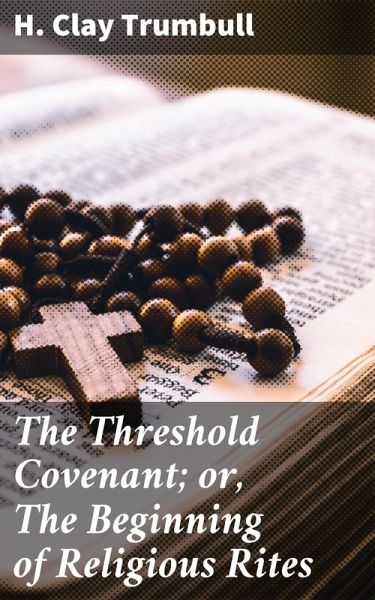
In "The Threshold Covenant; or, The Beginning of Religious Rites," H. Clay Trumbull meticulously explores the origins and significance of religious rituals, specifically focusing on the practice of covenant as a foundational element of faith. Trumbull'Äôs literary style is marked by a blend of rigorous scholarship and accessible language, allowing readers to engage with complex theological concepts without losing sight of their historical context. This work bridges the gap between anthropology and theology, examining how early religious rites shaped communal identity and spiritual beliefs, ultimately offering profound insights into the communal nature of faith across cultures. H. Clay Trumbull was a prominent American author and theologian in the late 19th and early 20th centuries, known for his deep engagement with biblical texts and covenant theology. His own spiritual journey, influenced by various religious traditions and his extensive knowledge of historical practices, prompted him to investigate the meaning and implications of covenants within both ancient and contemporary settings. This exploration reflects Trumbull'Äôs broader quest to understand the relationship between God and humanity as expressed through rituals. This scholarly yet approachable work is recommended for anyone interested in the intersections of religion, anthropology, and history. Scholars, students, and general readers alike will find Trumbull'Äôs insights both illuminating and thought-provoking, making it a valuable addition to the library of anyone seeking to understand the deeper meanings behind religious practices.
Dieser Download kann aus rechtlichen Gründen nur mit Rechnungsadresse in A, B, BG, CY, CZ, D, DK, EW, E, FIN, F, GR, H, IRL, I, LT, L, LR, M, NL, PL, P, R, S, SLO, SK ausgeliefert werden.