Sie sind bereits eingeloggt. Klicken Sie auf 2. tolino select Abo, um fortzufahren.
Bitte loggen Sie sich zunächst in Ihr Kundenkonto ein oder registrieren Sie sich bei bücher.de, um das eBook-Abo tolino select nutzen zu können.
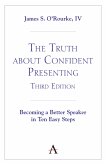
Accomplished public speakers know that just a few enduring principles govern the key to success. Based on scientific evidence and years of careful observation of highly successful public speakers, James O'Rourke has gathered 51 basic truths about confident presenting, organized into ten easily mastered categories in 'The Truth about Confident Presenting'. Current relevant examples and specific instructions on how to apply these truths form the centrepiece of each brief chapter. Everything you need is right here - from audience research to topic selection, organization patterns, forms of…mehr
Accomplished public speakers know that just a few enduring principles govern the key to success. Based on scientific evidence and years of careful observation of highly successful public speakers, James O'Rourke has gathered 51 basic truths about confident presenting, organized into ten easily mastered categories in 'The Truth about Confident Presenting'. Current relevant examples and specific instructions on how to apply these truths form the centrepiece of each brief chapter. Everything you need is right here - from audience research to topic selection, organization patterns, forms of evidence, principles of persuasion, delivery techniques, nonverbal mannerisms, anxiety and event management.
Dieser Download kann aus rechtlichen Gründen nur mit Rechnungsadresse in A, D ausgeliefert werden.
Die Herstellerinformationen sind derzeit nicht verfügbar.
Autorenporträt
James S. O'Rourke IV, teaching professor of management and the Arthur F. and Mary J. O'Neil Director of the Eugene D. Fanning Center for Business Communication at the University of Notre Dame, USA, is a widely regarded consultant among 'Fortune 500' companies in the United States and around the world.
Inhaltsangabe
Contents Part I: Some Initial Truths 1. Public Speaking Is Not Easy, but It's Certainly Doable 2. The Key to Success Is Preparation 3. Rehearsal Is Essential 4. Emulating Good Speakers Makes You Better 5. Establish Goals for Your Presentation 6. A Presentation Is a Learning Occasion Part II: The Truth about Getting Ready to Speak 7. Talk Is the Work 8. Know What Your Audience Is Looking For 9. There Is a Difference between Speaking and Writing 10. Preparing a Presentation Is a Relatively Simple Process 11. Begin by Analyzing Your Audience 12. Know about Your Audience Part III: The Truth about What Makes People Listen 13. Understand What Makes People Listen 14. Your Speaking Style Makes a Difference 15. Answer the Questions Listeners Bring to Your Presentation 16. Listening Matters 17. Being an Active Listener Brings Real Benefits 18. You Can Overcome the Barriers to Successful Communication Part IV: The Truth about Developing Support for Your Presentation 19. Develop Support for Your Presentation 20. Understand the Power of Your Content 21. The Kinds and Quality of Evidence Matter to Your Audience 22. Structure Can Help Carry an Inexperienced Speaker 23. Find Support for Your Presentation 24. Use the Internet to Support Your Presentation Part V: The Truth about Getting Up to Speak 25. Select a Delivery Approach 26. Your Introduction Forms Their First Impression 27. Begin with a Purpose in Mind 28. Keep Your Audience Interested 29. Conclusions Are as Important as Introductions 30. Have Confidence in Your Preparation 31. Repeat the Process as Often as Possible Part VI: The Truth about Managing Anxiety 32. All Speakers Get Nervous 33. Recognize Anxiety Before It Begins 34. Deal with Nervous Behaviour 35. Keep Your Nervousness to Yourself Part VII: The Truth about Nonverbal Communication 36. Most Information Is Transferred Nonverbally 37. The Nonverbal Process Can Work for You 38. Nonverbal Communication Has Specific Functions 39. Nonverbal Communication Is Governed by Key Principles 40. Nonverbal Communication Has an Effect on Your Audience Part VIII: The Truth about Visual Aids 41. Visual Aids Can Help Your Audience Understand Your Message 42. Understand Visual Images Before You Use Them 43. Choose the Right Visual 44. Use PowerPoint Effectively 45. Consider Speaking without Visuals Part IX: The Truth about Handling an Audience 46. Assess the Mood of Your Audience 47. Answer the Audience's Questions 48. Handle Hostility with Confidence Part X: The Truth about What Makes a Presentation Work 49. Know as Much as Possible about the Location 50. Use the Microphone to Your Advantage 51. Know Your Limits
Contents Part I: Some Initial Truths 1. Public Speaking Is Not Easy, but It's Certainly Doable 2. The Key to Success Is Preparation 3. Rehearsal Is Essential 4. Emulating Good Speakers Makes You Better 5. Establish Goals for Your Presentation 6. A Presentation Is a Learning Occasion Part II: The Truth about Getting Ready to Speak 7. Talk Is the Work 8. Know What Your Audience Is Looking For 9. There Is a Difference between Speaking and Writing 10. Preparing a Presentation Is a Relatively Simple Process 11. Begin by Analyzing Your Audience 12. Know about Your Audience Part III: The Truth about What Makes People Listen 13. Understand What Makes People Listen 14. Your Speaking Style Makes a Difference 15. Answer the Questions Listeners Bring to Your Presentation 16. Listening Matters 17. Being an Active Listener Brings Real Benefits 18. You Can Overcome the Barriers to Successful Communication Part IV: The Truth about Developing Support for Your Presentation 19. Develop Support for Your Presentation 20. Understand the Power of Your Content 21. The Kinds and Quality of Evidence Matter to Your Audience 22. Structure Can Help Carry an Inexperienced Speaker 23. Find Support for Your Presentation 24. Use the Internet to Support Your Presentation Part V: The Truth about Getting Up to Speak 25. Select a Delivery Approach 26. Your Introduction Forms Their First Impression 27. Begin with a Purpose in Mind 28. Keep Your Audience Interested 29. Conclusions Are as Important as Introductions 30. Have Confidence in Your Preparation 31. Repeat the Process as Often as Possible Part VI: The Truth about Managing Anxiety 32. All Speakers Get Nervous 33. Recognize Anxiety Before It Begins 34. Deal with Nervous Behaviour 35. Keep Your Nervousness to Yourself Part VII: The Truth about Nonverbal Communication 36. Most Information Is Transferred Nonverbally 37. The Nonverbal Process Can Work for You 38. Nonverbal Communication Has Specific Functions 39. Nonverbal Communication Is Governed by Key Principles 40. Nonverbal Communication Has an Effect on Your Audience Part VIII: The Truth about Visual Aids 41. Visual Aids Can Help Your Audience Understand Your Message 42. Understand Visual Images Before You Use Them 43. Choose the Right Visual 44. Use PowerPoint Effectively 45. Consider Speaking without Visuals Part IX: The Truth about Handling an Audience 46. Assess the Mood of Your Audience 47. Answer the Audience's Questions 48. Handle Hostility with Confidence Part X: The Truth about What Makes a Presentation Work 49. Know as Much as Possible about the Location 50. Use the Microphone to Your Advantage 51. Know Your Limits
Es gelten unsere Allgemeinen Geschäftsbedingungen: www.buecher.de/agb
Impressum
www.buecher.de ist ein Internetauftritt der buecher.de internetstores GmbH
Geschäftsführung: Monica Sawhney | Roland Kölbl | Günter Hilger
Sitz der Gesellschaft: Batheyer Straße 115 - 117, 58099 Hagen
Postanschrift: Bürgermeister-Wegele-Str. 12, 86167 Augsburg
Amtsgericht Hagen HRB 13257
Steuernummer: 321/5800/1497
USt-IdNr: DE450055826