16,95 €
16,95 €
inkl. MwSt.
Sofort per Download lieferbar

8 °P sammeln
16,95 €
Als Download kaufen
16,95 €
inkl. MwSt.
Sofort per Download lieferbar
8 °P sammeln
Jetzt verschenken
Alle Infos zum eBook verschenken
16,95 €
inkl. MwSt.
Sofort per Download lieferbar
Alle Infos zum eBook verschenken
8 °P sammeln

Andere Kunden interessierten sich auch für
") The Ubiquitous Siva Volume II (eBook, PDF)16,95 €
The Ubiquitous Siva Volume II (eBook, PDF)16,95 €") The Matter of Wonder (eBook, ePUB)34,95 €
The Matter of Wonder (eBook, ePUB)34,95 €") The Many Faces of a Himalayan Goddess (eBook, ePUB)28,95 €
The Many Faces of a Himalayan Goddess (eBook, ePUB)28,95 €") Hinduism and Buddhism (eBook, ePUB)2,13 €
Hinduism and Buddhism (eBook, ePUB)2,13 €") The Spiritual Teaching of Ramana Maharshi (eBook, ePUB)7,99 €
The Spiritual Teaching of Ramana Maharshi (eBook, ePUB)7,99 €") The Bhagavad Gita (eBook, ePUB)9,49 €
The Bhagavad Gita (eBook, ePUB)9,49 €") The Divine Pantheon: (eBook, ePUB)2,99 €
The Divine Pantheon: (eBook, ePUB)2,99 €






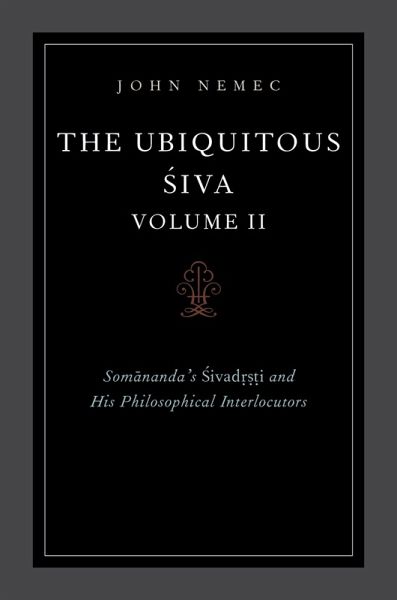
This is a sequel to a volume published in 2011 by OUP under the title The Ubiquitous Siva: Somananda's Sivadṛ??i and his Tantric Interlocutors. The first volume offered an introduction, critical edition, and annotated translation of the first three chapters of the Sivadṛ??i of Somananda, along with its principal commentary, the Sivadṛ??ivṛtti, written by Utpaladeva. It dealt primarily with Saiva theology and the religious views of competing esoteric traditions. The present volume presents the fourth chapter of the Sivadṛ??i and Sivadṛ??ivṛtti and addresses a fresh set of issues that engage a distinct family of opposing schools and authors of mainstream Indian philosophical traditions. In this fourth chapter, Somananda and Utpaladeva engage logical and philosophical works that exerted tremendous influence in the Indian subcontinent in its premodernity. Among the authors and schools addressed by Somananda in this chapter are the Buddhist Epistemologists, and Dharmakirti in particular; the Hindu school of hermeneutics, i.e., the Mimaṃsa; the Hindu realist schools of the logic- and debate-oriented Nyaya and their ontologically-oriented partners, the Vaise?ika; and the Hindu, dualist Saṃkhya and Yoga schools. Throughout this chapter, Somananda endeavors to explain his brand of Saivism philosophically. Somananda challenges his philosophical interlocutors with a single over-arching argument: he suggests that their views cannot coherethey cannot be explained logicallyunless their authors accept the Saiva non-duality for which he advocates. The argument he offers, despite its historical influence, remains virtually unstudied. The Ubiquitous Siva Volume II offers the first English translation of Chapter Four of the Sivadṛ??i and Sivadṛ??ivṛtti along with an introduction and critical edition.
Dieser Download kann aus rechtlichen Gründen nur mit Rechnungsadresse in A, B, BG, CY, CZ, D, DK, EW, E, FIN, F, GR, HR, H, IRL, I, LT, L, LR, M, NL, PL, P, R, S, SLO, SK ausgeliefert werden.