4,49 €
inkl. MwSt.
Sofort per Download lieferbar
0 °P sammeln

Andere Kunden interessierten sich auch für
") The Railways in Colonial South Asia (eBook, ePUB)45,95 €
The Railways in Colonial South Asia (eBook, ePUB)45,95 €") Love is a Sweet Chain (eBook, ePUB)22,95 €
Love is a Sweet Chain (eBook, ePUB)22,95 €") The political ecology of colonial capitalism (eBook, ePUB)81,95 €
The political ecology of colonial capitalism (eBook, ePUB)81,95 €") Decolonising International Relations (eBook, ePUB)41,95 €
Decolonising International Relations (eBook, ePUB)41,95 €") The Unbroken Machine (eBook, ePUB)6,99 €
The Unbroken Machine (eBook, ePUB)6,99 €") The Post-Colonial States of South Asia (eBook, ePUB)45,95 €
The Post-Colonial States of South Asia (eBook, ePUB)45,95 € (eBook, ePUB)") How to Erase Racism from the Minds of Humanity (Revised) (eBook, ePUB)9,49 €
How to Erase Racism from the Minds of Humanity (Revised) (eBook, ePUB)9,49 €




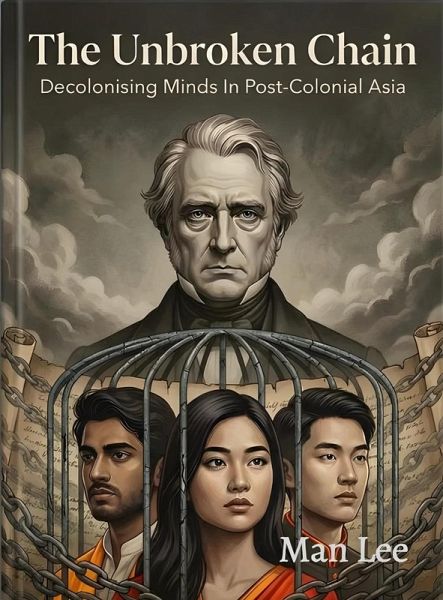
THE UNBROKEN CHAIN: Decolonising Minds in Post-Colonial Asia
Why do the colonizers' mental chains remain unbroken, long after independence?
In Hong Kong, Singapore, and Malaysia, colonial rule ended decades ago. Yet the English-educated elite still measure success by Western standards, speak the colonizer's language at home, and unconsciously perpetuate the hierarchies their grandparents fought to dismantle. Physical independence came-but mental freedom never followed.
This groundbreaking work exposes how Thomas Babington Macaulay's 1835 blueprint for "mental colonization" created generations who were taught to be ashamed of their own languages, cultures, and identities. Through meticulous historical analysis and contemporary examples, The Unbroken Chain reveals:
Drawing on postcolonial theory, historical documents, and personal narratives, this book challenges readers to recognize the invisible chains that bind our minds-and shows pathways toward genuine decolonization.
For scholars, students, thought leaders, diaspora communities, and anyone questioning why "independence" didn't bring true freedom, The Unbroken Chain offers uncomfortable truths and necessary insights.
The empire may have left, but has your mind come home?
Why do the colonizers' mental chains remain unbroken, long after independence?
In Hong Kong, Singapore, and Malaysia, colonial rule ended decades ago. Yet the English-educated elite still measure success by Western standards, speak the colonizer's language at home, and unconsciously perpetuate the hierarchies their grandparents fought to dismantle. Physical independence came-but mental freedom never followed.
This groundbreaking work exposes how Thomas Babington Macaulay's 1835 blueprint for "mental colonization" created generations who were taught to be ashamed of their own languages, cultures, and identities. Through meticulous historical analysis and contemporary examples, The Unbroken Chain reveals:
- How colonial education systems engineered psychological dependency that survives to this day
- Why Lee Kuan Yew, builder of modern Singapore, had to "sweat blood" learning his own ethnic language at age 38
- How linguistic imperialism created internal hierarchies where speaking English became the measure of intelligence and civilization
- Why successful, educated Asians often feel like strangers in their own cultures
Drawing on postcolonial theory, historical documents, and personal narratives, this book challenges readers to recognize the invisible chains that bind our minds-and shows pathways toward genuine decolonization.
For scholars, students, thought leaders, diaspora communities, and anyone questioning why "independence" didn't bring true freedom, The Unbroken Chain offers uncomfortable truths and necessary insights.
The empire may have left, but has your mind come home?
Dieser Download kann aus rechtlichen Gründen nur mit Rechnungsadresse in A, B, CY, CZ, D, DK, EW, E, FIN, F, GR, H, IRL, I, LT, L, LR, M, NL, PL, P, R, S, SLO, SK ausgeliefert werden.