5,49 €
5,49 €
inkl. MwSt.
Sofort per Download lieferbar

0 °P sammeln
5,49 €
Als Download kaufen
5,49 €
inkl. MwSt.
Sofort per Download lieferbar
0 °P sammeln
Jetzt verschenken
Alle Infos zum eBook verschenken
5,49 €
inkl. MwSt.
Sofort per Download lieferbar
Alle Infos zum eBook verschenken
0 °P sammeln

Andere Kunden interessierten sich auch für
") The New Adam: A Modern Social Novel (eBook, ePUB)6,99 €
The New Adam: A Modern Social Novel (eBook, ePUB)6,99 € (eBook, ePUB)") The Secret of the Mysterious Key (detective novel) (eBook, ePUB)5,49 €
The Secret of the Mysterious Key (detective novel) (eBook, ePUB)5,49 € (eBook, ePUB)") The Ship of 1,000 whisperers (novel) (eBook, ePUB)6,49 €
The Ship of 1,000 whisperers (novel) (eBook, ePUB)6,49 € (eBook, ePUB)") Lily of the Valley (novel) (eBook, ePUB)10,99 €
Lily of the Valley (novel) (eBook, ePUB)10,99 € (eBook, ePUB)") The Bicycle Thief (novel) (eBook, ePUB)5,99 €
The Bicycle Thief (novel) (eBook, ePUB)5,99 € (eBook, ePUB)") The Immortal Husband (novel) (eBook, ePUB)8,99 €
The Immortal Husband (novel) (eBook, ePUB)8,99 € (eBook, ePUB)") The Magician (novel) (eBook, ePUB)5,99 €
The Magician (novel) (eBook, ePUB)5,99 €





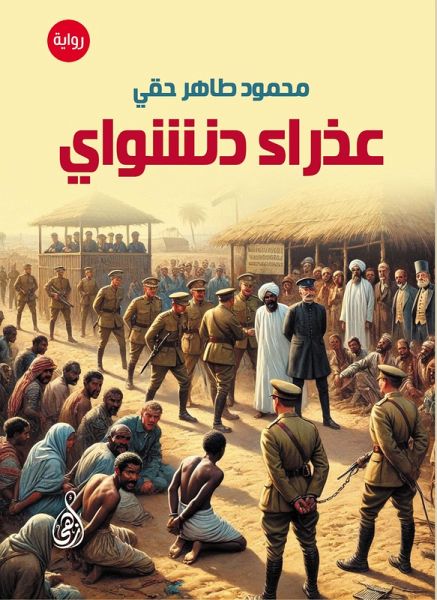
This novel is one of the first Egyptian novels to reflect a painful national reality, drawing inspiration from the Denshawai disaster of 1906. This incident was not merely a passing chapter in history, but rather a spark of awareness that ignited the flames of resistance and contributed to shaping the national spirit that culminated in the 1919 Revolution. Mahmoud Taher Haqqi wrote this novel as a witness to the era of colonial oppression, employing a simple yet deeply moving style that brings the reader closer to the tragedy, as if hearing the echoes of the screams and seeing the looks of terror in the eyes of the innocent who were brought before a court that was nothing more than a stage for the presentation of unjust rulings. The narrative was not merely a presentation of facts; rather, it explored the roots of injustice and revealed the way in which justice was used as a tool of brutality against ordinary peasants, who found themselves, overnight, before a judiciary that sought not the truth, but rather scapegoats to be sacrificed to the tyranny of the occupation. In the novel's pages, it is revealed how public punishment became a means of terrorizing an entire people, as death sentences, floggings, and displacement were carried out before the eyes of the people, in a scene that was not merely an act of revenge, but a clear message that force alone can enforce the law.
Dieser Download kann aus rechtlichen Gründen nur mit Rechnungsadresse in A, B, BG, CY, CZ, D, DK, EW, E, FIN, F, GR, H, IRL, I, LT, L, LR, M, NL, PL, P, R, S, SLO, SK ausgeliefert werden.