15,95 €
inkl. MwSt.
Sofort per Download lieferbar
8 °P sammeln

Andere Kunden interessierten sich auch für
") The North of the South (eBook, ePUB)16,95 €
The North of the South (eBook, ePUB)16,95 €") World War I and Southern Modernism (eBook, ePUB)16,95 €
World War I and Southern Modernism (eBook, ePUB)16,95 €") Faulkner, Welty, Wright (eBook, ePUB)16,95 €
Faulkner, Welty, Wright (eBook, ePUB)16,95 €") Atticus Finch (eBook, ePUB)13,99 €
Atticus Finch (eBook, ePUB)13,99 €") The Oxford Handbook of the Literature of the U.S. South (eBook, ePUB)53,95 €
The Oxford Handbook of the Literature of the U.S. South (eBook, ePUB)53,95 €") Critical Essays on the Writings of Lillian Smith (eBook, ePUB)13,95 €
Critical Essays on the Writings of Lillian Smith (eBook, ePUB)13,95 €") Leaving the South (eBook, ePUB)16,95 €
Leaving the South (eBook, ePUB)16,95 €




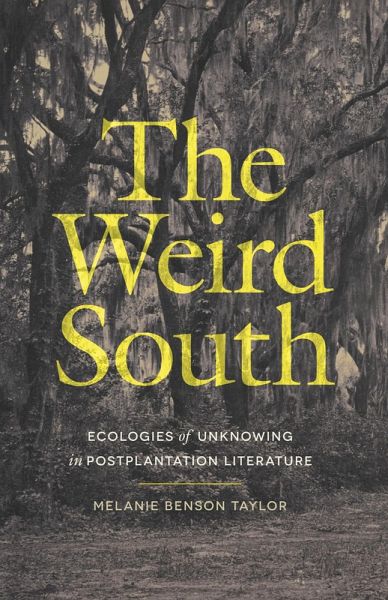
How do we read southern literature in a postplantation, postregional, and posthuman moment? How do we address the urgent contemporary catastrophes of the Anthropocene in these newly leveled landscapes? Put simply, how do we parse the levels of human responsibility--both for apocalypse and for deliverance--in contexts where settler-colonial and racial capitalist histories dramatically shape our reality?
Reading modern and contemporary southern literary texts from a variety of perspectives, these lectures engage the new materialist, object-oriented ontologies that critique and decenter human agency while uncovering the lasting, determinative, haunting realities of humanity's detention within what Timothy Morton calls the "weird" web of our entwined social, racial, economic, and natural ecologies.
As a concept in the burgeoning conversation about Anthropocenic disaster and climate emergency, the "weird" is a powerful way to conceptualize not just human hubris but also humility: we are no different from, no more powerful than, any other living or inanimate objects-neither the organisms that take up residence in our bodies nor the myriad things that we imagine we create, fashion, patrol, and control.
Reading modern and contemporary southern literary texts from a variety of perspectives, these lectures engage the new materialist, object-oriented ontologies that critique and decenter human agency while uncovering the lasting, determinative, haunting realities of humanity's detention within what Timothy Morton calls the "weird" web of our entwined social, racial, economic, and natural ecologies.
As a concept in the burgeoning conversation about Anthropocenic disaster and climate emergency, the "weird" is a powerful way to conceptualize not just human hubris but also humility: we are no different from, no more powerful than, any other living or inanimate objects-neither the organisms that take up residence in our bodies nor the myriad things that we imagine we create, fashion, patrol, and control.
Dieser Download kann aus rechtlichen Gründen nur mit Rechnungsadresse in A, D ausgeliefert werden.