41,95 €
41,95 €
inkl. MwSt.
Sofort per Download lieferbar

21 °P sammeln
41,95 €
Als Download kaufen
41,95 €
inkl. MwSt.
Sofort per Download lieferbar
21 °P sammeln
Jetzt verschenken
Alle Infos zum eBook verschenken
41,95 €
inkl. MwSt.
Sofort per Download lieferbar
Alle Infos zum eBook verschenken
21 °P sammeln

Andere Kunden interessierten sich auch für
") The Western Balkans in the World (eBook, ePUB)41,95 €
The Western Balkans in the World (eBook, ePUB)41,95 €") The National Politics of EU Enlargement in the Western Balkans (eBook, PDF)41,95 €
The National Politics of EU Enlargement in the Western Balkans (eBook, PDF)41,95 €") The National Politics of EU Enlargement in the Western Balkans (eBook, ePUB)41,95 €
The National Politics of EU Enlargement in the Western Balkans (eBook, ePUB)41,95 €") Kosovo's Foreign Policy and Bilateral Relations (eBook, PDF)39,95 €
Kosovo's Foreign Policy and Bilateral Relations (eBook, PDF)39,95 €") Beyond Balkanism (eBook, PDF)43,95 €
Beyond Balkanism (eBook, PDF)43,95 €") Western Balkans and the Future of Europe (eBook, PDF)96,95 €
Western Balkans and the Future of Europe (eBook, PDF)96,95 €") EU Enlargement and Civil Society in the Western Balkans (eBook, PDF)40,95 €
EU Enlargement and Civil Society in the Western Balkans (eBook, PDF)40,95 €


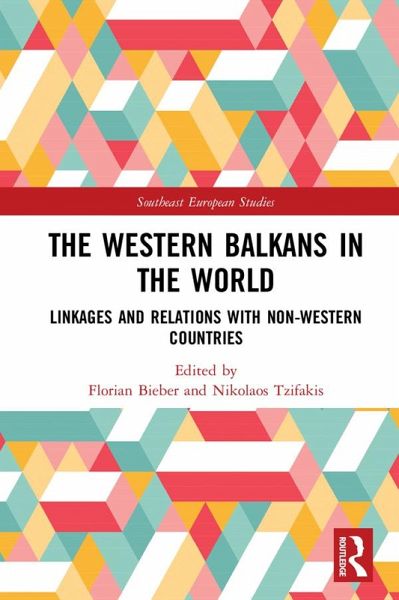
This book provides a detailed understanding of how different types of engagements impact upon the reform and EU integration of the Western Balkan region. It examines the influence of Russia, China, Turkey and the UAE in the region and analyses the range of existing links.
Contributors offer an academic and multifaceted perspective of the role of external and non-Western actors in the region that goes beyond, on the one hand, the tendency of some Western decision makers to perceive all engagement by third powers as a sinister threat and, on the other, the view of regional governments of all external involvement as a boon coming at a time of Western neglect and reduced foreign investments. By looking at the importance of Russia, Turkey, China and the UAE in the Western Balkans, the book sheds light on one key arena of global competition, offers new insights on the strengths and weaknesses of Euro-Atlantic integration and advances our knowledge of foreign policy and its economic, social and security dimensions for small and medium-sized countries.
It will be of interest to academics, postgraduate and research students, and think-tankers with research interest in IR and Southeast European Studies. European decision makers will also gain an insight into the extent of non-Western influence in the region.
Contributors offer an academic and multifaceted perspective of the role of external and non-Western actors in the region that goes beyond, on the one hand, the tendency of some Western decision makers to perceive all engagement by third powers as a sinister threat and, on the other, the view of regional governments of all external involvement as a boon coming at a time of Western neglect and reduced foreign investments. By looking at the importance of Russia, Turkey, China and the UAE in the Western Balkans, the book sheds light on one key arena of global competition, offers new insights on the strengths and weaknesses of Euro-Atlantic integration and advances our knowledge of foreign policy and its economic, social and security dimensions for small and medium-sized countries.
It will be of interest to academics, postgraduate and research students, and think-tankers with research interest in IR and Southeast European Studies. European decision makers will also gain an insight into the extent of non-Western influence in the region.
Dieser Download kann aus rechtlichen Gründen nur mit Rechnungsadresse in A, B, BG, CY, CZ, D, DK, EW, E, FIN, F, GR, HR, H, IRL, I, LT, L, LR, M, NL, PL, P, R, S, SLO, SK ausgeliefert werden.
"Academics and policy makers are increasingly interested in how Russia, China and Turkey are seeking to shape the Western Balkans. However, there has been little by way of systematic or comparative analysis of their involvement and how they each pose a challenge to the wider processes of Euro-Atlantic integration. This volume is a very timely contribution to our understanding of how these key international actors are seeking to exert influence in this important, but still unstable, region." - James Ker-Lindsay, London School of Economics and Political Science, UK
"The Western Balkan countries have once again become a playground for wider global politics. The authors demonstrate how non-Western actors increasingly interact with, and influence the politics (internal and external) of, the Western Balkan states. This book makes an important contribution to our understanding of the geopolitical relevance of the Western Balkans, and the wider challenges to the Euro-Atlantic integration of the region." - Soeren Keil, Canterbury Christ Church University, UK
"The Western Balkans in the World is a deeply thought-out, well researched and comprehensive exploration of the place of the region within the broader context of international relations. Instead of looking at each state in isolation, this volume analyzes the Western Balkans through a network of linkages, shared interests and soft power that are much broader than the region itself. The book is an extremely timely contribution to the scholarship on Western Balkans and foreign policy." - Jelena Subotic, Georgia State University, USA.
"The Western Balkan countries have once again become a playground for wider global politics. The authors demonstrate how non-Western actors increasingly interact with, and influence the politics (internal and external) of, the Western Balkan states. This book makes an important contribution to our understanding of the geopolitical relevance of the Western Balkans, and the wider challenges to the Euro-Atlantic integration of the region." - Soeren Keil, Canterbury Christ Church University, UK
"The Western Balkans in the World is a deeply thought-out, well researched and comprehensive exploration of the place of the region within the broader context of international relations. Instead of looking at each state in isolation, this volume analyzes the Western Balkans through a network of linkages, shared interests and soft power that are much broader than the region itself. The book is an extremely timely contribution to the scholarship on Western Balkans and foreign policy." - Jelena Subotic, Georgia State University, USA.