21,75 €
21,75 €
inkl. MwSt.
Sofort per Download lieferbar

0 °P sammeln
21,75 €
Als Download kaufen
21,75 €
inkl. MwSt.
Sofort per Download lieferbar
0 °P sammeln
Jetzt verschenken
Alle Infos zum eBook verschenken
21,75 €
inkl. MwSt.
Sofort per Download lieferbar
Alle Infos zum eBook verschenken
0 °P sammeln

Andere Kunden interessierten sich auch für
") The End of Evolution (eBook, ePUB)4,99 €
The End of Evolution (eBook, ePUB)4,99 €") Apotheosis of the Gnosis (eBook, ePUB)4,99 €
Apotheosis of the Gnosis (eBook, ePUB)4,99 €") The High-Way of Truth (eBook, ePUB)4,99 €
The High-Way of Truth (eBook, ePUB)4,99 €") The Struggle for Ultimate Freedom (eBook, ePUB)4,99 €
The Struggle for Ultimate Freedom (eBook, ePUB)4,99 €") The Great Convergence (eBook, ePUB)58,95 €
The Great Convergence (eBook, ePUB)58,95 €") The Spiritual Emerson (eBook, ePUB)7,99 €
The Spiritual Emerson (eBook, ePUB)7,99 €") The Soul of Being (eBook, ePUB)6,99 €
The Soul of Being (eBook, ePUB)6,99 €
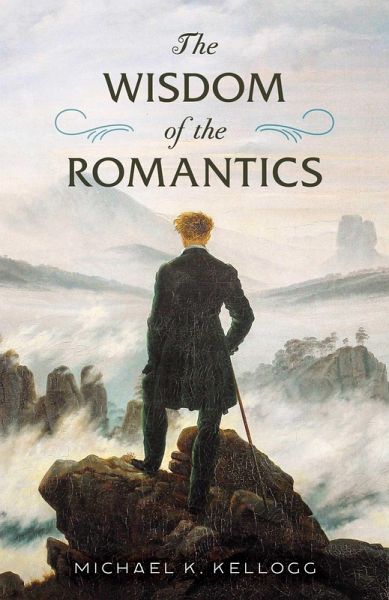
Explore the transformative power of Romanticism-where emotion, imagination, and contradiction collide-through the eyes of its greatest thinkers and artists. The post-Enlightenment movement known as Romanticism is a messy period; so messy, in fact, that many scholars eschew any attempt to define it. In reaction to the overreliance placed on reason by Enlightenment thinkers, Romantics emphasized individual freedom, emotional intensity, introspection, sincerity, and heightened imagination. They sought out nature at its wildest and most sublime: tall mountains, steep gorges, and resounding cataracts. They dabbled in the gothic and grotesque, in mythology, the sacred, and the mystical. Romanticism was a turning inward into subjectivity. In The Wisdom of the Romantics, author Michael Kellogg profiles such disparate authors as Rousseau and Balzac, Goethe and Hegel, Wordsworth and Jane Austen, revealing that classifying Romantic thinkers is a highly subjective enterprise - which is the whole point. That isn't to say that the change in thinking was inconsequential. Far from it. The transition from Haydn and Mozart to Beethoven and Chopin could not have been more dramatic. The German-born composer Giacomo Meyerbeer brought grand opera to new heights. The paintings of Francisco Goya, William Blake, Caspar David Friedrich, and J. M. W. Turner were all part of the transition away from a classical, academic style to the "emotive extremes" that heralded the coming of impressionism in the latter part of the century. In this latest entry into his popular Wisdom series, Kellogg explores the mercurial and ephemeral movement known as "Romanticism," arguing that what Romanticism "is" includes many contradictions, precisely what the rationalists rejected.
Dieser Download kann aus rechtlichen Gründen nur mit Rechnungsadresse in A, B, BG, CY, CZ, D, DK, EW, E, FIN, F, GR, HR, H, I, LT, L, LR, M, NL, PL, P, R, S, SLO, SK ausgeliefert werden.