46,95 €
46,95 €
inkl. MwSt.
Sofort per Download lieferbar

23 °P sammeln
46,95 €
Als Download kaufen
46,95 €
inkl. MwSt.
Sofort per Download lieferbar
23 °P sammeln
Jetzt verschenken
Alle Infos zum eBook verschenken
46,95 €
inkl. MwSt.
Sofort per Download lieferbar
Alle Infos zum eBook verschenken
23 °P sammeln

Andere Kunden interessierten sich auch für
") The Making of Manners and Morals in Twelfth-Century England (eBook, ePUB)42,95 €
The Making of Manners and Morals in Twelfth-Century England (eBook, ePUB)42,95 €") Medieval Minds (eBook, ePUB)32,95 €
Medieval Minds (eBook, ePUB)32,95 €") Saint Benedict, Montecassino, and the Crisis of Ninth-Century Southern Lombards in Early Medieval Cassinese Memory (eBook, ePUB)42,95 €
Saint Benedict, Montecassino, and the Crisis of Ninth-Century Southern Lombards in Early Medieval Cassinese Memory (eBook, ePUB)42,95 €") Studying Late Medieval History (eBook, ePUB)39,95 €
Studying Late Medieval History (eBook, ePUB)39,95 € (eBook, ePUB)") English Life and Manners in the Later Middle Ages (Routledge Revivals) (eBook, ePUB)45,95 €
English Life and Manners in the Later Middle Ages (Routledge Revivals) (eBook, ePUB)45,95 €") Myth and Reality: Studies on the Templars and Hospitallers, Medieval Narratives, and the Trial of the Templars (eBook, ePUB)42,95 €
Myth and Reality: Studies on the Templars and Hospitallers, Medieval Narratives, and the Trial of the Templars (eBook, ePUB)42,95 €") Old Stories and Contemporary Issues in Films about Antiquity and the Middle Ages (eBook, ePUB)38,95 €
Old Stories and Contemporary Issues in Films about Antiquity and the Middle Ages (eBook, ePUB)38,95 €







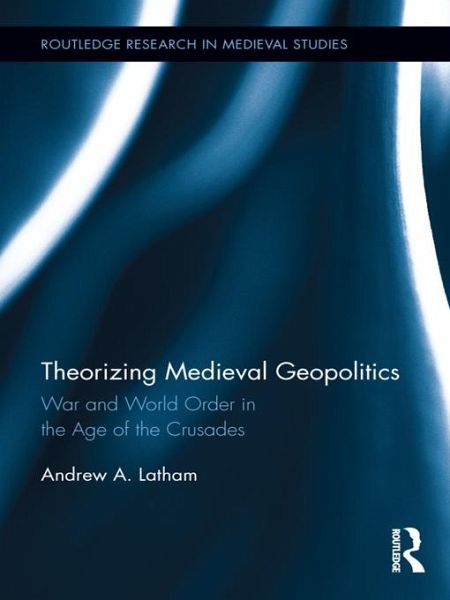
Over the past two decades or so, medieval geopolitics have come to occupy an increasingly prominent place in the collective imagination-and writings-of International Relations scholars. Although these accounts differ significantly in terms of their respective analytical assumptions, theoretical concerns and scholarly contributions, they share at least one common - arguably, defining - element: a belief that a careful study of medieval geopolitics can help resolve a number of important debates surrounding the nature and dynamics of "international" relations. There are however three generic weaknesses characterizing the extant literature: a general failure to examine the existing historiography of medieval geopolitics, an inadequate account of the material and ideational forces that create patterns of violent conflict in medieval Latin Christendom, and a failure to take seriously the role of "religion" in the geopolitical relations of medieval Latin Christendom.
This book seeks to address these shortcomings by providing a theoretically guided and historically sensitive account of the geopolitical relations of medieval Latin Christendom. It does this by developing a theoretically informed picture of medieval geopolitics, theorizing the medieval-to-modern transition in a new and fruitful way, and suggesting ways in which a systematic analysis of medieval geopolitical relations can actually help to illuminate a range of contemporary geopolitical phenomena. Finally, it develops an historically sensitive conceptual framework for understanding geopolitical conflict and war more generally.
This book seeks to address these shortcomings by providing a theoretically guided and historically sensitive account of the geopolitical relations of medieval Latin Christendom. It does this by developing a theoretically informed picture of medieval geopolitics, theorizing the medieval-to-modern transition in a new and fruitful way, and suggesting ways in which a systematic analysis of medieval geopolitical relations can actually help to illuminate a range of contemporary geopolitical phenomena. Finally, it develops an historically sensitive conceptual framework for understanding geopolitical conflict and war more generally.
Dieser Download kann aus rechtlichen Gründen nur mit Rechnungsadresse in A, B, BG, CY, CZ, D, DK, EW, E, FIN, F, GR, HR, H, IRL, I, LT, L, LR, M, NL, PL, P, R, S, SLO, SK ausgeliefert werden.