Sie sind bereits eingeloggt. Klicken Sie auf 2. tolino select Abo, um fortzufahren.
Bitte loggen Sie sich zunächst in Ihr Kundenkonto ein oder registrieren Sie sich bei bücher.de, um das eBook-Abo tolino select nutzen zu können.
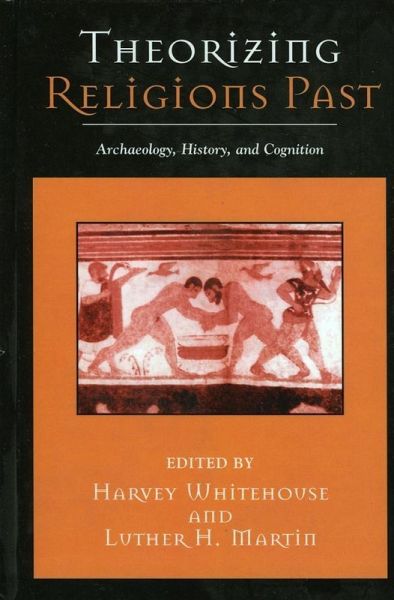
Historians bound by their singular stories and archaeologists bound by their material evidence donOt typically seek out broad comparative theories of religion. But recently Harvey WhitehouseOs Omodes of religiosityO theory has been attracting many scholars of past religions. Based upon universal features of human cognition, WhitehouseOs theory can provide useful comparisons across cultures and historical periods even when limited cultural data is present. In this groundbreaking volume scholars of cultures from prehistorical hunter-gatherers to 19th century Scandinavian Lutherans evaluate…mehr
Historians bound by their singular stories and archaeologists bound by their material evidence donOt typically seek out broad comparative theories of religion. But recently Harvey WhitehouseOs Omodes of religiosityO theory has been attracting many scholars of past religions. Based upon universal features of human cognition, WhitehouseOs theory can provide useful comparisons across cultures and historical periods even when limited cultural data is present. In this groundbreaking volume scholars of cultures from prehistorical hunter-gatherers to 19th century Scandinavian Lutherans evaluate WhitehouseOs hypothesis that all religions tend toward either an imagistic or a doctrinal mode depending on how they are remembered and transmitted. Theorizing Religions Past provides valuable insights for all historians of religion and especially for those interested in a new cognitive method for studying the past.
Die Herstellerinformationen sind derzeit nicht verfügbar.
Autorenporträt
Harvey Whitehouse is professor of anthropology and director of postgraduate studies in the Faculty of Humanities at Queen's University Belfast. He is co-director with E. Thomas Lawson of the newly established Centre for Cognition and Culture at Queen's University Belfast. He is currently the recipient of two major British Academy grants. His previous books include Inside the Cult: religious innovation and transmission in Papua New Guinea (1995), Arguments and Icons: divergent modes of religiosity, (2000), The Debated Mind: evolutionary psychology versus ethnography (2001), and Modes of Religiosity: a cognitive theory of religious transmission (AltaMira, 2004). Luther H. Martin, professor of religion at the University of Vermont, is the author of Hellenistic Religions: An Introduction (1987), an editor of Theoretical Frameworks for the Study of Graeco-Roman Religions (2002), and author of numerous articles in this area of the history of religions. In addition, he is the author of numerous articles on theory and method in the study of religion, an editor of several volumes of essays on this topic, as well as an editor of a volume on The Academic Study of Religion During the Cold War (2001). He is currently engaged in research on Graeco-Roman religions from the perspective of cognitive science.
Inhaltsangabe
1 Preface 2 The Wedding of Psychology, Ethnography & History: Methodological Bigamy or Tripartite Free Love? 3 Toward a Scientific History of Religions Part 4 The Archaeological Evidence 5 From Ohalo to Çatalhöyük: The Development of Religiosity During the Early Prehistory of Western Asia, 20,000-7,000 BC 6 No Need to Write this Down: Primary Emergence of the Doctrinal Mode in the Fifth and Fourth Millenia in Southwestern Iran 7 Graeco-Roman Antiquity 8 Old and New in Roman Religion: A Cognitive Account 9 Four Men, Two Sticks, and a Whip: Image and Doctrine in Mithraic Ritual 10 Syncretism and the Interaction of Modes of Religiosity: A Formative Perspective in "Gnostic Christian" Movements in Late Antiquity 11 Christian Traditions 12 Testing the Two Modes: Some Observations about Medieval Christianity 13 Modes of Religiosity and Changes in Popular Religious Practices at the Time of the Reformation 14 Modes of Religiosity and Types of Conversion in Medieval Europe and Modern Africa 15 Corrupt Doctrine and Doctrinal Revival: On the Nature and Limits of the Modes Theory 16 Critical Discussion 17 Critical Reflections on the "Modes of Religiosity" Argument 18 Theorizing Religions Past
1 Preface 2 The Wedding of Psychology, Ethnography & History: Methodological Bigamy or Tripartite Free Love? 3 Toward a Scientific History of Religions Part 4 The Archaeological Evidence 5 From Ohalo to Çatalhöyük: The Development of Religiosity During the Early Prehistory of Western Asia, 20,000-7,000 BC 6 No Need to Write this Down: Primary Emergence of the Doctrinal Mode in the Fifth and Fourth Millenia in Southwestern Iran 7 Graeco-Roman Antiquity 8 Old and New in Roman Religion: A Cognitive Account 9 Four Men, Two Sticks, and a Whip: Image and Doctrine in Mithraic Ritual 10 Syncretism and the Interaction of Modes of Religiosity: A Formative Perspective in "Gnostic Christian" Movements in Late Antiquity 11 Christian Traditions 12 Testing the Two Modes: Some Observations about Medieval Christianity 13 Modes of Religiosity and Changes in Popular Religious Practices at the Time of the Reformation 14 Modes of Religiosity and Types of Conversion in Medieval Europe and Modern Africa 15 Corrupt Doctrine and Doctrinal Revival: On the Nature and Limits of the Modes Theory 16 Critical Discussion 17 Critical Reflections on the "Modes of Religiosity" Argument 18 Theorizing Religions Past
Es gelten unsere Allgemeinen Geschäftsbedingungen: www.buecher.de/agb
Impressum
www.buecher.de ist ein Internetauftritt der buecher.de internetstores GmbH
Geschäftsführung: Monica Sawhney | Roland Kölbl | Günter Hilger
Sitz der Gesellschaft: Batheyer Straße 115 - 117, 58099 Hagen
Postanschrift: Bürgermeister-Wegele-Str. 12, 86167 Augsburg
Amtsgericht Hagen HRB 13257
Steuernummer: 321/5800/1497
USt-IdNr: DE450055826