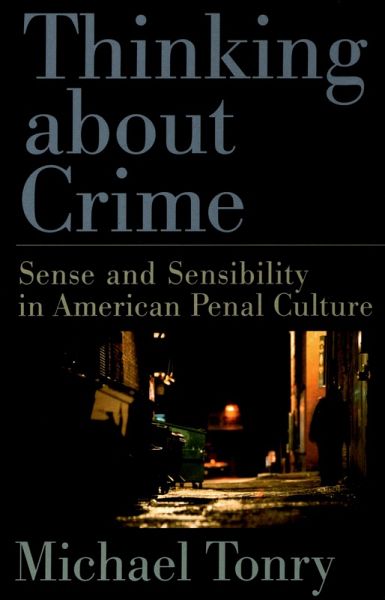
9,95 €
9,95 €
inkl. MwSt.
Sofort per Download lieferbar

5 °P sammeln
9,95 €
Als Download kaufen
9,95 €
inkl. MwSt.
Sofort per Download lieferbar
5 °P sammeln
Jetzt verschenken
Alle Infos zum eBook verschenken
9,95 €
inkl. MwSt.
Sofort per Download lieferbar
Alle Infos zum eBook verschenken
5 °P sammeln

Andere Kunden interessierten sich auch für
") The Future of Imprisonment (eBook, ePUB)20,95 €
The Future of Imprisonment (eBook, ePUB)20,95 €") The Insidious Momentum of American Mass Incarceration (eBook, ePUB)12,95 €
The Insidious Momentum of American Mass Incarceration (eBook, ePUB)12,95 €") Crime Scene Processing in Correctional Facilities and Prisons (eBook, ePUB)57,95 €
Crime Scene Processing in Correctional Facilities and Prisons (eBook, ePUB)57,95 €") Introduction to Criminal Justice (eBook, ePUB)77,95 €
Introduction to Criminal Justice (eBook, ePUB)77,95 €") Re-Thinking the Political Economy of Punishment (eBook, ePUB)47,95 €
Re-Thinking the Political Economy of Punishment (eBook, ePUB)47,95 €") Doing Justice, Preventing Crime (eBook, ePUB)13,95 €
Doing Justice, Preventing Crime (eBook, ePUB)13,95 €") Beyond Punishment? (eBook, ePUB)24,95 €
Beyond Punishment? (eBook, ePUB)24,95 €






Crime is an American preoccupation. Campaigns such as "the war on drugs," zero tolerance policing, and three strikes and you're out--not to mention the ever-shrill coverage of crime stories-all suggest a perpetually outraged nation determined to keep its criminal element at bay, no matter the cost. But is this really what average Americans think about crime and crime control measures? Or is the "no holds barred" approach merely another oscillation in an ongoing cycle of intolerance and tolerance in American thinking? Have prevailing but short-lived sensibilities on crime overruled our common sense? In this wide-ranging analysis, Michael Tonry argues that those responsible for crafting America's criminal justice policy have lost their way in a forest of good intentions, political cynicism, and public anxieties. American crime control politics over time have created a punishment system no one would knowingly have chosen yet one that no one seems able to change. Fueled by knee-jerk rhetoric and moral panics, the current crime control regime is founded on short-term thinking and the personal ambitions of politicians terrified of appearing "soft on crime," rather than on policies that work. Tonry demonstrates that attitudes toward crime in America are cyclical. Prevailing sensibilities rather than timeless truths govern the American war on crime, resulting in policies both wasteful and harsh. U.S. crime trends closely resemble those of other nations, yet American policies are very different. The evolution of the war on drugs is an example; sentencing grew steadily harsher long after the drug problem itself eased. Seamlessly blending history with an easy presentation of day-to-day realities and empirical evidence, Tonry proposes tangible, specific solutions that can serve as a platform for criminal justice reform. A spirited manifesto rooted in a lifetime of crime expertise, Tonry's book calls on politician and policymakers to choose the right path, not the easy or politically expedient one. We know how to create an effective and humane criminal justice system. Now we must have the courage to do so, by abandoning the current status quo, which is both costly and cruel in favor of practices that will move America closer to the mainstream of contemporary Western values.
Dieser Download kann aus rechtlichen Gründen nur mit Rechnungsadresse in A, B, BG, CY, CZ, D, DK, EW, E, FIN, F, GR, HR, H, IRL, I, LT, L, LR, M, NL, PL, P, R, S, SLO, SK ausgeliefert werden.