40,95 €
inkl. MwSt.
Sofort per Download lieferbar
20 °P sammeln

Andere Kunden interessierten sich auch für
") Virtual Testing and Predictive Modeling (eBook, PDF)80,95 €
Virtual Testing and Predictive Modeling (eBook, PDF)80,95 €") A Course on Damage Mechanics (eBook, PDF)68,95 €
A Course on Damage Mechanics (eBook, PDF)68,95 €") Fracture Mechanics (eBook, PDF)88,95 €
Fracture Mechanics (eBook, PDF)88,95 €") Fracture Mechanics (eBook, PDF)40,95 €
Fracture Mechanics (eBook, PDF)40,95 €") Fracture Mechanics (eBook, PDF)67,95 €
Fracture Mechanics (eBook, PDF)67,95 €") Physical Aspects of Fracture (eBook, PDF)40,95 €
Physical Aspects of Fracture (eBook, PDF)40,95 €") Advances in Fracture Research (eBook, PDF)72,95 €
Advances in Fracture Research (eBook, PDF)72,95 €
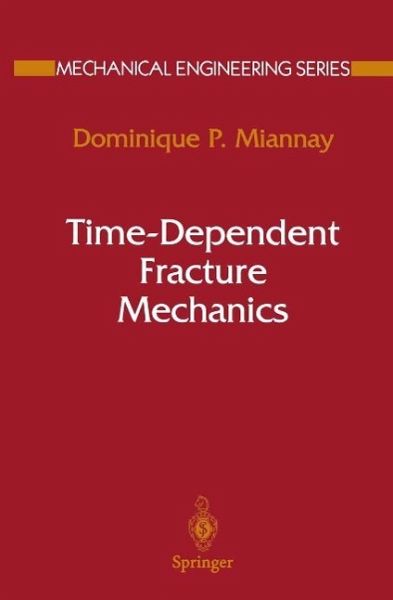
This book represents a continuation of the author's "Fracture Mechanics" (1997). It will appeal to a variety of audiences: The discussion of design codes and procedures will be of use to practicing engineers, particularly in the nuclear, aerospace, and pipeline industries; the extensive bibliography and discussion of recent results will make it a useful reference for academic researchers; and graduate students will find the clear explanations and worked examples useful for learning the field.
Dieser Download kann aus rechtlichen Gründen nur mit Rechnungsadresse in A, B, BG, CY, CZ, D, DK, EW, E, FIN, F, GR, HR, H, IRL, I, LT, L, LR, M, NL, PL, P, R, S, SLO, SK ausgeliefert werden.
From the reviews of the first edition: "Intended for engineers, researchers, and graduate students dealing with materials science, structural design, and non-destructive testing and evaluation, 'Time-Dependent Fracture Mechanics' by D. Miannay represents a continuation of the author's book 'Fracture Mechanics' from 1997. The discussion of design codes and procedures will be of use to practicing engineers ... the extensive bibliography and discussion of recent results will make it a useful reference for academic researchers; and graduate students will find clear explanations and worked examples." (Materialprüfung, Vol. 44 (5), 2002) "The book is devoted to the failure of cracked bodies, and its content is divided into three main logical parts. ... On the whole, the monograph could be recommended as reference book to postgraduate students, scientists and engineers working in the field of structural design, nondestructive evaluation and safety assessment." (Ján Sládek, Zentralblatt MATH, Vol. 977, 2002)