18,95 €
18,95 €
inkl. MwSt.
Sofort per Download lieferbar

9 °P sammeln
18,95 €
Als Download kaufen
18,95 €
inkl. MwSt.
Sofort per Download lieferbar
9 °P sammeln
Jetzt verschenken
Alle Infos zum eBook verschenken
18,95 €
inkl. MwSt.
Sofort per Download lieferbar
Alle Infos zum eBook verschenken
9 °P sammeln

Andere Kunden interessierten sich auch für
") Young People in the Global South (eBook, PDF)0,00 €
Young People in the Global South (eBook, PDF)0,00 €") The Other War (eBook, PDF)15,95 €
The Other War (eBook, PDF)15,95 €") Shielding the Poor (eBook, PDF)19,95 €
Shielding the Poor (eBook, PDF)19,95 €") Governance for Pro-Poor Urban Development (eBook, PDF)45,95 €
Governance for Pro-Poor Urban Development (eBook, PDF)45,95 €") Transforming the Development Landscape (eBook, PDF)15,95 €
Transforming the Development Landscape (eBook, PDF)15,95 €") Violence in African Elections (eBook, PDF)23,95 €
Violence in African Elections (eBook, PDF)23,95 €") International Aid and the Making of a Better World (eBook, PDF)43,95 €
International Aid and the Making of a Better World (eBook, PDF)43,95 €

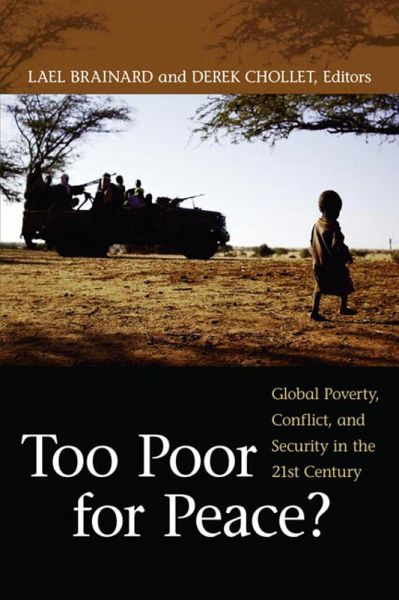
Extreme poverty exhausts institutions, depletes resources, weakens leadership, and ultimately contributes to rising insecurity and conflict. Just as poverty begets insecurity, however, the reverse is also true. As the destabilizing effects of conflict settle in, civil institutions are undermined and poverty proliferates. Breaking this nexus between poverty and conflict is one of the biggest challenges of the twenty-first century. The authors of this compelling book¿some of the most experienced practitioners from around the world¿investigate the complex and dynamic relationship between poverty and insecurity, exploring possible agents for change. They bring the latest lessons and intellectual framework to bear in an examination of African leadership, the private sector, and American foreign aid as vehicles for improving economic conditions and security. Contributors include Colin Kahl (University of Minnesota),Vinca LaFleur (Vinca LaFleur Communications), Edward Miguel (University of California, Berkeley), Jane Nelson (Harvard University and Brookings), Anthony Nyong (University of Jos and the International Development Research Centre, Nairobi), Susan Rice (Brookings), Robert Rotberg (Harvard University and the World Peace Foundation), Marc Sommers (Tufts University), Hendrik Urdal (International Peace Research Institute), and Jennifer Windsor (Freedom House).