Sie sind bereits eingeloggt. Klicken Sie auf 2. tolino select Abo, um fortzufahren.
Bitte loggen Sie sich zunächst in Ihr Kundenkonto ein oder registrieren Sie sich bei bücher.de, um das eBook-Abo tolino select nutzen zu können.
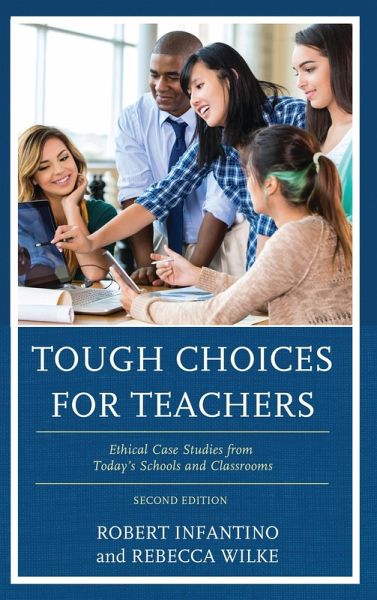
From lesson planning to instructional practice to classroom management, teachers must make choices constantly throughout their day. Sometimes these decisions are easy, but there are some decisions that are very difficult. As in other professions, challenging choices arise in education which could be detrimental to one's teaching career. Therefore, thoughtful decision making must be part of every educator's daily experience-yet how can current and future teachers be equipped to make the best decisions in their fast-paced profession? In Tough Choices for Teachers: Ethical Case Studies from…mehr
From lesson planning to instructional practice to classroom management, teachers must make choices constantly throughout their day. Sometimes these decisions are easy, but there are some decisions that are very difficult. As in other professions, challenging choices arise in education which could be detrimental to one's teaching career. Therefore, thoughtful decision making must be part of every educator's daily experience-yet how can current and future teachers be equipped to make the best decisions in their fast-paced profession? In Tough Choices for Teachers: Ethical Case Studies from Today's Schools and Classrooms, Robert Infantino and Rebecca Wilke help teachers and those working with educators to acquire practical skills to enhance their ethical decision-making processes. By utilizing case studies based on real scenarios the authors have encountered, readers will be able to work through numerous ethical dilemmas that will assist them in honing their approaches to current educational challenges. Who can benefit from reading Tough Choices for Teachers? Teachers-Preservice, New, and Experienced District LeadersProfessional Development ProvidersProfessors of EducationStudent Teacher SupervisorsStudent Teaching Seminar FacilitatorsDepartment ChairsCooperating TeachersMentors of Teachers Thinking through the ethical situations described in each chapter will assist teachers in not only improving their own decision making but also in learning specific strategies to pass on to students in today's schools and classrooms.
Die Herstellerinformationen sind derzeit nicht verfügbar.
Autorenporträt
Robert Infantino, Ed.D. is an Emeritus Professor of Education at the University of San Diego. He has spent more than fifty years in education, teaching students from high school to university, and consulting with teachers about literacy issues and ethical decision making in schools.
Inhaltsangabe
Table of Contents Preface Acknowledgements A Note to the Reader A Note to the Facilitator Chapter 1: Thinking about Ethics Chapter 2: Approaches to Ethical Decision Making Chapter 3: The Truth and Its Consequences Case 1 - A newly hired social studies teacher, Christine Kaminski, is asked to write a college letter of recommendation for a low-performing student. Should Chris tell the truth or not? Chapter 4: Playing by the Rules Case 2 - The first staff-development day turns into an afternoon golf outing for the members of the math department. Koby Johnson finds the invitation to join in very tempting. Should he stay or play? Chapter 5: Time Constraints Case 3 - Allison Barnett, like many new teachers, has multiple tugs on her time: from family, from the job, from college classes, and from personal needs. How can she balance her time without giving up teaching creatively in her elementary grade classroom? Chapter 6: Many Are Called, One Is Chosen Case 4 - Kelsey Lizdell is serving on a committee to find a new English teacher. She has to help choose among three well-qualified finalists. Quite unexpectedly, the conversation turns away from her choice. What should she do? Chapter 7: Property Concerns Case 5 - Reams of missing copy paper cause tighter controls on all the supplies in Diana Simpson's school. She discovers the culprit, a veteran teacher who thinks little of "borrowing" whatever supplies she needs. How should Diana handle this situation? Chapter 8: Credit-and Where It Is Due Case 6 - Student plagiarism may not be the only type of plagiarism happening in Brad Edelstein's school. Another teacher has taken full credit for a report that Brad helped write. How should he handle this situation? Chapter 9: Making the Grade Case 7 - Grades are important in Leticia Granados's biology class. But the parents of one of her students accuse Leticia of giving their son lower grades than he deserves. How should Leticia handle their threats? Chapter 10: Religion, Politics, and Delicate Curricular Subjects Case 8 - A student teacher wants to introduce new material into his cooperating teacher's English curriculum. Mike Leblanc is surprised and a bit shaken by his teacher's response. Is there a way for a student teacher to shape curriculum in this rural community school? Chapter 11: Relationship Red Flags Case 9 - There are many varied relationships among the participants in this case involving Heather McBride and her private elementary school. From older teachers, to the principal, to teachers who have already left the school, Heather faces a web of entanglements. How does she become disentangled and just teach her third graders? Chapter 12: Trouble with Tech Ethics Case 10 - Tyler Johnson thought his troubles with technology revolved around his students' obsession with a new online game. Unfortunately, his implementation of a lesson involving this game has not only created controversy with parents and his principal but has also received media attention. Could Tyler end up being reprimanded, or worse, even though he simply wanted to regain control of his classroom? Chapter 13: Sex and the Single Teacher Case 11 - Reggie Greco and Mary Ann Gardner have been "an item" around the high school. The problem is that Mary Ann happens to be the principal, while Reggie is a new science teacher under her supervision. After the inevitable breakup, Mary Ann recommends to the district that Reggie not be rehired. What are some solutions to this very messy situation? Chapter 14: Character Matters Case 12 - Before coming to work at her current school, Tina Carsoni had been a student teacher forMaggie Cline. She knew of Maggie's personal problems, the most serious of which involvedalcohol. Tina finds out that Maggie might be transferred to the elementary school in which Tinais now working. Should Tina tell her principal to reconsider Maggie's transfer because of theproblems? Chapter 15: Touchy Situations Case 13 - As a substitute teacher, Ralph finds himself in a professional hailstorm after filling in for his friend James who attends a conference. A student accuses Ralph of touching her inappropriately and spreads the news on social media. Soon parents as well as district leaders suspect the worst. But wait-this student has a history of reporting such incidents. But with a principal who doesn't like James or Ralph, the touchy situation becomes extremely complicated. What will happen to Ralph, and possibly James, because of this accusation? Chapter 16: Generational Differences Case 14 - Hired to replace another Millennial teacher, Hailey Brown is also added to the charter school's math curriculum committee. She quickly realizes that generational differences may be at the heart of some of the philosophical dilemmas that have arisen as the teachers struggle to find the optimum math program that will meet the expectations and needs of staff, parents, and the "Digital Natives" in their care. What can Hailey recommend that might appeal to all the different generations represented by the teachers on this committee? Epilogue Appendix A: Helping Student Athletes or Helping Students with Special Needs: An Ethical Dilemma Appendix B: Money Matters at Meadowlark Charter High School Appendix C: Recommended Readings for Educators about Ethics and Values Appendix D: Recommended Resources for Today's Teachers References About the Authors
Table of Contents Preface Acknowledgements A Note to the Reader A Note to the Facilitator Chapter 1: Thinking about Ethics Chapter 2: Approaches to Ethical Decision Making Chapter 3: The Truth and Its Consequences Case 1 - A newly hired social studies teacher, Christine Kaminski, is asked to write a college letter of recommendation for a low-performing student. Should Chris tell the truth or not? Chapter 4: Playing by the Rules Case 2 - The first staff-development day turns into an afternoon golf outing for the members of the math department. Koby Johnson finds the invitation to join in very tempting. Should he stay or play? Chapter 5: Time Constraints Case 3 - Allison Barnett, like many new teachers, has multiple tugs on her time: from family, from the job, from college classes, and from personal needs. How can she balance her time without giving up teaching creatively in her elementary grade classroom? Chapter 6: Many Are Called, One Is Chosen Case 4 - Kelsey Lizdell is serving on a committee to find a new English teacher. She has to help choose among three well-qualified finalists. Quite unexpectedly, the conversation turns away from her choice. What should she do? Chapter 7: Property Concerns Case 5 - Reams of missing copy paper cause tighter controls on all the supplies in Diana Simpson's school. She discovers the culprit, a veteran teacher who thinks little of "borrowing" whatever supplies she needs. How should Diana handle this situation? Chapter 8: Credit-and Where It Is Due Case 6 - Student plagiarism may not be the only type of plagiarism happening in Brad Edelstein's school. Another teacher has taken full credit for a report that Brad helped write. How should he handle this situation? Chapter 9: Making the Grade Case 7 - Grades are important in Leticia Granados's biology class. But the parents of one of her students accuse Leticia of giving their son lower grades than he deserves. How should Leticia handle their threats? Chapter 10: Religion, Politics, and Delicate Curricular Subjects Case 8 - A student teacher wants to introduce new material into his cooperating teacher's English curriculum. Mike Leblanc is surprised and a bit shaken by his teacher's response. Is there a way for a student teacher to shape curriculum in this rural community school? Chapter 11: Relationship Red Flags Case 9 - There are many varied relationships among the participants in this case involving Heather McBride and her private elementary school. From older teachers, to the principal, to teachers who have already left the school, Heather faces a web of entanglements. How does she become disentangled and just teach her third graders? Chapter 12: Trouble with Tech Ethics Case 10 - Tyler Johnson thought his troubles with technology revolved around his students' obsession with a new online game. Unfortunately, his implementation of a lesson involving this game has not only created controversy with parents and his principal but has also received media attention. Could Tyler end up being reprimanded, or worse, even though he simply wanted to regain control of his classroom? Chapter 13: Sex and the Single Teacher Case 11 - Reggie Greco and Mary Ann Gardner have been "an item" around the high school. The problem is that Mary Ann happens to be the principal, while Reggie is a new science teacher under her supervision. After the inevitable breakup, Mary Ann recommends to the district that Reggie not be rehired. What are some solutions to this very messy situation? Chapter 14: Character Matters Case 12 - Before coming to work at her current school, Tina Carsoni had been a student teacher forMaggie Cline. She knew of Maggie's personal problems, the most serious of which involvedalcohol. Tina finds out that Maggie might be transferred to the elementary school in which Tinais now working. Should Tina tell her principal to reconsider Maggie's transfer because of theproblems? Chapter 15: Touchy Situations Case 13 - As a substitute teacher, Ralph finds himself in a professional hailstorm after filling in for his friend James who attends a conference. A student accuses Ralph of touching her inappropriately and spreads the news on social media. Soon parents as well as district leaders suspect the worst. But wait-this student has a history of reporting such incidents. But with a principal who doesn't like James or Ralph, the touchy situation becomes extremely complicated. What will happen to Ralph, and possibly James, because of this accusation? Chapter 16: Generational Differences Case 14 - Hired to replace another Millennial teacher, Hailey Brown is also added to the charter school's math curriculum committee. She quickly realizes that generational differences may be at the heart of some of the philosophical dilemmas that have arisen as the teachers struggle to find the optimum math program that will meet the expectations and needs of staff, parents, and the "Digital Natives" in their care. What can Hailey recommend that might appeal to all the different generations represented by the teachers on this committee? Epilogue Appendix A: Helping Student Athletes or Helping Students with Special Needs: An Ethical Dilemma Appendix B: Money Matters at Meadowlark Charter High School Appendix C: Recommended Readings for Educators about Ethics and Values Appendix D: Recommended Resources for Today's Teachers References About the Authors
Es gelten unsere Allgemeinen Geschäftsbedingungen: www.buecher.de/agb
Impressum
www.buecher.de ist ein Internetauftritt der buecher.de internetstores GmbH
Geschäftsführung: Monica Sawhney | Roland Kölbl | Günter Hilger
Sitz der Gesellschaft: Batheyer Straße 115 - 117, 58099 Hagen
Postanschrift: Bürgermeister-Wegele-Str. 12, 86167 Augsburg
Amtsgericht Hagen HRB 13257
Steuernummer: 321/5800/1497
USt-IdNr: DE450055826