2,99 €
2,99 €
inkl. MwSt.
Sofort per Download lieferbar

0 °P sammeln
2,99 €
Als Download kaufen
2,99 €
inkl. MwSt.
Sofort per Download lieferbar
0 °P sammeln
Jetzt verschenken
Alle Infos zum eBook verschenken
2,99 €
inkl. MwSt.
Sofort per Download lieferbar
Alle Infos zum eBook verschenken
0 °P sammeln

Andere Kunden interessierten sich auch für
 A Simple Guide To The Condition, Diagnosis, Treatment And Related Conditions (eBook, ePUB)") Alien Hand Syndrome, (Dr Strangelove Syndrome) A Simple Guide To The Condition, Diagnosis, Treatment And Related Conditions (eBook, ePUB)2,99 €
Alien Hand Syndrome, (Dr Strangelove Syndrome) A Simple Guide To The Condition, Diagnosis, Treatment And Related Conditions (eBook, ePUB)2,99 €") Horner Syndrome, A Simple Guide To The Condition, Diagnosis, Treatment And Related Conditions (eBook, ePUB)2,99 €
Horner Syndrome, A Simple Guide To The Condition, Diagnosis, Treatment And Related Conditions (eBook, ePUB)2,99 €") Alice In Wonderland Syndrome, A Simple Guide To The Condition, Diagnosis, Treatment And Related Conditions (eBook, ePUB)2,99 €
Alice In Wonderland Syndrome, A Simple Guide To The Condition, Diagnosis, Treatment And Related Conditions (eBook, ePUB)2,99 € A Simple Guide To The Condition, Diagnosis, Treatment And Related Conditions (eBook, ePUB)") Benign Fasciculation Syndrome, (Muscle Twitching) A Simple Guide To The Condition, Diagnosis, Treatment And Related Conditions (eBook, ePUB)2,99 €
Benign Fasciculation Syndrome, (Muscle Twitching) A Simple Guide To The Condition, Diagnosis, Treatment And Related Conditions (eBook, ePUB)2,99 €") Cubital Tunnel Syndrome, A Simple Guide To The Condition, Diagnosis, Treatment And Related Conditions (eBook, ePUB)2,99 €
Cubital Tunnel Syndrome, A Simple Guide To The Condition, Diagnosis, Treatment And Related Conditions (eBook, ePUB)2,99 €") Thoracic Outlet Syndrome, A Simple Guide To The Condition, Diagnosis, Treatment And Related Conditions (eBook, ePUB)2,99 €
Thoracic Outlet Syndrome, A Simple Guide To The Condition, Diagnosis, Treatment And Related Conditions (eBook, ePUB)2,99 €") Goodpasture Syndrome, A Simple Guide To The Condition, Diagnosis, Treatment And Related Conditions (eBook, ePUB)2,99 €
Goodpasture Syndrome, A Simple Guide To The Condition, Diagnosis, Treatment And Related Conditions (eBook, ePUB)2,99 €
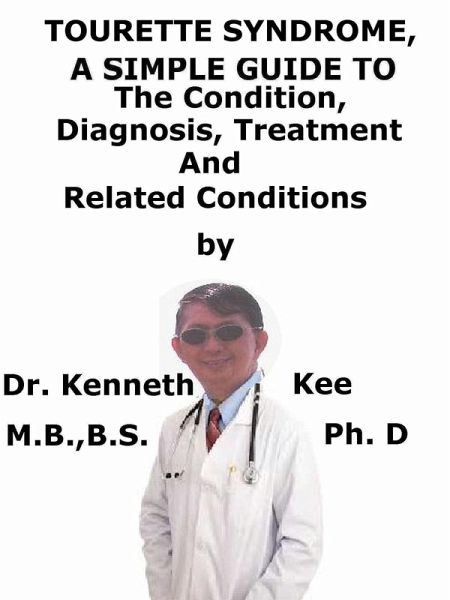
Tourette syndrome (TS), sometimes called Tourette disorder (TD), is a neurological medical disorder featured by multiple repeated tics.
Tics are sudden, purposeless, and involuntary vocal sounds or muscular jerks.
Tourette syndrome is a disorder that causes a person to make repeated, quick movements or sounds that they cannot control.
Symptoms of TS normally start between the ages of 5 and 10 years, and normally start with mild, simple tics involving the face, head, or arms.
With time, tics may occur more often and add to differences.
They may also affect more body parts, such as the trunk or legs, and often become more disturbing to activities of daily living (ADLs).
Causes
Genetics
Tourette syndrome tends to be passed down through families.
The syndrome may be linked to problems in certain areas of the brain.
It may be related with chemical substances (dopamine, serotonin, and norepinephrine) that assist nerve cells signal one another.
Tourette syndrome is an autosomal dominant disorder.
Autosomal indicates that both males and females are affected and dominant indicates that one copy of the gene is essential to have the disorder.
This indicates that a parent with TS or a parent who has the gene for TS has a 50/50 chance, with each pregnancy, to pass the gene on.
Childhood infection
Another theory is TS formation may be linked to a childhood infection by streptococcal bacteria (bacteria that normally produce a sore throat).
Trying to fight off the infection, the immune system forms antibodies (proteins).
The antibodies may react with brain tissue, involving the brain's functioning.
Following a throat infection, some children have developed the symptoms of TS, and the symptoms of obsessive compulsive disorder (OCD).
Symptoms of Tourette syndrome is often first observed during childhood, between ages 7 and 10.
The most frequent first symptom is a tic of the face.
There are many types of tics.
Some affect body movement (motor tics) and others result in a sound (vocal or phonic tics).
Tics can be:
1. Vocal (sounds) such as grunting, coughing or shouting out words
2. Physical (movements) such as jerking of the head or jumping up and down
They can also be:
1. Simple making a small movement or uttering a single sound
2. Complex making a series of physical movements or speaking a long phrase
Most people diagnosed with TS have a combination of physical and vocal tics, which can be both simple and complex.
The tics do not normally pose a serious threat to a person's overall health condition, even though physical tics, such as jerking of the head, can often be painful.
To be diagnosed with Tourette syndrome, a person must:
1. Have had many motor tics and 1 or more vocal tics, even though these tics may not have happened at the same time.
2. Have tics that happen many times a day, nearly every day or on and off, for a period of more than 1 year.
3. During this duration, there must not have been a tic-free period of more than 3 months in a row.
4. Have begun the tics before age 18.
5. Have no other brain disorder that could be a likely reason of the symptoms
People who have mild symptoms are not medically treated.
The main treatments for TS are:
Behavioral therapy is a widely used non-medical treatment for tics.
1. Habit reversal therapy
2. Exposure with response prevention (ERP)
3. Medicines
Dopamine antagonists
Muscle relaxants
Alpha2-adrenergic agonists
4. Surgery and deep brain stimulation (DBS) are last resort treatments for TS
DBS requires permanent implantation of electrodes
By stimulating certain areas of the brain the symptoms of TS can often be regulated
TABLE OF CONTENT
Introduction
Chapter 1 Tourette Syndrome
Chapter 2 Causes
Chapter 3 Symptoms
Chapter 4 Diagnosis
Chapter 5 Treatment...
Tics are sudden, purposeless, and involuntary vocal sounds or muscular jerks.
Tourette syndrome is a disorder that causes a person to make repeated, quick movements or sounds that they cannot control.
Symptoms of TS normally start between the ages of 5 and 10 years, and normally start with mild, simple tics involving the face, head, or arms.
With time, tics may occur more often and add to differences.
They may also affect more body parts, such as the trunk or legs, and often become more disturbing to activities of daily living (ADLs).
Causes
Genetics
Tourette syndrome tends to be passed down through families.
The syndrome may be linked to problems in certain areas of the brain.
It may be related with chemical substances (dopamine, serotonin, and norepinephrine) that assist nerve cells signal one another.
Tourette syndrome is an autosomal dominant disorder.
Autosomal indicates that both males and females are affected and dominant indicates that one copy of the gene is essential to have the disorder.
This indicates that a parent with TS or a parent who has the gene for TS has a 50/50 chance, with each pregnancy, to pass the gene on.
Childhood infection
Another theory is TS formation may be linked to a childhood infection by streptococcal bacteria (bacteria that normally produce a sore throat).
Trying to fight off the infection, the immune system forms antibodies (proteins).
The antibodies may react with brain tissue, involving the brain's functioning.
Following a throat infection, some children have developed the symptoms of TS, and the symptoms of obsessive compulsive disorder (OCD).
Symptoms of Tourette syndrome is often first observed during childhood, between ages 7 and 10.
The most frequent first symptom is a tic of the face.
There are many types of tics.
Some affect body movement (motor tics) and others result in a sound (vocal or phonic tics).
Tics can be:
1. Vocal (sounds) such as grunting, coughing or shouting out words
2. Physical (movements) such as jerking of the head or jumping up and down
They can also be:
1. Simple making a small movement or uttering a single sound
2. Complex making a series of physical movements or speaking a long phrase
Most people diagnosed with TS have a combination of physical and vocal tics, which can be both simple and complex.
The tics do not normally pose a serious threat to a person's overall health condition, even though physical tics, such as jerking of the head, can often be painful.
To be diagnosed with Tourette syndrome, a person must:
1. Have had many motor tics and 1 or more vocal tics, even though these tics may not have happened at the same time.
2. Have tics that happen many times a day, nearly every day or on and off, for a period of more than 1 year.
3. During this duration, there must not have been a tic-free period of more than 3 months in a row.
4. Have begun the tics before age 18.
5. Have no other brain disorder that could be a likely reason of the symptoms
People who have mild symptoms are not medically treated.
The main treatments for TS are:
Behavioral therapy is a widely used non-medical treatment for tics.
1. Habit reversal therapy
2. Exposure with response prevention (ERP)
3. Medicines
Dopamine antagonists
Muscle relaxants
Alpha2-adrenergic agonists
4. Surgery and deep brain stimulation (DBS) are last resort treatments for TS
DBS requires permanent implantation of electrodes
By stimulating certain areas of the brain the symptoms of TS can often be regulated
TABLE OF CONTENT
Introduction
Chapter 1 Tourette Syndrome
Chapter 2 Causes
Chapter 3 Symptoms
Chapter 4 Diagnosis
Chapter 5 Treatment...
Dieser Download kann aus rechtlichen Gründen nur mit Rechnungsadresse in A, B, CY, CZ, D, DK, EW, E, FIN, F, GR, H, IRL, I, LT, L, LR, M, NL, PL, P, R, S, SLO, SK ausgeliefert werden.