253,95 €
253,95 €
inkl. MwSt.
Sofort per Download lieferbar

127 °P sammeln
253,95 €
Als Download kaufen
253,95 €
inkl. MwSt.
Sofort per Download lieferbar
127 °P sammeln
Jetzt verschenken
Alle Infos zum eBook verschenken
253,95 €
inkl. MwSt.
Sofort per Download lieferbar
Alle Infos zum eBook verschenken
127 °P sammeln

Andere Kunden interessierten sich auch für
") Harmonization of Company Taxation in the European Community (eBook, PDF)42,95 €
Harmonization of Company Taxation in the European Community (eBook, PDF)42,95 €") Harmonization of Corporate Taxes in the EC (eBook, PDF)79,95 €
Harmonization of Corporate Taxes in the EC (eBook, PDF)79,95 €") Tax Policy towards the National Heritage (eBook, PDF)91,95 €
Tax Policy towards the National Heritage (eBook, PDF)91,95 €") Towards a Dual Income Tax? (eBook, PDF)97,95 €
Towards a Dual Income Tax? (eBook, PDF)97,95 €") Harmful Tax Competition in the European Union (eBook, PDF)104,95 €
Harmful Tax Competition in the European Union (eBook, PDF)104,95 €") Selectivity in State Aid Law and the Methods for the Allocation of the Corporate Tax Base (eBook, PDF)95,95 €
Selectivity in State Aid Law and the Methods for the Allocation of the Corporate Tax Base (eBook, PDF)95,95 €") Tax Compliance Costs for Companies in an Enlarged European Community (eBook, PDF)191,95 €
Tax Compliance Costs for Companies in an Enlarged European Community (eBook, PDF)191,95 €







The corporate tax policy of the European Commission has proved one of the major failures in the history of the European Community. Despite efforts of the European Commission throughout the thirty years of its existence, and pressure from the business community, little progress has been made in harmonizing corporate taxation in the European Union; the Commission''s proposals have almost always been turned down at the Council level. Yet harmonization is a crucial step in establishing a common market in Europe.
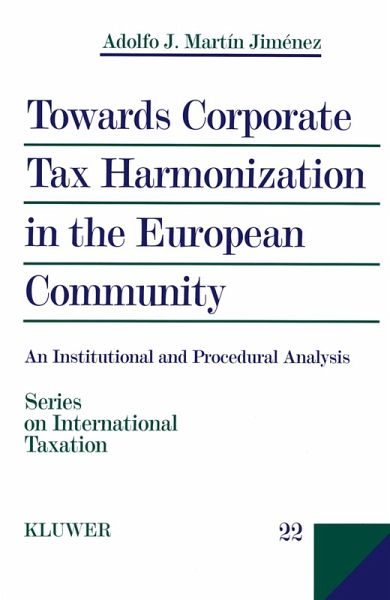
Towards Corporate Tax Harmonization in the European Community examines the efforts of the European Commission to achieve harmonization. It bases its analysis on the study of theoretical economic models of corporate tax systems which meet the requirements of a common market and avoid economic inefficiencies as well as on an examination of the US federal tax system.
Through the examination of theoretical models as well as practical examples, the author studies why the repeated harmonization attempts have failed and concludes that they must take into account not only economic aspects, but also political and legal factors. Harmonization of corporate taxation is not only a legislative exercise. Other institutions, such as the EC Court, have an important role to play in the harmonization process, as the US federal experience suggests.
Towards Corporate Tax Harmonization in the European Community concludes with a model for corporate tax harmonization which takes into account both economic theory and the realities of the political and legal process.
Practical features include chapter introductions and conclusions, a bibliography and a comprehensive table of cases arranged in both alphabetical and date order for ease of reference, including extensive citations of both EC Court and US Supreme Court jurisprudence.
This work''s thought-provoking conclusions and its comparative approach assist the reader in gaining a better understanding of the problems posed by company taxation in the EC as well as federal forms of government in general.
Towards Corporate Tax Harmonization in the European Community examines the efforts of the European Commission to achieve harmonization. It bases its analysis on the study of theoretical economic models of corporate tax systems which meet the requirements of a common market and avoid economic inefficiencies as well as on an examination of the US federal tax system.
Through the examination of theoretical models as well as practical examples, the author studies why the repeated harmonization attempts have failed and concludes that they must take into account not only economic aspects, but also political and legal factors. Harmonization of corporate taxation is not only a legislative exercise. Other institutions, such as the EC Court, have an important role to play in the harmonization process, as the US federal experience suggests.
Towards Corporate Tax Harmonization in the European Community concludes with a model for corporate tax harmonization which takes into account both economic theory and the realities of the political and legal process.
Practical features include chapter introductions and conclusions, a bibliography and a comprehensive table of cases arranged in both alphabetical and date order for ease of reference, including extensive citations of both EC Court and US Supreme Court jurisprudence.
This work''s thought-provoking conclusions and its comparative approach assist the reader in gaining a better understanding of the problems posed by company taxation in the EC as well as federal forms of government in general.
Dieser Download kann aus rechtlichen Gründen nur mit Rechnungsadresse in A, B, BG, CY, CZ, D, DK, EW, E, FIN, F, GR, HR, H, IRL, I, LT, L, LR, M, NL, PL, P, R, S, SLO, SK ausgeliefert werden.