36,95 €
36,95 €
inkl. MwSt.
Sofort per Download lieferbar

18 °P sammeln
36,95 €
Als Download kaufen
36,95 €
inkl. MwSt.
Sofort per Download lieferbar
18 °P sammeln
Jetzt verschenken
Alle Infos zum eBook verschenken
36,95 €
inkl. MwSt.
Sofort per Download lieferbar
Alle Infos zum eBook verschenken
18 °P sammeln

Andere Kunden interessierten sich auch für
") Transforming Conflict through Communication in Personal, Family, and Working Relationships (eBook, ePUB)36,95 €
Transforming Conflict through Communication in Personal, Family, and Working Relationships (eBook, ePUB)36,95 €") Understanding and Transforming Intra-Ethnic Conflicts (eBook, PDF)61,95 €
Understanding and Transforming Intra-Ethnic Conflicts (eBook, PDF)61,95 €") Peace in Turkey 2023 (eBook, PDF)74,95 €
Peace in Turkey 2023 (eBook, PDF)74,95 €") Communication and Conflict Transformation through Local, Regional, and Global Engagement (eBook, PDF)95,95 €
Communication and Conflict Transformation through Local, Regional, and Global Engagement (eBook, PDF)95,95 €") Beyond Mediation (eBook, PDF)87,95 €
Beyond Mediation (eBook, PDF)87,95 €") Routledge Handbook of Conflict Response and Leadership in Africa (eBook, PDF)43,95 €
Routledge Handbook of Conflict Response and Leadership in Africa (eBook, PDF)43,95 €") Breaking Cycles of Violence in Israel and Palestine (eBook, PDF)72,95 €
Breaking Cycles of Violence in Israel and Palestine (eBook, PDF)72,95 €





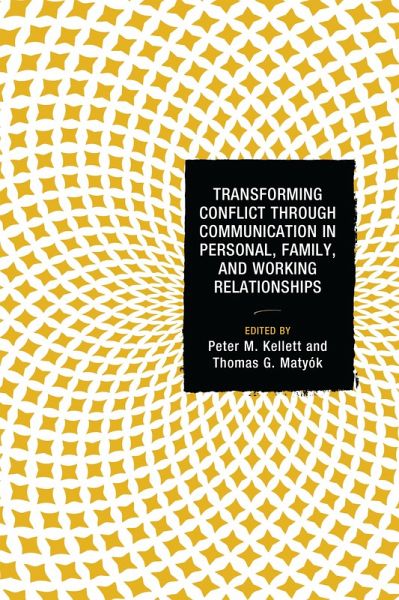
A transformational approach to conflict argues that conflicts must be viewed as embedded within broader relational patterns and social and discursive structures. Central to this book is the idea that the origins of transformation can be momentary, situational, and small-scale or large-scale and systemic. The momentary involves shifts and meaningful changes in communication and related patterns that are created in communication between people. Momentary transformative changes can radiate out into more systemic levels, and systemic transformative changes can radiate inward to more personal levels. This book engages this transformative framework by bringing together current scholarship that epitomizes and highlights the contribution of communication scholarship and communication-centered approaches to conflict transformation in personal, family, and working relationships and organizational contexts. The resulting volume presents an engaging mix of scholarly chapters, think pieces, and personal experiences from the field of practice and everyday life. The book embraces a wide variety of theoretical and methodological approaches, including narrative, critical, intersectional, rhetorical, and quantitative. It makes a valuable additive contribution to the ongoing dialogue across and between disciplines on how to transform conflicts creatively, sustainably, and ethically.