96,95 €
inkl. MwSt.
Sofort per Download lieferbar
48 °P sammeln

Andere Kunden interessierten sich auch für
") Youth Activism in the Radical Right of Brazil and Germany (eBook, PDF)104,95 €
Youth Activism in the Radical Right of Brazil and Germany (eBook, PDF)104,95 €") The Five Vital Signs of Conversation (eBook, PDF)70,95 €
The Five Vital Signs of Conversation (eBook, PDF)70,95 €") Behavioral Insights for Policy Design (eBook, PDF)68,95 €
Behavioral Insights for Policy Design (eBook, PDF)68,95 €") Reading Lacan's Seminar VIII (eBook, PDF)120,95 €
Reading Lacan's Seminar VIII (eBook, PDF)120,95 €") Groupthink in Science (eBook, PDF)52,95 €
Groupthink in Science (eBook, PDF)52,95 €") Cultural Insights from Latino Therapists in the Field (eBook, PDF)96,95 €
Cultural Insights from Latino Therapists in the Field (eBook, PDF)96,95 €") Mapping Social Memory (eBook, PDF)80,95 €
Mapping Social Memory (eBook, PDF)80,95 €






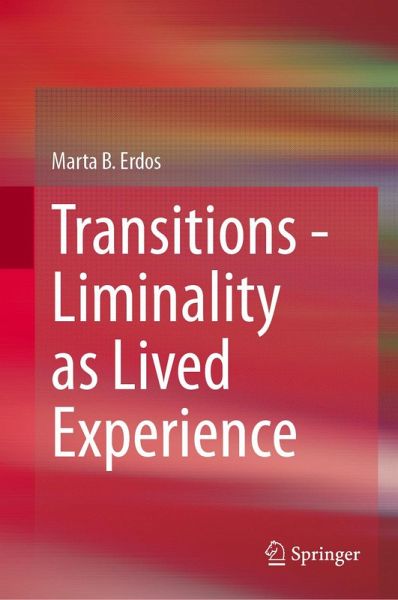
This book, adopting a systemic transdisciplinary perspective, explores the sociopsychological and the psychosocial interfaces shaping people's lived experiences of liminality. It is about life's outstandingly chaotic and confusing moments regularly recurring in or under calamitous circumstances, pervading our lives in the 21st century. Prospects for constructive change have traditionally been present in transformative liminal settings. The broad context of permanent liminality, however, is conducive to impasses in the process of change. The resulting liminal hotspots are characterized by a turmoil of negative feelings and increased suggestibility. In the book, discursive analyses underpin and illustrate the key points.
Part I of the book serves as an introduction, exploring the mixed potential inherent languaging and symbol use in the social construction of transitions and liminal phenomena. Part II comprises sociopsychological analyses of the contexts - as labyrinths of meaning - of today's globalized, a-mazed societies where economy, politics and info-communication technologies are closely intertwined to maintain trickster liminality. This part includes explorations on two distinct forms of manipulative discourse characteristic of authoritarian regimes, highlighting the role of double bind relations that permeate a despotic system to perpetuate unpredictability, chaos, and repeated entrapments in liminal hotspots. The author explores the discursive practices altering the traditional patterns of transformative liminality into the absurdity of permanent liminality with its (self)destructive power. Part III is about the psychosocial interface, focusing on the intersubjective domain of the individual's lived experiences, specifically on the phenomenological connections between rites of transition and psychosocial crises. Further, it comprises explorations on the prospects for transformative liminality inherent in dialogue.
As a conclusion, humans' constructive potential must be coupled with care to benefit from transformations. Transitioning from one form-of-process into the subsequent one remains an intrinsic and mercurial event in human development. Let us embrace these moments - but embrace them with care.
Transitions - Liminality as Lived Experience is primarily intended for scholars, as well as students (master's level or PhD), in the broad area of social sciences, especially in social communication, discourse studies, counselling, semiotic cultural psychology, social psychology, and clinical social work.
Part I of the book serves as an introduction, exploring the mixed potential inherent languaging and symbol use in the social construction of transitions and liminal phenomena. Part II comprises sociopsychological analyses of the contexts - as labyrinths of meaning - of today's globalized, a-mazed societies where economy, politics and info-communication technologies are closely intertwined to maintain trickster liminality. This part includes explorations on two distinct forms of manipulative discourse characteristic of authoritarian regimes, highlighting the role of double bind relations that permeate a despotic system to perpetuate unpredictability, chaos, and repeated entrapments in liminal hotspots. The author explores the discursive practices altering the traditional patterns of transformative liminality into the absurdity of permanent liminality with its (self)destructive power. Part III is about the psychosocial interface, focusing on the intersubjective domain of the individual's lived experiences, specifically on the phenomenological connections between rites of transition and psychosocial crises. Further, it comprises explorations on the prospects for transformative liminality inherent in dialogue.
As a conclusion, humans' constructive potential must be coupled with care to benefit from transformations. Transitioning from one form-of-process into the subsequent one remains an intrinsic and mercurial event in human development. Let us embrace these moments - but embrace them with care.
Transitions - Liminality as Lived Experience is primarily intended for scholars, as well as students (master's level or PhD), in the broad area of social sciences, especially in social communication, discourse studies, counselling, semiotic cultural psychology, social psychology, and clinical social work.
Dieser Download kann aus rechtlichen Gründen nur mit Rechnungsadresse in A, B, BG, CY, CZ, D, DK, EW, E, FIN, F, GR, HR, H, IRL, I, LT, L, LR, M, NL, PL, P, R, S, SLO, SK ausgeliefert werden.