41,95 €
inkl. MwSt.
Sofort per Download lieferbar
21 °P sammeln

Andere Kunden interessierten sich auch für
") Protecting Human Rights Defenders at Risk (eBook, PDF)39,95 €
Protecting Human Rights Defenders at Risk (eBook, PDF)39,95 €") Human Rights and Development (eBook, PDF)32,95 €
Human Rights and Development (eBook, PDF)32,95 €") UK Borderscapes (eBook, PDF)39,95 €
UK Borderscapes (eBook, PDF)39,95 €") Human Rights and the United Nations (eBook, PDF)39,95 €
Human Rights and the United Nations (eBook, PDF)39,95 €") Reviewing the Responsibility to Protect (eBook, PDF)41,95 €
Reviewing the Responsibility to Protect (eBook, PDF)41,95 €") Anti-genocide Activists and the Responsibility to Protect (eBook, PDF)51,95 €
Anti-genocide Activists and the Responsibility to Protect (eBook, PDF)51,95 €") Resettlement with People First (eBook, PDF)42,95 €
Resettlement with People First (eBook, PDF)42,95 €







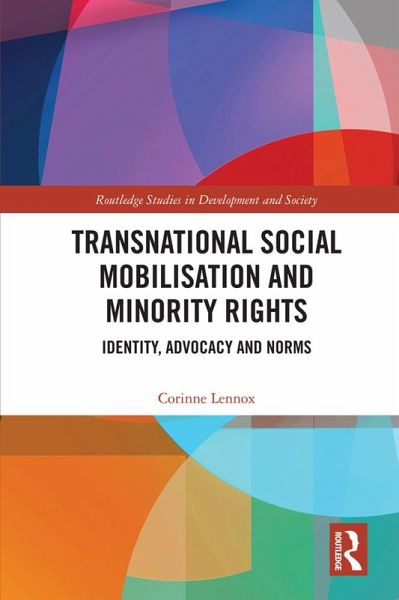
This book explores the ways in which minority groups across the world are reshaping the international minority rights protection system. It documents the actions of four major groups that are using transnational social mobilisation to achieve recognition of their identities and their rights. The result is a greater pluralism in global identity politics and a wide range of new group-specific standards that can inform policies on multiculturalism, political participation, and socio-economic inclusion in the national and international spheres.
The book begins by summarising the learning from the global movements of indigenous peoples and Roma. The book then focuses in greater depth on the cases of Afro-descendants in Latin America and of Dalits and caste-affected groups in South Asia and beyond. Each case study shows the historical roots of group-specific transnational mobilisation and how activists have constructed a distinct identity frame out of shared experiences. The book explores key parallels and differences between the discourse, framing strategies, organisational structures and political opportunities used in each case to show which factors have influenced the success or failures of their norm entrepreneurship. The role that international institutions have played in supporting these efforts is given special attention, including intergovernmental bodies such as the UN, the EU and the OAS, and international non-governmental organisations. The UN World Conference Against Racism is explored as a particularly significant political opportunity across the cases.
Among academic audiences, this book will appeal to those researching minority rights, social movements, global governance, discrimination and multiculturalism from legal, political, sociological and critical theory perspectives. It will also interest practitioners and activists working on minority rights and the challenges of norm compliance, socio-economic inclusion and governance.
The book begins by summarising the learning from the global movements of indigenous peoples and Roma. The book then focuses in greater depth on the cases of Afro-descendants in Latin America and of Dalits and caste-affected groups in South Asia and beyond. Each case study shows the historical roots of group-specific transnational mobilisation and how activists have constructed a distinct identity frame out of shared experiences. The book explores key parallels and differences between the discourse, framing strategies, organisational structures and political opportunities used in each case to show which factors have influenced the success or failures of their norm entrepreneurship. The role that international institutions have played in supporting these efforts is given special attention, including intergovernmental bodies such as the UN, the EU and the OAS, and international non-governmental organisations. The UN World Conference Against Racism is explored as a particularly significant political opportunity across the cases.
Among academic audiences, this book will appeal to those researching minority rights, social movements, global governance, discrimination and multiculturalism from legal, political, sociological and critical theory perspectives. It will also interest practitioners and activists working on minority rights and the challenges of norm compliance, socio-economic inclusion and governance.
Dieser Download kann aus rechtlichen Gründen nur mit Rechnungsadresse in A, B, BG, CY, CZ, D, DK, EW, E, FIN, F, GR, HR, H, IRL, I, LT, L, LR, M, NL, PL, P, R, S, SLO, SK ausgeliefert werden.