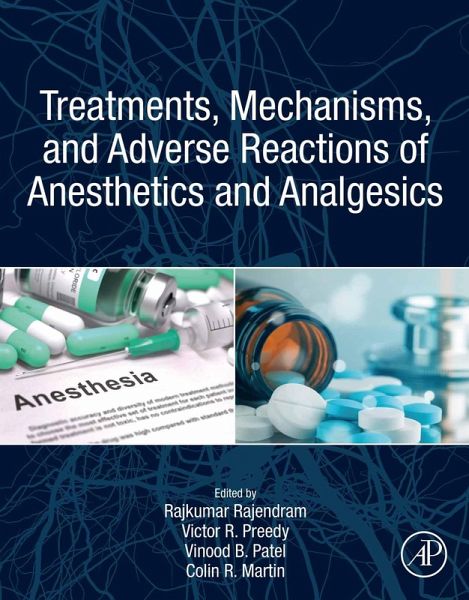
Treatments, Mechanisms, and Adverse Reactions of Anesthetics and Analgesics (eBook, ePUB)
Redaktion: Rajendram AKC, BSc; Martin BSc, MSc; Patel, Fhea; Preedy BSc
Alle Infos zum eBook verschenken
Treatments, Mechanisms, and Adverse Reactions of Anesthetics and Analgesics (eBook, ePUB)
Redaktion: Rajendram AKC, BSc; Martin BSc, MSc; Patel, Fhea; Preedy BSc
- Format: ePub
- Merkliste
- Auf die Merkliste
- Bewerten Bewerten
- Teilen
- Produkt teilen
- Produkterinnerung
- Produkterinnerung

Hier können Sie sich einloggen

Bitte loggen Sie sich zunächst in Ihr Kundenkonto ein oder registrieren Sie sich bei bücher.de, um das eBook-Abo tolino select nutzen zu können.
Treatments, Mechanisms, and Adverse Reactions of Anesthetics and Analgesics is an essential read for anyone working in pain management. The book addresses the onset of pain, the cause of the pain, and the administration of analgesia or anesthesia. The etiology of pain is complex and multi-factorial, which is made more complex with the use of analgesics and local or general anesthetics. This volume works to clarify all of the subjects pertinent to anesthesia and the brain, from their variety, modes of action, and adverse effects. - Provides a broad range of topics related to the neuroscience of…mehr
- Geräte: eReader
- ohne Kopierschutz
- eBook Hilfe
Perioperative Neuroscience (eBook, ePUB)95,95 €
Neurotoxicity of Drugs of Abuse (eBook, ePUB)132,95 €
Nanomedical Drug Delivery for Neurodegenerative Diseases (eBook, ePUB)127,95 €
Features and Assessments of Pain, Anesthesia, and Analgesia (eBook, ePUB)160,95 €
The Neuroscience of Pain, Anesthetics, and Analgesics (eBook, ePUB)382,95 €
Treatments, Nutraceuticals, Supplements, and Herbal Medicine in Neurological Disorders (eBook, ePUB)160,95 €
The Neurobiology, Physiology, and Psychology of Pain (eBook, ePUB)160,95 €-
-
-
Dieser Download kann aus rechtlichen Gründen nur mit Rechnungsadresse in A, B, BG, CY, CZ, D, DK, EW, E, FIN, F, GR, HR, H, IRL, I, LT, L, LR, M, NL, PL, P, R, S, SLO, SK ausgeliefert werden.
- Produktdetails
- Verlag: Elsevier Science & Techn.
- Seitenzahl: 680
- Erscheinungstermin: 9. November 2021
- Englisch
- ISBN-13: 9780128202388
- Artikelnr.: 62912310
- Verlag: Elsevier Science & Techn.
- Seitenzahl: 680
- Erscheinungstermin: 9. November 2021
- Englisch
- ISBN-13: 9780128202388
- Artikelnr.: 62912310
- Herstellerkennzeichnung Die Herstellerinformationen sind derzeit nicht verfügbar.
1. Anesthesia for malignant hyperthermia susceptible patients
2. Use of dextran in regional anesthesia
3. Intraperitoneal local anesthetic agents in the management of
post-operative pain
4. Automatic control of anesthesia via different vital signs
5. Non-opioid based analgesia in otolaryngology
II. Mechanisms of action of drugs
6. Buprenorphine: mechanisms and applications
7. Caffeine usage in pain management
8. Chloroprocaine: features and applications
9. Clonidine: features and applications
10. An excursion into secondary pharmacology of fentanyls with potential
implications for drug design: ¿1 receptor
11. Isoflurane: mechanisms and applications
12. The lidocaine patch: features and applications: post-thoracotomy pain
and beyond
13. Memantine: features and application to chronic pain control
14. Midazolam: Perioperative administration
15. Intravenous paracetamol: features and applications
16. Prilocaine: mechanisms and applications
17. Sevoflurane: features and use in topical application for wound care
18. Tramadol as an analgesic
III. Adverse effects, reactions and outcomes
19. Long-term effects of anaesthesia on the brain: an update on
neurotoxicity
20. Neuraxial labour analgesia and breast feeding
21. Mechanistic Overview of How Opioid Analgesics Promote Constipation
22. Cognitive-behavioral therapy for opioid use disorder and chronic pain
23. Preoperative opioid and benzodiazepines: impact on adverse outcomes
24. Anesthetics, Malignant hyperthermia syndrome and Kv7 channels
25. Problems with epidural catheter
26. Headache after neuroaxial blocks: a focus on combined-epidural
anesthesia
27. Liposomal bupivacaine, pain relief and adverse events
28. Adverse events associate with analgesics: a focus on paracetamol use
IV. Novel and non-pharmacological aspects and treatments
29. Acronychia pedunculata leaves and usage in pain
30. Adansonia digitata and use in neuropathic pain: prostaglandins and
beyond
31. Andrographis paniculata standardized extract (ParActin) and pain
32. Capsaicin: features usage in diabetic neuropathic pain
33. Cola nitida and Pain reliefLawrence
34. Analgesic effects of Ephedra Herb extract and ephedrine alkaloids-free
Ephedra Herb extract (EFE)
35. Euphorbia bicolor (Euphorbiaceae) Latex Phytochemicals and applications
to analgesia
36. Pain relieving activity of muntingia calabura l.: elucidation of
possible mechanisms of action and identification of responsible
phytoconstituents
37. Resolving neuroinflammation and pain with Maresin 1, a specialized
pro-resolving lipid mediator
38. Therapeutic role of naringenin to alleviate inflammatory pain
39. Analgesic properties of Solanum paniculatum and S.torvum extracts
40. Dietary constituents contribute to local anesthetic agent:
neurophysiologicals mechanism of nociceptive pain
41. Pain response following prenatal stress and its modulation by
antioxidants
42. Physical activity and fitness in the prevention of musculoskeletal pain
in youth
43. Linking aerobic exercise and childhood pain alleviation: a narrative
44. Physical activity and exercise in the management of musculoskeletal
pain: a focus on fibromyalgia
45. Spinal cord stimulation and limb pain
46. Effectiveness of neural mobilization on pain and disability in
individuals with musculoskeletal disorders
47. Virtual reality and applications to treating neck pain
48. Virtual reality-induced analgesia and dental pain
49. Vibrotactile devices, DentalVibe and local anesthesiaElitsa
50. Cooled radiofrequency ablation (CRFA) and osteoarthritis treatment for
pain
51. Non-pharmacologic analgesic therapies: a focus on photobiomodulation,
acustimulation and cryoanalgesia (ice) therapy
52. New coping strategies and self-education for chronic pain management:
e-health
53. Postoperative Pain Management Truncal blocks in obstetric and
gynecologic surgery
1. Anesthesia for malignant hyperthermia susceptible patients
2. Use of dextran in regional anesthesia
3. Intraperitoneal local anesthetic agents in the management of
post-operative pain
4. Automatic control of anesthesia via different vital signs
5. Non-opioid based analgesia in otolaryngology
II. Mechanisms of action of drugs
6. Buprenorphine: mechanisms and applications
7. Caffeine usage in pain management
8. Chloroprocaine: features and applications
9. Clonidine: features and applications
10. An excursion into secondary pharmacology of fentanyls with potential
implications for drug design: ¿1 receptor
11. Isoflurane: mechanisms and applications
12. The lidocaine patch: features and applications: post-thoracotomy pain
and beyond
13. Memantine: features and application to chronic pain control
14. Midazolam: Perioperative administration
15. Intravenous paracetamol: features and applications
16. Prilocaine: mechanisms and applications
17. Sevoflurane: features and use in topical application for wound care
18. Tramadol as an analgesic
III. Adverse effects, reactions and outcomes
19. Long-term effects of anaesthesia on the brain: an update on
neurotoxicity
20. Neuraxial labour analgesia and breast feeding
21. Mechanistic Overview of How Opioid Analgesics Promote Constipation
22. Cognitive-behavioral therapy for opioid use disorder and chronic pain
23. Preoperative opioid and benzodiazepines: impact on adverse outcomes
24. Anesthetics, Malignant hyperthermia syndrome and Kv7 channels
25. Problems with epidural catheter
26. Headache after neuroaxial blocks: a focus on combined-epidural
anesthesia
27. Liposomal bupivacaine, pain relief and adverse events
28. Adverse events associate with analgesics: a focus on paracetamol use
IV. Novel and non-pharmacological aspects and treatments
29. Acronychia pedunculata leaves and usage in pain
30. Adansonia digitata and use in neuropathic pain: prostaglandins and
beyond
31. Andrographis paniculata standardized extract (ParActin) and pain
32. Capsaicin: features usage in diabetic neuropathic pain
33. Cola nitida and Pain reliefLawrence
34. Analgesic effects of Ephedra Herb extract and ephedrine alkaloids-free
Ephedra Herb extract (EFE)
35. Euphorbia bicolor (Euphorbiaceae) Latex Phytochemicals and applications
to analgesia
36. Pain relieving activity of muntingia calabura l.: elucidation of
possible mechanisms of action and identification of responsible
phytoconstituents
37. Resolving neuroinflammation and pain with Maresin 1, a specialized
pro-resolving lipid mediator
38. Therapeutic role of naringenin to alleviate inflammatory pain
39. Analgesic properties of Solanum paniculatum and S.torvum extracts
40. Dietary constituents contribute to local anesthetic agent:
neurophysiologicals mechanism of nociceptive pain
41. Pain response following prenatal stress and its modulation by
antioxidants
42. Physical activity and fitness in the prevention of musculoskeletal pain
in youth
43. Linking aerobic exercise and childhood pain alleviation: a narrative
44. Physical activity and exercise in the management of musculoskeletal
pain: a focus on fibromyalgia
45. Spinal cord stimulation and limb pain
46. Effectiveness of neural mobilization on pain and disability in
individuals with musculoskeletal disorders
47. Virtual reality and applications to treating neck pain
48. Virtual reality-induced analgesia and dental pain
49. Vibrotactile devices, DentalVibe and local anesthesiaElitsa
50. Cooled radiofrequency ablation (CRFA) and osteoarthritis treatment for
pain
51. Non-pharmacologic analgesic therapies: a focus on photobiomodulation,
acustimulation and cryoanalgesia (ice) therapy
52. New coping strategies and self-education for chronic pain management:
e-health
53. Postoperative Pain Management Truncal blocks in obstetric and
gynecologic surgery