79,95 €
inkl. MwSt.
Sofort per Download lieferbar
40 °P sammeln

Andere Kunden interessierten sich auch für
") Cuckoos of the World (eBook, PDF)88,95 €
Cuckoos of the World (eBook, PDF)88,95 €") Sunbirds (eBook, PDF)41,95 €
Sunbirds (eBook, PDF)41,95 €") The Greater Flamingo (eBook, PDF)58,95 €
The Greater Flamingo (eBook, PDF)58,95 €") Parrots (eBook, PDF)88,95 €
Parrots (eBook, PDF)88,95 €") The Nuthatches (eBook, PDF)50,95 €
The Nuthatches (eBook, PDF)50,95 €") The Sparrowhawk (eBook, PDF)50,95 €
The Sparrowhawk (eBook, PDF)50,95 €") The Whooper Swan (eBook, PDF)62,95 €
The Whooper Swan (eBook, PDF)62,95 €

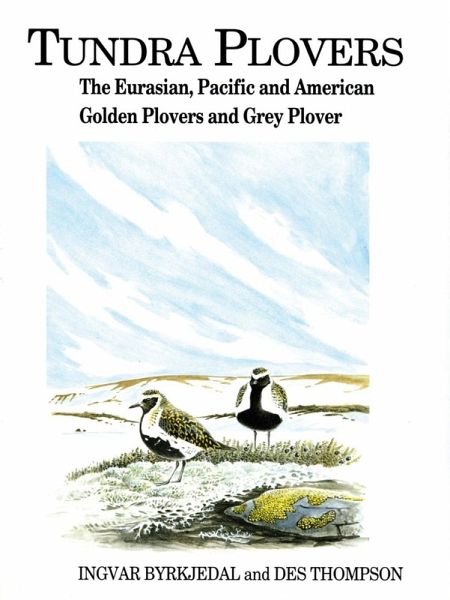
There are four species of tundra plover: the Grey Plover, and the Eurasian, Pacific, and American golden plovers.
They breed only in the northern hemisphere, principally on tundra, and migrate far south to coastal mudflats, saltings and agricultural landscapes. They have attracted avid interest from birdwatchers and researchers worldwide, not least the authors who have studied all four species. The Eurasian Golden Plover has a special claim to fame as questions over its flight speed first prompted the compilation of the world bestseller the Guinness Book of Records!
This ground-breaking book on shorebirds (waders) examines the taxonomy, appearance, behaviour, ecology and conservation of Golden and Grey plovers, and compares and contrasts their natural history and biogeography. There are detailed accounts on all aspects of their lifestyle including feeding, mating, parental care, moults, migration and avoidance of predators. The personal touches in this book add immensely to its value, not least the authors' first hand experiences of the birds and their haunts. Most of their work presented here has not been published before, adding to the significance of this highly original book.
Long-awaited considerations of differences in plumage, vocalisations, habitat use, breeding, movements and food are included. The links between phylogeny, biogeography and behaviour are bound to excite interest. The comparative approach is highly detailed and refreshing, and marks the book as a classic.
Ingvar Byrkjedal has also contributed all of the wonderful colour and line illustrations. Over fifty-five photographs, over one hundred and twenty tables and figures, and many other embellishments complete this definitive book.
They breed only in the northern hemisphere, principally on tundra, and migrate far south to coastal mudflats, saltings and agricultural landscapes. They have attracted avid interest from birdwatchers and researchers worldwide, not least the authors who have studied all four species. The Eurasian Golden Plover has a special claim to fame as questions over its flight speed first prompted the compilation of the world bestseller the Guinness Book of Records!
This ground-breaking book on shorebirds (waders) examines the taxonomy, appearance, behaviour, ecology and conservation of Golden and Grey plovers, and compares and contrasts their natural history and biogeography. There are detailed accounts on all aspects of their lifestyle including feeding, mating, parental care, moults, migration and avoidance of predators. The personal touches in this book add immensely to its value, not least the authors' first hand experiences of the birds and their haunts. Most of their work presented here has not been published before, adding to the significance of this highly original book.
Long-awaited considerations of differences in plumage, vocalisations, habitat use, breeding, movements and food are included. The links between phylogeny, biogeography and behaviour are bound to excite interest. The comparative approach is highly detailed and refreshing, and marks the book as a classic.
Ingvar Byrkjedal has also contributed all of the wonderful colour and line illustrations. Over fifty-five photographs, over one hundred and twenty tables and figures, and many other embellishments complete this definitive book.