41,95 €
inkl. MwSt.
Sofort per Download lieferbar
21 °P sammeln

Andere Kunden interessierten sich auch für
") Twenty-First Century Urbanism (eBook, ePUB)41,95 €
Twenty-First Century Urbanism (eBook, ePUB)41,95 €") Socially Restorative Urbanism (eBook, PDF)51,95 €
Socially Restorative Urbanism (eBook, PDF)51,95 €") Walking Cities: London (eBook, PDF)25,95 €
Walking Cities: London (eBook, PDF)25,95 €") Street Level: Los Angeles in the Twenty-First Century (eBook, PDF)47,95 €
Street Level: Los Angeles in the Twenty-First Century (eBook, PDF)47,95 €Generating Inclusive Cities (eBook, PDF)") (Re)Generating Inclusive Cities (eBook, PDF)22,95 €
(Re)Generating Inclusive Cities (eBook, PDF)22,95 €") Urban Surfaces, Graffiti, and the Right to the City (eBook, PDF)41,95 €
Urban Surfaces, Graffiti, and the Right to the City (eBook, PDF)41,95 €") Sustainable Urbanisation in the Caribbean (eBook, PDF)42,95 €
Sustainable Urbanisation in the Caribbean (eBook, PDF)42,95 €
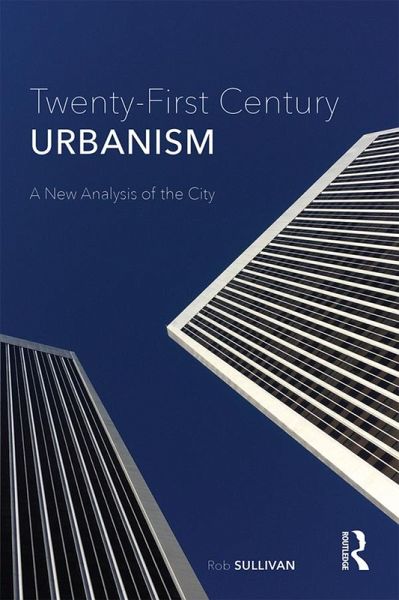
This volume argues that the city cannot be captured by any one mode of analysis but instead is composed of the mobile, relational, efficient, sentient, and the phenomenological with all of them cast in new theoretical configurations and combined into one methodological entity. Rather than focusing on any one city or abstract analytical model, this book instead takes a multipronged theoretical and methodological approach to present the city as an intelligent affective organism - a sentient being.
It proposes that cities operate on a relational, mobile, and phenomenological basis through the mode of efficiency, calibrated by a profoundly complicated division of labor. Its starting point is that the city is a mobile unit of analysis, from its economic status to its demographic makeup, from its cultural configuration to its environmental conditions, and therefore easily evades our quantitative and qualitative methods of computation and comprehension.
Twenty-First Century Urbanism provides planning and urban design academics and students with a multifaceted approach to understanding the development of cities, encouraging the examination of cities through a myriad, non-linear approach.
It proposes that cities operate on a relational, mobile, and phenomenological basis through the mode of efficiency, calibrated by a profoundly complicated division of labor. Its starting point is that the city is a mobile unit of analysis, from its economic status to its demographic makeup, from its cultural configuration to its environmental conditions, and therefore easily evades our quantitative and qualitative methods of computation and comprehension.
Twenty-First Century Urbanism provides planning and urban design academics and students with a multifaceted approach to understanding the development of cities, encouraging the examination of cities through a myriad, non-linear approach.
Dieser Download kann aus rechtlichen Gründen nur mit Rechnungsadresse in A, B, BG, CY, CZ, D, DK, EW, E, FIN, F, GR, HR, H, IRL, I, LT, L, LR, M, NL, PL, P, R, S, SLO, SK ausgeliefert werden.