26,95 €
inkl. MwSt.
Erscheint vor. 01.06.26
13 °P sammeln

Andere Kunden interessierten sich auch für
") Working through Surveillance and Technical Communication (eBook, ePUB)0,00 €
Working through Surveillance and Technical Communication (eBook, ePUB)0,00 €") Technical Communication and the World Wide Web (eBook, ePUB)49,95 €
Technical Communication and the World Wide Web (eBook, ePUB)49,95 €") Gatillos Mentales: pîde a tu audiencia lo que quieras (eBook, ePUB)0,00 €
Gatillos Mentales: pîde a tu audiencia lo que quieras (eBook, ePUB)0,00 €") The Routledge Handbook of Media Use and Well-Being (eBook, ePUB)49,95 €
The Routledge Handbook of Media Use and Well-Being (eBook, ePUB)49,95 €") Risk and Crisis Communication (eBook, ePUB)33,95 €
Risk and Crisis Communication (eBook, ePUB)33,95 €") Digital Media and Risk Culture in China's Financial Markets (eBook, ePUB)41,95 €
Digital Media and Risk Culture in China's Financial Markets (eBook, ePUB)41,95 €") Concerning Communication (eBook, ePUB)9,95 €
Concerning Communication (eBook, ePUB)9,95 €






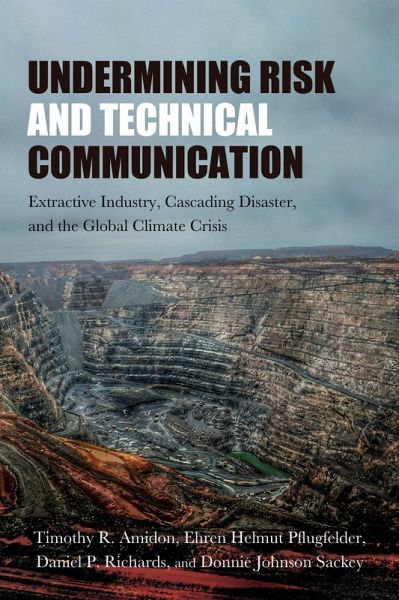
Changes the conversation about risk by exposing the field's historical complicity with extractive industries and building new methodologies for future risk communication research.
Technical and professional communication has a problem with how the concept of risk has been considered alongside extractive technologies. Throughout its history, the practice, teaching, and research of technical and professional communication has been embedded within, complicit with, and indebted to these industries. These industries have also created massive global harm to people and ecosystems, both through accidents as well as the slow violence of pollution and climate change. In response, this book seeks to "undermine" how technical and professional communication works with risk by reconsidering implications that traverse a greater span of time and geography. It revises the field's risk methodology and encourages future researchers to navigate the scope and scale of their projects. Along with new theoretical framing, the text presents three detailed case studies illustrating how careful consideration of scope and scale can impact how technical and professional communication engages extraction and risk, showcasing to new and experienced technical communication researchers alike how risk communication is about to enter a new era.
Technical and professional communication has a problem with how the concept of risk has been considered alongside extractive technologies. Throughout its history, the practice, teaching, and research of technical and professional communication has been embedded within, complicit with, and indebted to these industries. These industries have also created massive global harm to people and ecosystems, both through accidents as well as the slow violence of pollution and climate change. In response, this book seeks to "undermine" how technical and professional communication works with risk by reconsidering implications that traverse a greater span of time and geography. It revises the field's risk methodology and encourages future researchers to navigate the scope and scale of their projects. Along with new theoretical framing, the text presents three detailed case studies illustrating how careful consideration of scope and scale can impact how technical and professional communication engages extraction and risk, showcasing to new and experienced technical communication researchers alike how risk communication is about to enter a new era.
Dieser Download kann aus rechtlichen Gründen nur mit Rechnungsadresse in A, D ausgeliefert werden.