
33,95 €
33,95 €
inkl. MwSt.
Sofort per Download lieferbar

17 °P sammeln
33,95 €
Als Download kaufen
33,95 €
inkl. MwSt.
Sofort per Download lieferbar
17 °P sammeln
Jetzt verschenken
Alle Infos zum eBook verschenken
33,95 €
inkl. MwSt.
Sofort per Download lieferbar
Alle Infos zum eBook verschenken
17 °P sammeln

Andere Kunden interessierten sich auch für
") Understanding Evil (eBook, PDF)33,95 €
Understanding Evil (eBook, PDF)33,95 €") The Handbook of Jungian Psychology (eBook, ePUB)39,95 €
The Handbook of Jungian Psychology (eBook, ePUB)39,95 €") The Postsecular Sacred (eBook, ePUB)37,95 €
The Postsecular Sacred (eBook, ePUB)37,95 €") Psyche and the Sacred (eBook, ePUB)35,95 €
Psyche and the Sacred (eBook, ePUB)35,95 €") Trauma and Beyond (eBook, ePUB)33,95 €
Trauma and Beyond (eBook, ePUB)33,95 €") Jungian Psychoanalysis (eBook, ePUB)21,95 €
Jungian Psychoanalysis (eBook, ePUB)21,95 €") The Spectre of the Other in Jungian Psychoanalysis (eBook, ePUB)31,95 €
The Spectre of the Other in Jungian Psychoanalysis (eBook, ePUB)31,95 €
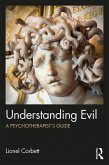


Evil is a ubiquitous, persistent problem that causes enormous human suffering. Although human beings have struggled with evil since the dawn of our species, we seem to be no nearer to ending it. In this book, Lionel Corbett describes the complexity of the problem of evil, as well as many of our current approaches to understanding it, in ways that are helpful to the practicing psychotherapist, psychoanalyst, or Jungian analyst.
Psychotherapists often work with people who have been the victim of evil, and, occasionally, the therapist is faced with a perpetrator of evil. To be helpful in these situations, the practitioner must understand the problem from several points of view, since evil is so complex that no single approach is adequate. Understanding Evil: A psychotherapist's guide describes a range of approaches to evil based on Jungian theory, psychoanalysis, social sciences, philosophy, neurobiology, mythology, and religious studies. The book clarifies the difference between actions that are merely wrong from those that are truly evil, discusses the problem of detecting evil, and describes the effects on the clinician of witnessing evil. The book also discusses what is known about the psychology of terrorism, and the question of whether a spiritual approach to evil is necessary, or whether evil can be approached from a purely secular point of view.
In Understanding Evil, a combination of psychoanalytic and Jungian theory allows the practitioner a deep understanding of the problem of evil. The book will appeal to analytical psychologists and psychotherapists, psychoanalysts, and academics and students of Jungian and post-Jungian studies. It will also be of great interest to researchers approaching the question of evil from a variety of other fields, including philosophy and religious studies.
Psychotherapists often work with people who have been the victim of evil, and, occasionally, the therapist is faced with a perpetrator of evil. To be helpful in these situations, the practitioner must understand the problem from several points of view, since evil is so complex that no single approach is adequate. Understanding Evil: A psychotherapist's guide describes a range of approaches to evil based on Jungian theory, psychoanalysis, social sciences, philosophy, neurobiology, mythology, and religious studies. The book clarifies the difference between actions that are merely wrong from those that are truly evil, discusses the problem of detecting evil, and describes the effects on the clinician of witnessing evil. The book also discusses what is known about the psychology of terrorism, and the question of whether a spiritual approach to evil is necessary, or whether evil can be approached from a purely secular point of view.
In Understanding Evil, a combination of psychoanalytic and Jungian theory allows the practitioner a deep understanding of the problem of evil. The book will appeal to analytical psychologists and psychotherapists, psychoanalysts, and academics and students of Jungian and post-Jungian studies. It will also be of great interest to researchers approaching the question of evil from a variety of other fields, including philosophy and religious studies.
Dieser Download kann aus rechtlichen Gründen nur mit Rechnungsadresse in A, B, BG, CY, CZ, D, DK, EW, E, FIN, F, GR, HR, H, IRL, I, LT, L, LR, M, NL, PL, P, R, S, SLO, SK ausgeliefert werden.
"This is a sensitive and profound exploration of the problem of evil at it confronts psychotherapists, citizens, and in fact all human beings at most critical points in their lives. Dr. Corbett brings complex analytical understanding and years of personal experience as a psychotherapist to bear on one of the most difficult topics of our times. Many people will find this a most helpful guide through dark times and treacherous passages in their lives." --Murray Stein, Ph.D., author of Jung's Map of the Soul
"In tackling the enormously complex topic of "evil," Lionel Corbett has done a great service to the worldwide psychotherapy community. Carefully presenting the many strands from philosophy, religious studies, science, and cultural studies, Corbett weaves a non-reductive vision of evil and the challenges it presents to the clinician. Be prepared to wrestle with the daimonic when you open the pages of this remarkably reflective contribution to psychological, analytic and moral studies." --Joe Cambray, Ph.D., President/CEO, Pacifica Graduate Institute
"In tackling the enormously complex topic of "evil," Lionel Corbett has done a great service to the worldwide psychotherapy community. Carefully presenting the many strands from philosophy, religious studies, science, and cultural studies, Corbett weaves a non-reductive vision of evil and the challenges it presents to the clinician. Be prepared to wrestle with the daimonic when you open the pages of this remarkably reflective contribution to psychological, analytic and moral studies." --Joe Cambray, Ph.D., President/CEO, Pacifica Graduate Institute