32,95 €
32,95 €
inkl. MwSt.
Sofort per Download lieferbar

16 °P sammeln
32,95 €
Als Download kaufen
32,95 €
inkl. MwSt.
Sofort per Download lieferbar
16 °P sammeln
Jetzt verschenken
Alle Infos zum eBook verschenken
32,95 €
inkl. MwSt.
Sofort per Download lieferbar
Alle Infos zum eBook verschenken
16 °P sammeln

Andere Kunden interessierten sich auch für
") Understanding Existential Health for Dementia Care (eBook, PDF)32,95 €
Understanding Existential Health for Dementia Care (eBook, PDF)32,95 €") A Breast Cancer Guide For Spouses, Partners, Friends, and Family (eBook, ePUB)22,95 €
A Breast Cancer Guide For Spouses, Partners, Friends, and Family (eBook, ePUB)22,95 €") Coping with Chronic Illness (eBook, ePUB)23,95 €
Coping with Chronic Illness (eBook, ePUB)23,95 €") Living Your Life with Cancer through Acceptance and Commitment Therapy (eBook, ePUB)21,95 €
Living Your Life with Cancer through Acceptance and Commitment Therapy (eBook, ePUB)21,95 €") Selling Immunity Self, Culture and Economy in Healthcare and Medicine (eBook, ePUB)38,95 €
Selling Immunity Self, Culture and Economy in Healthcare and Medicine (eBook, ePUB)38,95 €") Critical Health and Learning Disabilities (eBook, ePUB)39,95 €
Critical Health and Learning Disabilities (eBook, ePUB)39,95 €") From Loneliness to Solitude in Person-centred Health Care (eBook, ePUB)39,95 €
From Loneliness to Solitude in Person-centred Health Care (eBook, ePUB)39,95 €






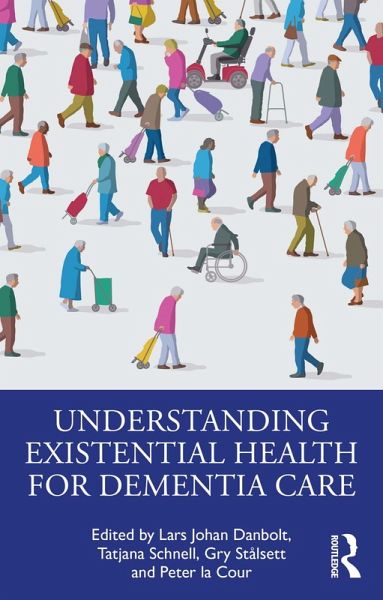
Understanding Existential Health for Dementia Care is a groundbreaking book that describes how existential health can enrich and expand bio-psycho-social approaches to dementia care, recognizing that well-being extends beyond physical, neurological, and cognitive symptoms. This book equips professionals, clinicians, and caregivers to integrate existential dimensions into person-centered care, emphasizing the role of meaning in life and emotional connection for dealing with illness and suffering.
Beginning with an introduction to the concept of existential health, the book connects this to an overall understanding of health related to dementia care. Core themes include the coincidence of suffering and meaning, fear of dementia, challenges to personhood, and multicultural perspectives. The book then provides an overview of how existential health can enhance person-centered care, addressing different types of dementia, neurological changes, emotional factors, and daily life functioning.The final section provides examples of existential support, including tools for meaningful conversations and existential exploration. The last chapter weaves together the book's thematic threads, highlighting how past experiences contribute to present sense of meaning, identity, and connectedness in people with dementia.
It is valuable reading for professionals in dementia care-nurses, psychologists, doctors, and chaplains-as well as for caregivers seeking inspiration and students in medicine, nursing, psychology, theology, and social work.
Beginning with an introduction to the concept of existential health, the book connects this to an overall understanding of health related to dementia care. Core themes include the coincidence of suffering and meaning, fear of dementia, challenges to personhood, and multicultural perspectives. The book then provides an overview of how existential health can enhance person-centered care, addressing different types of dementia, neurological changes, emotional factors, and daily life functioning.The final section provides examples of existential support, including tools for meaningful conversations and existential exploration. The last chapter weaves together the book's thematic threads, highlighting how past experiences contribute to present sense of meaning, identity, and connectedness in people with dementia.
It is valuable reading for professionals in dementia care-nurses, psychologists, doctors, and chaplains-as well as for caregivers seeking inspiration and students in medicine, nursing, psychology, theology, and social work.
Dieser Download kann aus rechtlichen Gründen nur mit Rechnungsadresse in A, B, BG, CY, CZ, D, DK, EW, E, FIN, F, GR, HR, H, IRL, I, LT, L, LR, M, NL, PL, P, R, S, SLO, SK ausgeliefert werden.