34,95 €
34,95 €
inkl. MwSt.
Sofort per Download lieferbar

17 °P sammeln
34,95 €
Als Download kaufen
34,95 €
inkl. MwSt.
Sofort per Download lieferbar
17 °P sammeln
Jetzt verschenken
Alle Infos zum eBook verschenken
34,95 €
inkl. MwSt.
Sofort per Download lieferbar
Alle Infos zum eBook verschenken
17 °P sammeln

Andere Kunden interessierten sich auch für
") UNESCO, Cultural Heritage, and Outstanding Universal Value (eBook, PDF)34,95 €
UNESCO, Cultural Heritage, and Outstanding Universal Value (eBook, PDF)34,95 €") Cultural Heritage Care and Management (eBook, ePUB)36,95 €
Cultural Heritage Care and Management (eBook, ePUB)36,95 €") The Moralization of Jewish Heritage in Germany (eBook, ePUB)71,95 €
The Moralization of Jewish Heritage in Germany (eBook, ePUB)71,95 €") The 1970 UNESCO and 1995 UNIDROIT Conventions on Stolen or Illegally Transferred Cultural Property (eBook, ePUB)155,95 €
The 1970 UNESCO and 1995 UNIDROIT Conventions on Stolen or Illegally Transferred Cultural Property (eBook, ePUB)155,95 €") Cultural Value of Work (eBook, ePUB)62,95 €
Cultural Value of Work (eBook, ePUB)62,95 €") Art, Culture and International Development (eBook, ePUB)55,95 €
Art, Culture and International Development (eBook, ePUB)55,95 €") Heritage, Homemaking, and Identity Formation in Migrant Workers (eBook, ePUB)39,95 €
Heritage, Homemaking, and Identity Formation in Migrant Workers (eBook, ePUB)39,95 €




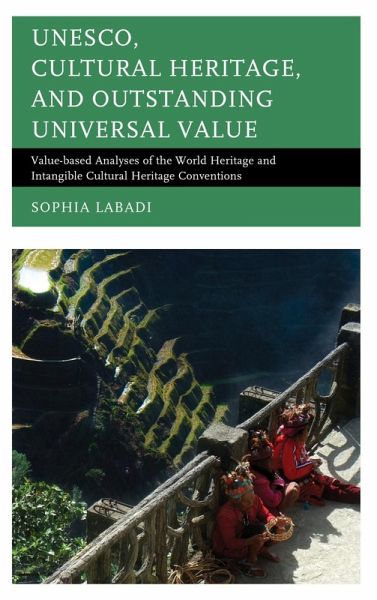
This book explores the international legal framework developed by UNESCO to identify and protect world heritage and its implementation at the national level. Drawing on close policy analysis of UNESCO's major documents, extensive professional experience at UNESCO, as well as in-depth analyses of case studies from Asia, Europe, and Latin America, Sophia Labadi offers a nuanced discussion of the constitutive role of national understandings of a universalist framework. The discussion departs from considerations of the World Heritage Convention as Eurocentric and offers a more complex analysis of how official narratives relating to non-European and non-traditional heritage mark a subversion of a dominant and canonical European representation of heritage. It engages simultaneously with a diversity of discourses across the humanities and social sciences and with related theories pertaining not only to tangible and intangible heritage, conservation, and archaeology but also political science, social theory, tourism and development studies, economics, cultural, and gender studies. In doing so, it provides a critical review of many key concepts, including tourism, development, sustainability, intangible heritage, and authenticity.