Sie sind bereits eingeloggt. Klicken Sie auf 2. tolino select Abo, um fortzufahren.
Bitte loggen Sie sich zunächst in Ihr Kundenkonto ein oder registrieren Sie sich bei bücher.de, um das eBook-Abo tolino select nutzen zu können.
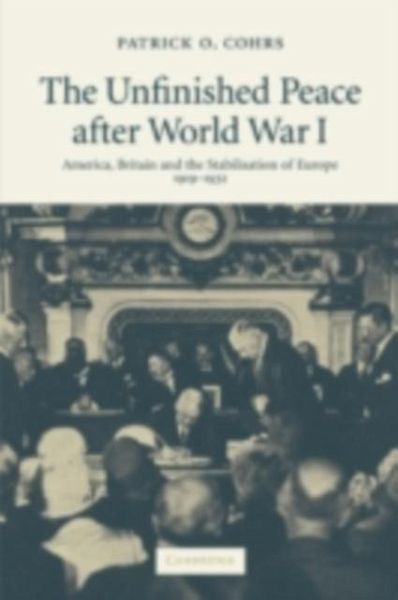
This is a highly original and revisionist analysis of British and American efforts to forge a stable Euro-Atlantic peace order between 1919 and the rise of Hitler. Patrick Cohrs argues that this order was not founded at Versailles but rather through the first 'real' peace settlements after World War I - the London reparations settlement of 1924 and the Locarno security pact of 1925. Crucially, both fostered Germany's integration into a fledgling transatlantic peace system, thus laying the only realistic foundations for European stability. What proved decisive was that key decision-makers drew…mehr
This is a highly original and revisionist analysis of British and American efforts to forge a stable Euro-Atlantic peace order between 1919 and the rise of Hitler. Patrick Cohrs argues that this order was not founded at Versailles but rather through the first 'real' peace settlements after World War I - the London reparations settlement of 1924 and the Locarno security pact of 1925. Crucially, both fostered Germany's integration into a fledgling transatlantic peace system, thus laying the only realistic foundations for European stability. What proved decisive was that key decision-makers drew lessons from the 'Great War' and Versailles' shortcomings. Yet Cohrs also re-appraises why they could not sustain the new order, master its gravest crisis - the Great Depression - and prevent Nazism's onslaught. Despite this ultimate failure, he concludes that the 'unfinished peace' of the 1920s prefigured the terms on which a more durable peace could be founded after 1945.
Dieser Download kann aus rechtlichen Gründen nur mit Rechnungsadresse in A, B, BG, CY, CZ, D, DK, EW, E, FIN, F, GR, HR, H, IRL, I, LT, L, LR, M, NL, PL, P, R, S, SLO, SK ausgeliefert werden.
Die Herstellerinformationen sind derzeit nicht verfügbar.
Autorenporträt
Patrick O. Cohrs is Associate Professor of History and International Relations at Yale University. Professor Cohrs received his doctorate from the University of Oxford in 2002. He has held fellowships at the Center for European Studies and the Kennedy School's Belfer Center for Science and International Affairs at Harvard University. Before moving to Yale, he was the Alistair Horne Fellow at St Antony's College, Oxford, and taught at Humboldt University Berlin. Professor Cohrs is currently working on a history of the Pax Americana which reappraises American aspirations for a 'new world order' from their origins to the Cold War and explores how far they contributed to the creation of a more legitimate international system. He teaches courses in modern international history, particularly on the United States and the world, the history of global, transatlantic and European international politics, and classic and new approaches to international history. He is one of the co-founders of the Yale International History programme.
Inhaltsangabe
Prologue: the truncated peace of Versailles and its consequences, 1919-23; 1. The wider challenges: the legacy of the 'Great War' and the era of imperialism; 2. Wilson, Lloyd George and the quest for a 'peace to end all wars'; 3. The ill-founded peace settlement of 1919; 4. The escalation of Europe's post-Versailles crisis, 1920-23; Part I. The Anglo-American Stabilisation of Europe, 1923-4: 5. Towards a progressive transformation of European politics: the reorientation of American stabilisation policy, 1921-3; 6. Towards transatlantic co-operation and a new European order: the reorientation of British stabilisation policy, 1922-4; 7. The turning point - the Anglo-American intervention in the Ruhr crisis; 8. From antagonism to accommodation: the reorientation of French and German postwar policies, 1923-4; 9. The two paths to the London conference: the Dawes process and the recasting of European international politics; 10. The first 'real' peace settlement after World War 1: the London agreement of 1924 and the consequences of the 'economic peace'; Part II. Europe's Nascent Pax Anglo-Americana, 1924-5: 11. The dawning of a progressive Pax Americana in Europe?; 12. Towards the Locarno pact - Britain's quest for a new European concert, 1924-5; 13. Regression? US policy and the 'political insurance' of Europe's 'economic peace'; 14. Beyond irreconcilable differences? German and French approaches to Locarno; 15. The path to Locarno - and its transatlantic dimension; 16. The second 'real' peace settlement after World War I: the Locarno conference and the emergence of a new concert of Europe; Part III. The Unfinished Transatlantic Peace Order: the system of London and Locarno, 1926-9; 17. Sustaining peaceful change and stability - the challenges of the latter 1920s; 18. Progressive visions and limited commitments: American stabilisation efforts in the era of London and Locarno; 19. 'Reciprocity'? Britain as 'honest broker' in the Locarno system; 20. The new European concert - and its limits; 21. The quest for a 'final postwar agreement' at Thoiry; 22. Towards a peaceful change of Polish-German relations?; 23. Achievements and constraints - the European security system of the latter 1920s; 24. No 'new world order' - the limits of the Kellogg-Briand Pact; 25. Towards the young process - the final bid to fortify the system of London and Locarno; 26. The last 'grand bargain' after World War I - the Hague Settlement of 1929; Epilogue; Conclusion.
Prologue: the truncated peace of Versailles and its consequences, 1919-23; 1. The wider challenges: the legacy of the 'Great War' and the era of imperialism; 2. Wilson, Lloyd George and the quest for a 'peace to end all wars'; 3. The ill-founded peace settlement of 1919; 4. The escalation of Europe's post-Versailles crisis, 1920-23; Part I. The Anglo-American Stabilisation of Europe, 1923-4: 5. Towards a progressive transformation of European politics: the reorientation of American stabilisation policy, 1921-3; 6. Towards transatlantic co-operation and a new European order: the reorientation of British stabilisation policy, 1922-4; 7. The turning point - the Anglo-American intervention in the Ruhr crisis; 8. From antagonism to accommodation: the reorientation of French and German postwar policies, 1923-4; 9. The two paths to the London conference: the Dawes process and the recasting of European international politics; 10. The first 'real' peace settlement after World War 1: the London agreement of 1924 and the consequences of the 'economic peace'; Part II. Europe's Nascent Pax Anglo-Americana, 1924-5: 11. The dawning of a progressive Pax Americana in Europe?; 12. Towards the Locarno pact - Britain's quest for a new European concert, 1924-5; 13. Regression? US policy and the 'political insurance' of Europe's 'economic peace'; 14. Beyond irreconcilable differences? German and French approaches to Locarno; 15. The path to Locarno - and its transatlantic dimension; 16. The second 'real' peace settlement after World War I: the Locarno conference and the emergence of a new concert of Europe; Part III. The Unfinished Transatlantic Peace Order: the system of London and Locarno, 1926-9; 17. Sustaining peaceful change and stability - the challenges of the latter 1920s; 18. Progressive visions and limited commitments: American stabilisation efforts in the era of London and Locarno; 19. 'Reciprocity'? Britain as 'honest broker' in the Locarno system; 20. The new European concert - and its limits; 21. The quest for a 'final postwar agreement' at Thoiry; 22. Towards a peaceful change of Polish-German relations?; 23. Achievements and constraints - the European security system of the latter 1920s; 24. No 'new world order' - the limits of the Kellogg-Briand Pact; 25. Towards the young process - the final bid to fortify the system of London and Locarno; 26. The last 'grand bargain' after World War I - the Hague Settlement of 1929; Epilogue; Conclusion.
Es gelten unsere Allgemeinen Geschäftsbedingungen: www.buecher.de/agb
Impressum
www.buecher.de ist ein Internetauftritt der buecher.de internetstores GmbH
Geschäftsführung: Monica Sawhney | Roland Kölbl | Günter Hilger
Sitz der Gesellschaft: Batheyer Straße 115 - 117, 58099 Hagen
Postanschrift: Bürgermeister-Wegele-Str. 12, 86167 Augsburg
Amtsgericht Hagen HRB 13257
Steuernummer: 321/5800/1497
USt-IdNr: DE450055826