51,95 €
51,95 €
inkl. MwSt.
Sofort per Download lieferbar

26 °P sammeln
51,95 €
Als Download kaufen
51,95 €
inkl. MwSt.
Sofort per Download lieferbar
26 °P sammeln
Jetzt verschenken
Alle Infos zum eBook verschenken
51,95 €
inkl. MwSt.
Sofort per Download lieferbar
Alle Infos zum eBook verschenken
26 °P sammeln

Andere Kunden interessierten sich auch für
") Complexity and Planning (eBook, PDF)45,95 €
Complexity and Planning (eBook, PDF)45,95 €") A Planner's Encounter with Complexity (eBook, PDF)51,95 €
A Planner's Encounter with Complexity (eBook, PDF)51,95 €") Planning with Complexity (eBook, PDF)53,95 €
Planning with Complexity (eBook, PDF)53,95 €") The Politics of Urban Cultural Policy (eBook, PDF)61,95 €
The Politics of Urban Cultural Policy (eBook, PDF)61,95 €") Towns and Cities: Function in Form (eBook, PDF)41,95 €
Towns and Cities: Function in Form (eBook, PDF)41,95 €") Routledge Companion to Creativity and the Built Environment (eBook, PDF)47,95 €
Routledge Companion to Creativity and the Built Environment (eBook, PDF)47,95 €") The New Urban Condition (eBook, PDF)37,95 €
The New Urban Condition (eBook, PDF)37,95 €





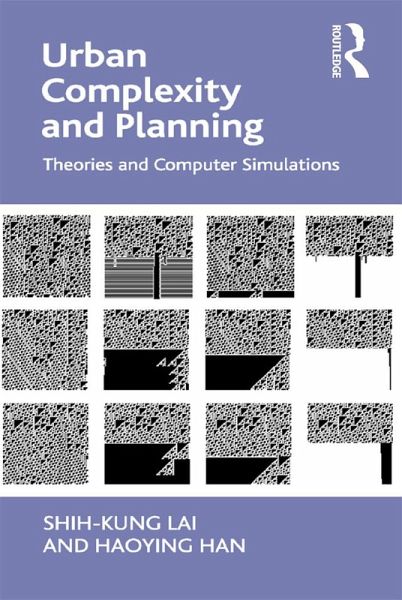
In recent years, there has been a new understanding of how cities evolve and function, which reflects the emergent paradigm of complexity. The crux of this view is that cities are created by differentiated actors involved in individual, small-scale projects interacting in a complex way in the urban development process. This 'bottom up' approach to urban modeling not only transforms our understanding of cities, but also improves our capabilities of harnessing the urban development process. For example, we used to think that plans control urban development in an aggregate, holistic way, but what actually happens is that plans only affect differentiated actors in seeking their goals through information. In other words, plans and regulations set restrictions or incentives of individual behaviour in the urban development process through imposing rights, information, and prices, and the analysis of the effects of plans and regulations must take into account the complex urban dynamics at a disaggregate level of the urban development process. Computer simulations provide a rigorous, promising analytic tool that serves as a supplement to the traditional, mathematical approach to depicting complex urban dynamics. Based on the emergent paradigm of complexity, the book provides an innovative set of arguments about how we can gain a better understanding of how cities emerge and function through computer simulations, and how plans affect the evolution of complex urban systems in a way distinct from what we used to think they should. Empirical case studies focus on the development of a compact urban hierarchy in Taiwan, China, and the USA, but derive more generalizable principles and relationships among cities, complexity, and planning.
Dieser Download kann aus rechtlichen Gründen nur mit Rechnungsadresse in A, B, BG, CY, CZ, D, DK, EW, E, FIN, F, GR, HR, H, IRL, I, LT, L, LR, M, NL, PL, P, R, S, SLO, SK ausgeliefert werden.