2,99 €
2,99 €
inkl. MwSt.
Sofort per Download lieferbar

0 °P sammeln
2,99 €
Als Download kaufen
2,99 €
inkl. MwSt.
Sofort per Download lieferbar
0 °P sammeln
Jetzt verschenken
Alle Infos zum eBook verschenken
2,99 €
inkl. MwSt.
Sofort per Download lieferbar
Alle Infos zum eBook verschenken
0 °P sammeln

Andere Kunden interessierten sich auch für
") Nephrotic Syndrome, A Simple Guide To The Condition, Diagnosis, Treatment And Related Conditions (eBook, ePUB)2,99 €
Nephrotic Syndrome, A Simple Guide To The Condition, Diagnosis, Treatment And Related Conditions (eBook, ePUB)2,99 €") Goodpasture Syndrome, A Simple Guide To The Condition, Diagnosis, Treatment And Related Conditions (eBook, ePUB)2,99 €
Goodpasture Syndrome, A Simple Guide To The Condition, Diagnosis, Treatment And Related Conditions (eBook, ePUB)2,99 € A Simple Guide To The Condition, Diagnosis, Treatment And Related Conditions (eBook, ePUB)") Nocturnal Enuresis, (Night Urination) A Simple Guide To The Condition, Diagnosis, Treatment And Related Conditions (eBook, ePUB)2,99 €
Nocturnal Enuresis, (Night Urination) A Simple Guide To The Condition, Diagnosis, Treatment And Related Conditions (eBook, ePUB)2,99 €") Thoracic Outlet Syndrome, A Simple Guide To The Condition, Diagnosis, Treatment And Related Conditions (eBook, ePUB)2,99 €
Thoracic Outlet Syndrome, A Simple Guide To The Condition, Diagnosis, Treatment And Related Conditions (eBook, ePUB)2,99 €") Frailty Syndrome, A Simple Guide To The Condition, Diagnosis, Treatment And Related Conditions (eBook, ePUB)2,99 €
Frailty Syndrome, A Simple Guide To The Condition, Diagnosis, Treatment And Related Conditions (eBook, ePUB)2,99 €") Snapping Hip Syndrome, A Simple Guide To The Condition, Diagnosis, Treatment And Related Conditions (eBook, ePUB)2,99 €
Snapping Hip Syndrome, A Simple Guide To The Condition, Diagnosis, Treatment And Related Conditions (eBook, ePUB)2,99 € A Simple Guide To The Condition, Diagnosis, Treatment And Related Conditions (eBook, ePUB)") Alien Hand Syndrome, (Dr Strangelove Syndrome) A Simple Guide To The Condition, Diagnosis, Treatment And Related Conditions (eBook, ePUB)2,99 €
Alien Hand Syndrome, (Dr Strangelove Syndrome) A Simple Guide To The Condition, Diagnosis, Treatment And Related Conditions (eBook, ePUB)2,99 €

Urethral Syndrome
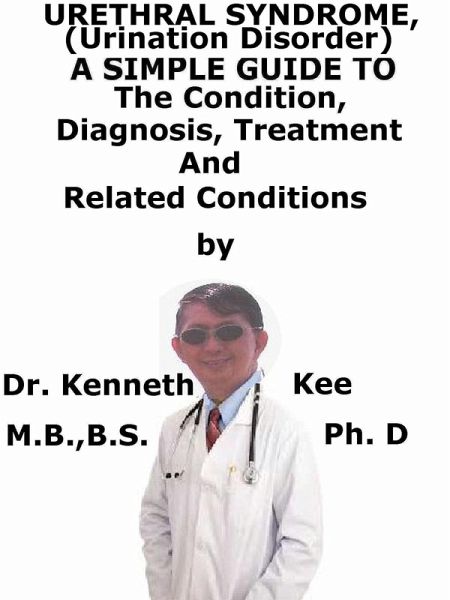
Recently I had seen a few cases of painful and difficult urination or dysuria.
I was going to write on dysuria but decided on Urethral Syndrome instead which has urinary frequency, urgency, dysuria, and supra-pubic discomfort as part of its syndrome and have a special chapter on dysuria.
What is Urethral Syndrome?
Urethral syndrome is defined as a medical disorder with lower urinary tract symptoms (urinary frequency, urgency, dysuria, and supra-pubic discomfort) but with no recognized urinary pathogen cultured from urine or any other objective discovery of urological defect.
The diagnosis of urethral syndrome is made based on the history, negative urine cultures, dynamic cystourethroscopy and urodynamic studies.
The term urethral syndrome is now controversial as there are no guided diagnostic criteria and there is some overlap with other diagnoses e.g., interstitial cystitis.
The most frequent cause of Urethral Syndrome is urethral stenosis.
Presently other causes are:
1. Hormone imbalances,
2. Inflamed Skene glands and paraurethral glands (the "female prostate"),
3. Allergy to certain foods,
4. Environmental chemicals (e.g., douches, bubble bath, soaps, contraceptive gels, condoms),
5. Hypersensitivity following urinary tract infection, and
6. Trauma during sexual intercourse.
Following the early pain-causing episode, patients with urethral syndrome have both involuntary spasms and voluntary contraction of the pelvic musculature during the painful episode, which, besides any residual irritant or re-injury, begins a vicious circle of worsening poor function of the pelvic floor muscles.
Symptoms normally are:
1. Supra-pubic discomfort,
2. Dysuria, and
3. Urinary frequency
Diagnosis is by:
1. Urine dipstick analysis
2. Midstream specimen of urine for microscopy, culture and sensitivities.
3. Urethral swab for chlamydia, chlamydial-antigens in first-pass urine sample.
If there are chlamydia-negative and persistent symptoms, a sample is taken by supra-pubic aspiration or urethral catheterization and culture for 'fastidious' or slow-growing organisms.
Any organisms detected in this way are medically significant.
If no infection is found, consider cystoscopy to exclude non-infective causes.
Further investigations may also include pelvic ultrasound, MRI scan, intravenous urography and urodynamic studies.
General treatments
1. Any psychological problems should be identified and may require treatment but they are often not relevant
Behavioral treatment (such as biofeedback, meditation, and hypnosis) has been used with some success.
Biofeedback has the most promise in patients whose symptoms are because of a failure to loosen up the pelvic muscles during urination.
Attempts at relaxation while undergoing electromyelography monitoring can help the patient retrain their muscles to allow them to void normally.
2. Highly acidic foods, including spicy foods, should be avoided that may worsen syndromes
a. Alcohol and other beverages
b. Condiments
c. Fruits
d. Juices
e. Salad dressings
f. Snacks
g. Vegetables
h. Miscellaneous foods
3. Exercise and massage programs can be very helpful.
4. Urethral massage may help by increasing drainage of mucus from chronically infected periurethral glands.
Medicine
1. Treatment of urinary tract infections and chlamydial urethritis
2. Vaginal estrogen cream in patients with atrophic urethritis.
Other Medicines are:
1. Hormone replacement
2. Anesthetics
3. Antispasmodics
4. Tricyclic antidepressants (TCAs)
5. Muscle relaxants
6. Alpha-blockers
The previous surgery used to treat urethral syndrome has been urethral dilation.
InterStim therapy and YAG laser ablation can reduce or eliminate symptoms.
TABLE OF CONTENT
Introduction...
Recently I had seen a few cases of painful and difficult urination or dysuria.
I was going to write on dysuria but decided on Urethral Syndrome instead which has urinary frequency, urgency, dysuria, and supra-pubic discomfort as part of its syndrome and have a special chapter on dysuria.
What is Urethral Syndrome?
Urethral syndrome is defined as a medical disorder with lower urinary tract symptoms (urinary frequency, urgency, dysuria, and supra-pubic discomfort) but with no recognized urinary pathogen cultured from urine or any other objective discovery of urological defect.
The diagnosis of urethral syndrome is made based on the history, negative urine cultures, dynamic cystourethroscopy and urodynamic studies.
The term urethral syndrome is now controversial as there are no guided diagnostic criteria and there is some overlap with other diagnoses e.g., interstitial cystitis.
The most frequent cause of Urethral Syndrome is urethral stenosis.
Presently other causes are:
1. Hormone imbalances,
2. Inflamed Skene glands and paraurethral glands (the "female prostate"),
3. Allergy to certain foods,
4. Environmental chemicals (e.g., douches, bubble bath, soaps, contraceptive gels, condoms),
5. Hypersensitivity following urinary tract infection, and
6. Trauma during sexual intercourse.
Following the early pain-causing episode, patients with urethral syndrome have both involuntary spasms and voluntary contraction of the pelvic musculature during the painful episode, which, besides any residual irritant or re-injury, begins a vicious circle of worsening poor function of the pelvic floor muscles.
Symptoms normally are:
1. Supra-pubic discomfort,
2. Dysuria, and
3. Urinary frequency
Diagnosis is by:
1. Urine dipstick analysis
2. Midstream specimen of urine for microscopy, culture and sensitivities.
3. Urethral swab for chlamydia, chlamydial-antigens in first-pass urine sample.
If there are chlamydia-negative and persistent symptoms, a sample is taken by supra-pubic aspiration or urethral catheterization and culture for 'fastidious' or slow-growing organisms.
Any organisms detected in this way are medically significant.
If no infection is found, consider cystoscopy to exclude non-infective causes.
Further investigations may also include pelvic ultrasound, MRI scan, intravenous urography and urodynamic studies.
General treatments
1. Any psychological problems should be identified and may require treatment but they are often not relevant
Behavioral treatment (such as biofeedback, meditation, and hypnosis) has been used with some success.
Biofeedback has the most promise in patients whose symptoms are because of a failure to loosen up the pelvic muscles during urination.
Attempts at relaxation while undergoing electromyelography monitoring can help the patient retrain their muscles to allow them to void normally.
2. Highly acidic foods, including spicy foods, should be avoided that may worsen syndromes
a. Alcohol and other beverages
b. Condiments
c. Fruits
d. Juices
e. Salad dressings
f. Snacks
g. Vegetables
h. Miscellaneous foods
3. Exercise and massage programs can be very helpful.
4. Urethral massage may help by increasing drainage of mucus from chronically infected periurethral glands.
Medicine
1. Treatment of urinary tract infections and chlamydial urethritis
2. Vaginal estrogen cream in patients with atrophic urethritis.
Other Medicines are:
1. Hormone replacement
2. Anesthetics
3. Antispasmodics
4. Tricyclic antidepressants (TCAs)
5. Muscle relaxants
6. Alpha-blockers
The previous surgery used to treat urethral syndrome has been urethral dilation.
InterStim therapy and YAG laser ablation can reduce or eliminate symptoms.
TABLE OF CONTENT
Introduction...
Dieser Download kann aus rechtlichen Gründen nur mit Rechnungsadresse in A, B, CY, CZ, D, DK, EW, E, FIN, F, GR, H, IRL, I, LT, L, LR, M, NL, PL, P, R, S, SLO, SK ausgeliefert werden.