2,99 €
inkl. MwSt.
Sofort per Download lieferbar
0 °P sammeln

Andere Kunden interessierten sich auch für
 (eBook, ePUB)") Val K., Immigrant (The Zuriel Disclosures, #6) (eBook, ePUB)2,99 €
Val K., Immigrant (The Zuriel Disclosures, #6) (eBook, ePUB)2,99 € (eBook, ePUB)") Val K. and the Murder Castle (The Zuriel Disclosures, #8) (eBook, ePUB)2,99 €
Val K. and the Murder Castle (The Zuriel Disclosures, #8) (eBook, ePUB)2,99 € (eBook, ePUB)") Val Karnowski, Boy Revolutionary, 1848 (The Zuriel Disclosures, #2) (eBook, ePUB)2,99 €
Val Karnowski, Boy Revolutionary, 1848 (The Zuriel Disclosures, #2) (eBook, ePUB)2,99 € (eBook, ePUB)") Surviving First Grade, Poland 1848 (The Zuriel Disclosures, #3) (eBook, ePUB)2,99 €
Surviving First Grade, Poland 1848 (The Zuriel Disclosures, #3) (eBook, ePUB)2,99 € (eBook, ePUB)") The Exorcism of Moses K. (The Zuriel Disclosures, #1) (eBook, ePUB)2,99 €
The Exorcism of Moses K. (The Zuriel Disclosures, #1) (eBook, ePUB)2,99 € (eBook, ePUB)") Rogala in the Crimean War (The Zuriel Disclosures, #5) (eBook, ePUB)2,99 €
Rogala in the Crimean War (The Zuriel Disclosures, #5) (eBook, ePUB)2,99 € (eBook, ePUB)") Val - Prequel to The Zombie Chronicles (Apocalypse Infection Unleashed Series, #10) (eBook, ePUB)2,99 €
Val - Prequel to The Zombie Chronicles (Apocalypse Infection Unleashed Series, #10) (eBook, ePUB)2,99 €



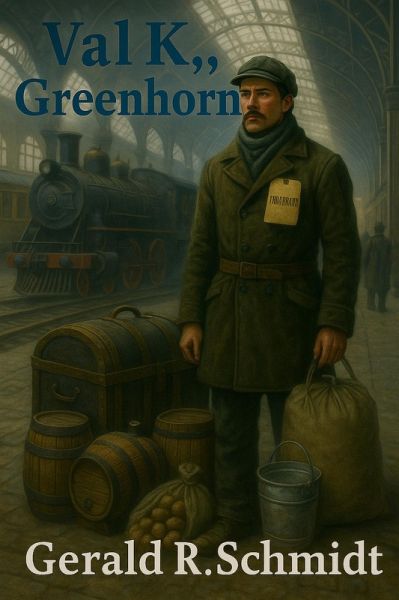
Chicago, 1872. Only months have passed since the Great Fire destroyed the heart of the city, leaving a blackened wasteland where once stood shops, hotels, and churches. Into this ruin comes Val Karnowski, a young Polish immigrant fleeing oppression in Prussian Poland. He carries little more than his past, his pride, and a hope for freedom in America. Instead, he finds himself in a tenement district so filthy and violent that even Berlin's slums seem tame by comparison.
Val begins his new life as a carpenter's helper on the rebuilding of the Palmer House Hotel, Chicago's grandest project. His days are long, and his foreman merciless. His co-workers are a babel of Poles, Germans, Irish, and Scandinavians, who debate religion, politics, and unions between hammer blows. Siegfried Nückel, a German immigrant, singles Val out for enmityand his hatred will shape Val's fate.
Chicago itself presses in. A smallpox epidemic strikes the city. Typhoid fever rages through crowded alleys. That winter, 187273, will be the harshest in Chicago history to date, freezing the river solid and trapping the poor without coal. Even horses fall sick: during the great epizootic influenza, all travel halts for two weeks, industry paralyzed.
Yet there is more than misery. Val explores the city with companions on Sunday afternoons, their only hours of free daylight. They discover churches, saloons, theaters, and factories, stumbling into comic adventures and tragic sights alike. Real newspaper clippings of accidents, thefts, murders, and fires are woven into the story, bringing Val's tumultuous area to life. Other clippings remind Val and his fellow Poles of home: Bismarck's Kulturkampf against Catholics and Poles, his war on the Jesuits, and the rise of the Old Catholic Church after the declaration of Papal Infallibility. Every headline sharpens their longing for a free Poland.
Val's identity is equally complicated. Jewish on his father's side yet Catholic by upbringing, he is never far from questions of faith. His Protestant co-workers challenge him; Freemasonry and dark rumors stir the air. Back in Prussia, a censor discovered Val had fought for the French during the recent war. Declared a traitor, Val barely escaped before the net closed. The censor's fury was so great that he turned to a coven of warlocks to kill Val across the sea. Strange accidents and Satanic happenings in Chicago suggest that this vengeance is active.
Thru all this, Val finds moments of joy. He re-connects with John Reszczynski, whom he once knew in Poland - now a saloon-keeper tho John's influence proves dangerous. He falls in love with Marcyanna, a young woman from the Polish Patch. Their romance is tender, awkward, and complicated by poverty and temptation. When Siegfried Nückel pushes Val from a scaffold, leaving him broken in skull and bone, Marcyanna remains at his side. From his hospital bed, still in casts, Val proposes marriage. The trial of his enemy is held at his bedside, a vivid glimpse into the machinery of American justice.
History marches on around him. Newspapers thunder against unions as carpenters and masons strike for better wages. German socialists bring Marxist ideas to the city. The 1872 presidential election pits Ulysses S. Grant against Horace Greeley, dividing the Polish community. In saloons and schoolhouses, in churches and union halls, every immigrant must decide where he stands.
This is a story of hardship and hope, of faith and betrayal, of the endless struggle of immigrants to carve a new life. Val K. is only one man, but thru his eyes the reader sees the birth of modern Chicago: brutal, corrupt, vibrant, and alive.
Will Val's marriage bring the stability he longs for? Will Val make it in his new city? What will happen to Siegfried Nückel? Step into 1872 Chicagoa frontier city scarred by fire, shaken by plague, ruled by corrupt politicians.
⚖️
Val begins his new life as a carpenter's helper on the rebuilding of the Palmer House Hotel, Chicago's grandest project. His days are long, and his foreman merciless. His co-workers are a babel of Poles, Germans, Irish, and Scandinavians, who debate religion, politics, and unions between hammer blows. Siegfried Nückel, a German immigrant, singles Val out for enmityand his hatred will shape Val's fate.
Chicago itself presses in. A smallpox epidemic strikes the city. Typhoid fever rages through crowded alleys. That winter, 187273, will be the harshest in Chicago history to date, freezing the river solid and trapping the poor without coal. Even horses fall sick: during the great epizootic influenza, all travel halts for two weeks, industry paralyzed.
Yet there is more than misery. Val explores the city with companions on Sunday afternoons, their only hours of free daylight. They discover churches, saloons, theaters, and factories, stumbling into comic adventures and tragic sights alike. Real newspaper clippings of accidents, thefts, murders, and fires are woven into the story, bringing Val's tumultuous area to life. Other clippings remind Val and his fellow Poles of home: Bismarck's Kulturkampf against Catholics and Poles, his war on the Jesuits, and the rise of the Old Catholic Church after the declaration of Papal Infallibility. Every headline sharpens their longing for a free Poland.
Val's identity is equally complicated. Jewish on his father's side yet Catholic by upbringing, he is never far from questions of faith. His Protestant co-workers challenge him; Freemasonry and dark rumors stir the air. Back in Prussia, a censor discovered Val had fought for the French during the recent war. Declared a traitor, Val barely escaped before the net closed. The censor's fury was so great that he turned to a coven of warlocks to kill Val across the sea. Strange accidents and Satanic happenings in Chicago suggest that this vengeance is active.
Thru all this, Val finds moments of joy. He re-connects with John Reszczynski, whom he once knew in Poland - now a saloon-keeper tho John's influence proves dangerous. He falls in love with Marcyanna, a young woman from the Polish Patch. Their romance is tender, awkward, and complicated by poverty and temptation. When Siegfried Nückel pushes Val from a scaffold, leaving him broken in skull and bone, Marcyanna remains at his side. From his hospital bed, still in casts, Val proposes marriage. The trial of his enemy is held at his bedside, a vivid glimpse into the machinery of American justice.
History marches on around him. Newspapers thunder against unions as carpenters and masons strike for better wages. German socialists bring Marxist ideas to the city. The 1872 presidential election pits Ulysses S. Grant against Horace Greeley, dividing the Polish community. In saloons and schoolhouses, in churches and union halls, every immigrant must decide where he stands.
This is a story of hardship and hope, of faith and betrayal, of the endless struggle of immigrants to carve a new life. Val K. is only one man, but thru his eyes the reader sees the birth of modern Chicago: brutal, corrupt, vibrant, and alive.
Will Val's marriage bring the stability he longs for? Will Val make it in his new city? What will happen to Siegfried Nückel? Step into 1872 Chicagoa frontier city scarred by fire, shaken by plague, ruled by corrupt politicians.
⚖️
Dieser Download kann aus rechtlichen Gründen nur mit Rechnungsadresse in A, B, CY, CZ, D, DK, EW, E, FIN, F, GR, H, IRL, I, LT, L, LR, M, NL, PL, P, R, S, SLO, SK ausgeliefert werden.